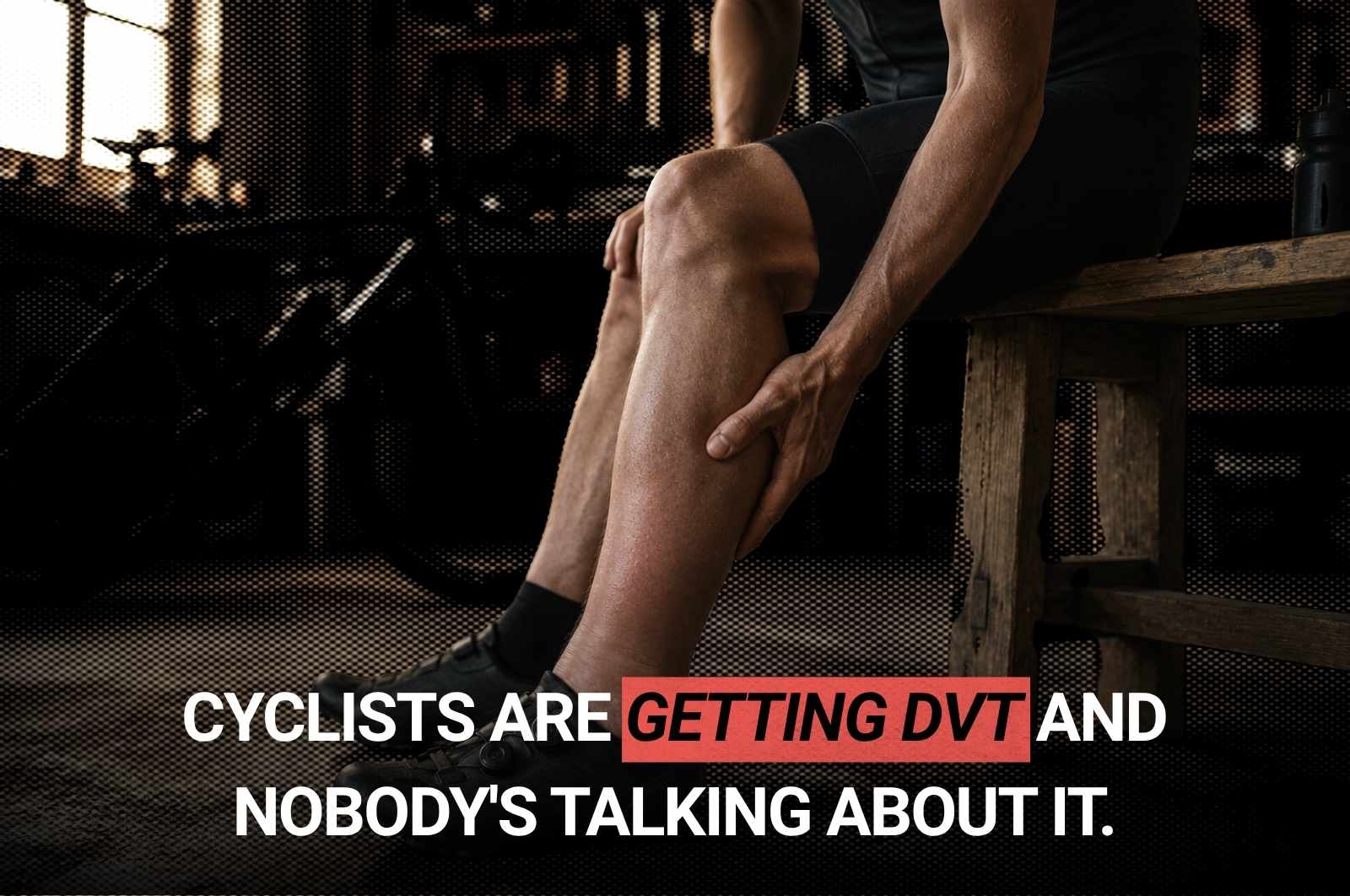
Trained cyclists can carry up to three litres more blood than a sedentary person, which is why those rope-like leg veins show up.
You finish a long ride, peel off your bib shorts, and there they are.
Veins. Bulging across the quad, snaking down the calf, splitting around the knee like a river delta.
It looks dramatic. Sometimes it looks alarming.
Most cyclists assume it is a badge of fitness, and most of the time, they are right.
But not always.
What You Are Actually Looking At
Veins return deoxygenated blood back to the heart through one-way valves.
In a trained cyclist, those veins are pushed closer to the skin by lower body fat, bigger underlying muscle, and higher blood volume that can run roughly three litres above sedentary levels.
The contraction of your calves and quads during pedalling acts as a secondary pump, squeezing blood back uphill against gravity.
That is the muscular pump mechanism, and it is the reason endurance athletes tend to display the most prominent surface veins.
Why Cyclists in Particular
Cycling is a repetitive, rhythmic, low-impact contraction sport.
The calves and quads fire thousands of times per ride without the eccentric shock of running, which means more pumping, less damage.
Combine that with the lean body composition most regular cyclists drift toward, and you get the classic ropey-leg look that finish lines and Instagram both love.
The Science Behind the Pump
This is where most cycling blogs hand-wave with "studies show" and walk away.
The actual literature is more interesting.
A 2021 systematic review published in the Journal of Vascular Surgery (Brazilian) and indexed on PubMed Central examined how structured exercise affects calf muscle pump function. You can read the full review on PubMed Central.
The finding was clear: structured aerobic and resistance training improved calf muscle pump efficiency, walking distance, and quality of life even in patients who already had chronic venous insufficiency.
In plainer terms, the same mechanical action that makes cyclists' veins pop is also one of the strongest defences against the disease that would deform them.
What the Numbers Say
A separate computational fluid dynamics analysis modelled venous return during calf contraction.
Healthy limbs ejected about 0.2 mL of blood per pump cycle centrally toward the heart. Limbs with proximal valve incompetence dropped to 0.14 mL per cycle, a roughly 30 percent reduction in efficiency.
That gap is what training defends against, ride after ride.
Where the Story Gets Awkward
Here is the part nobody wants to talk about.
Veins that are visible because of low body fat and strong calf contraction are adaptive and they regress when training drops off.
Veins that are visible because the valves themselves have failed do not regress. They get worse.
And there is uncomfortable data here. Some research suggests elite endurance athletes show a slightly higher incidence of varicose veins than the general population, possibly because sustained high venous pressure during long climbs and aerobars positions stresses valves over the long haul.
Cycling protects vein health on average. It does not guarantee it for every rider.
How to Tell the Difference
A healthy athletic vein is usually soft, bluish-green, and flat to the touch when you lie down with your legs elevated.
It looks dramatic standing up, then half disappears within a minute of putting your feet on the wall.
A varicose vein is rope-like, bulging, sometimes twisted, and it stays visible even with the leg elevated.
The honest tradeoff of being a lean cyclist is that you also need to be more observant than the average person, because the cosmetic baseline is so close to the warning signs. The same habits that build the look (long sessions, sustained climbing, lean body fat) sit right next to the habits that strain valves over the years.
Persistent swelling that does not resolve overnight. Aching or heaviness that gets worse standing and better lying down.
Skin discolouration, itching, or darkening around the ankle. A tender, red, warm vein that hurts to touch.
Sudden one-sided calf pain with swelling and warmth is a different category entirely, and that one is an emergency room conversation, not a forum thread.
The diagnostic gold standard is Doppler duplex ultrasound, and modern treatment options like endovenous laser ablation are minimally invasive enough that most patients are back on light training within a week.
How to Keep Your Veins on the Right Side of the Line
The protective habits are unglamorous and free.
Hydrate before, during, and after every ride, because dehydration thickens blood and slows venous return.
Move every hour on long travel days, especially on the way to events. Sitting on a plane for nine hours before a sportive is one of the worst things you can do to your legs.
Elevate your legs against a wall for 10 minutes after a hard ride to flush the system without effort.
Strength work on the calves and ankles, with calf raises and ankle circles, sharpens the very pump that makes you a faster cyclist anyway.
Compression socks help in long-haul travel and post-ride flushing, though the performance claims on the bike are still genuinely debated.
The first mistake is panic, the second mistake is denial.
Some riders see a single prominent vein and assume the worst.
Others ignore a clearly painful, throbbing, twisted vein because "all cyclists have these."
Both miss the point. Visible veins are a data point, not a diagnosis.
The question is not whether your veins show. The question is how they behave when you elevate, whether they hurt, and whether the surrounding skin and tissue look normal.
The Statement Your Legs Are Actually Making
For the overwhelming majority of cyclists, those prominent leg veins are exactly what they look like: the visible accounting of years of pedalling, lower body fat, and a circulatory system that runs three litres richer than it used to.
It is a trophy, not a tumour.
But trophies need maintenance. Hydrate, move on travel days, elevate after big rides, and pay attention when something feels off.
Cycling is one of the most vein-friendly sports on earth.
That does not mean your veins are bulletproof. It means they have given you a higher ceiling than most people, and the job is to ride inside it.
Pay attention to your legs. They are telling you something most people never get to hear.