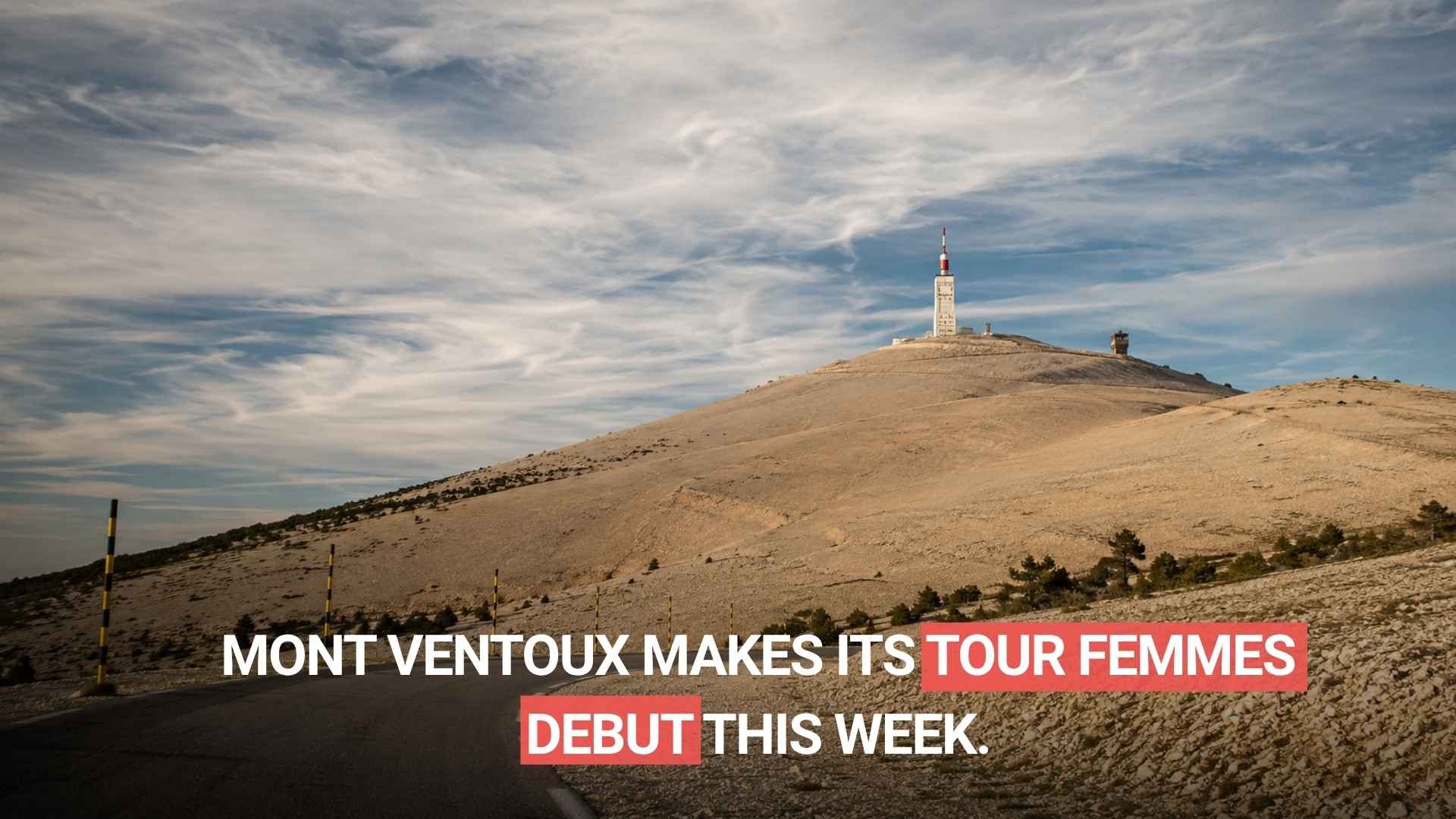
Stage 7 is the queen stage of the 2026 Tour de France Femmes and the first ever women's summit finish on the Giant of Provence. The tactical picture is more complicated than the elevation profile suggests.
That sentence should not have taken until 2026 to write.
The Giant of Provence has been part of men's cycling mythology since 1951. It has hosted the Tour de France 18 times, most recently in 2025. It killed Tom Simpson in 1967.
It has decided classifications, ended careers, and produced some of the sport's most iconic images.
On Friday 7 August, the women get their turn.
And the tactical picture is more interesting than a straight climb reading suggests.
The Climb Itself
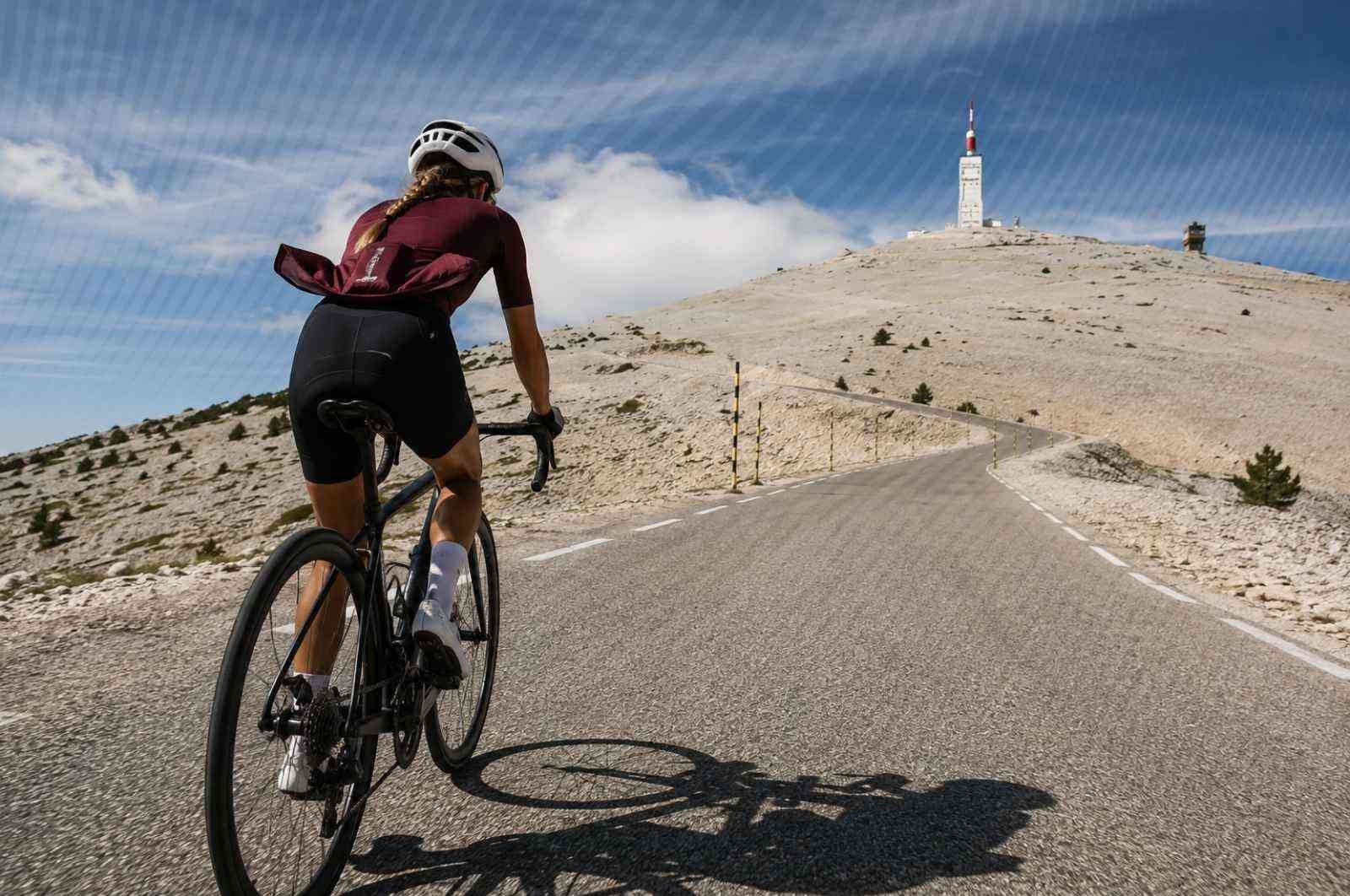
The ascent from Bedoin is the hardest of Ventoux's three approaches.
Officially it measures 15.7 km at an average gradient of 8.8 percent.
The summit sits at 1,910 metres, the highest point of the entire 2026 race.
Total climbing on Stage 7 is roughly 3,565 metres across 146.8 km.
The first 6 km after Saint Estève settle in around 9 to 10 percent, sheltered inside a pine forest that keeps wind off the riders. That section rewards steady climbers.
Then the road breaks out of the trees at Chalet Reynard, and everything changes.
The Detail Most Previews Miss
The final 6 km of Ventoux, above Chalet Reynard, are not another mountain climb in the traditional sense.
The gradient drops to a rolling average, the surface flattens in sections, and the road runs across the exposed lunar shoulder of the mountain toward the summit observatory.
It is a wind exposed drag, not a summit ramp.
That matters. On a normal 8.8 percent finish, the lightest climber wins. On Ventoux's final third, power to weight starts to matter less and pure sustained power starts to matter more.
A rider who can hold 320 watts in a headwind will pull time out of a lighter rider who cannot.
Demi Vollering flagged this specifically before the race.
Speaking to the press in the pre race conference, she said the top of Ventoux is quite some power because it is a flatter part, and predicted that team tactics will matter more here than they did on last year's decisive Col de la Madeleine stage.
That is not the read most previews are running.
Most are treating this as a pure climbers' shootout. Vollering is treating it as a pacing and shelter puzzle. Those two reads produce different race strategies.
Vollering and the Mountain That Made Her a Climber
For Vollering personally, this stage is a homecoming of sorts.
Ventoux inspired me a lot, she told reporters at the FDJ United Suez pre race press conference.
That is where I really found out I was a pretty good climber, because against all the other girls I trained with, I was always the first at the top.
She has climbed it repeatedly, first as a teenager and later as a training benchmark.
She skipped the Tour de Suisse and Dutch Nationals this year specifically to be fresh for the Tour, spent three weeks at altitude in Tignes, and arrived in Lausanne without the fatigue that broke her 2025 campaign.
She won Stage 1 time bonuses in a bunch sprint.
That is unusual for a climber. It suggests she is arriving in the shape her team has been building since June.
The Ferrand Prevot Question
Pauline Ferrand Prevot is the defending champion. She has been open with the press that her entire season has been built around this Tour.
Her spring form was uneven, with a third place at Paris Roubaix as the highlight and an anonymous showing at the Vuelta Femenina in between.
But she has ridden Ventoux repeatedly.
Her Visma Lease a Bike deal was extended through 2028 earlier this year, and the team has organised its entire mountain preparation around her.
She dropped weight over the winter, a decision Vollering publicly criticised in the spring, but the physiological argument was straightforward.
Lighter climbers ride Ventoux faster, and Ferrand Prevot bet her defence on it.
On paper, the Vollering versus Ferrand Prevot duel is what Stage 7 was built for. In practice, the stage is not decided by which of them is lighter.
It is decided by which team pacing plan holds together above Chalet Reynard.
The Time Trial Complicates Everything
There is a variable most previews are underweighting. Stage 4, the 21 km Dijon time trial, may have already tilted the yellow jersey race before Ventoux arrives.
Marlen Reusser is the reigning ITT world champion and the strongest time triallist in the field.
If she takes a full minute out of Vollering and Ferrand Prevot in Dijon, she does not need to match them on the summit finish. She needs to limit her losses, which is a much easier tactical brief.
That changes what everyone else has to do on Ventoux.
If Reusser is in yellow going into Stage 7, the climbers have to attack her, not each other. If a climber is in yellow, the tactic is defensive.
And of course, sitting on top of the whole GC picture as of today is Sigrid Haugset, whose 88 km solo on Stage 3 put her more than 2 minutes clear.
Whether her time trial holds, and whether her legs hold through the Massif Central, will define whether Ventoux is a coronation stage or a general classification decider.
The History Nobody Talks About
This is not, technically, the first women's summit finish on Mont Ventoux.
Anna Kiesenhofer, later the 2020 Olympic road champion, won a Ventoux summit stage of the Tour Feminin International de l'Ardeche in 2016, finishing 3 minutes 53 seconds ahead of the second placed rider.
Marta Cavalli won the women's Mont Ventoux Denivele Challenge in 2022.
Those results matter for two reasons. First, they show what Ventoux can do to a women's field: time gaps in minutes, not seconds.
Second, they show that the mountain has been asked of women's cycling before, and the physical answers have been recorded.
What is new about 2026 is not the climb itself but the fact that the Tour de France Femmes has finally chosen to include it.
The women had to wait five editions to race this mountain. Five editions is not nothing.
Three tactical patterns are worth setting alarms for.
First, watch what happens at the base of the Bedoin climb.
If a GC team, most likely FDJ Suez or Visma, drills the pace hard on the lower slopes, they are trying to isolate rivals from their domestiques before the wind exposed top section.
That signals they trust their leader's individual capacity.
Second, watch Chalet Reynard. If Ferrand Prevot or Vollering has not attacked by there, they are pacing for the finish, not the mountain.
The final 6 km is where the tactical read Vollering has flagged plays out. Big attacks in headwind are expensive.
Third, watch whether Kim Le Court Pienaar or Kasia Niewiadoma Phinney ends up in a break earlier in the stage.
Either of them has the climbing legs to hurt the favourites, and both are within striking distance on GC. Vollering has already shown she can hold time trial output.
The question is whether she can hold it when the race is stripped down to two riders and a headwind.
The Statement This Stage Will Make
The Tour de France Femmes has spent five editions building toward a mountain like Ventoux.
On Friday, the sport gets to see whether a field that has been described in the press as the deepest in women's road cycling can produce a race worthy of the venue.
The answer, if the last three days are any signal, will be yes.
.webp)