Up to 91% of male cyclists report perineal numbness at some point, but the data on lasting damage is far messier than the scare headlines suggest.
Every few months a headline goes viral claiming your bike is quietly destroying your sex life.
The panic spreads. The forums light up. Someone swears they are switching to running.
Then the actual urologists weigh in, and the story gets a lot less dramatic.
The truth is more complicated than a clickbait headline, and far more reassuring for most riders.
So let's be precise about what cycling does and does not do to the male body below the waist.
What Actually Happens Down There
When you sit on a bike, your body makes contact with the saddle in one specific place: the perineum.
That is the soft stretch of tissue between the scrotum and the anus, and it is busier than it looks.
Packed into that small zone are the pudendal nerve, the arteries that feed blood to the penis, and a web of pelvic floor muscle.
A narrow or badly positioned saddle presses all of it against your own pelvic bone.
The result can be numbness, a burning sensation, or a strange bruised feeling that lingers after the ride.
Why It Feels Like A "Prostate" Problem
Many men feel pressure in that region and immediately assume the worst about their prostate.
Here is the thing: the nerves that control erections run right along the outer surface of the prostate gland.
Irritate the surrounding tissue and your brain often reads it as a prostate or sexual problem, even when the gland itself is perfectly healthy.
That is why so many riders get told they have prostatitis when there is no infection at all.
The discomfort is real. The diagnosis is frequently wrong.
The Numbers Behind The Headlines
This is where most scare articles fall apart, because they never give you a single specific figure.
A widely cited review in Sexual Medicine Reviews found that perineal numbness affects somewhere between 22% and 91% of male cyclists depending on the study.
Erectile dysfunction figures ranged from 1.8% to 50%, which is an enormous spread.
That huge range is not a rounding error. It tells you the risk depends almost entirely on how you ride, not whether you ride.
Saddle type, saddle angle, and body position mattered more than mileage in almost every dataset.
In other words, the bike is rarely the villain. The setup usually is.
The Mechanism: Blood And Nerves, Not Magic
The science here is genuinely simple, almost insulting in how mechanical it is.
Pressure on the perineum squeezes the pudendal nerve inside a tight passage called Alcock's canal.
Squeeze a nerve long enough and it stops sending signals properly. That is your numbness.
At the same time, that pressure throttles blood flow into the penis, measured in studies as a drop in penile oxygen levels.
Researchers have even tracked an inverse link: the harder the saddle nose presses, the less time men spend with a nighttime erection.
Cut the pressure and the oxygen comes back. The nerve wakes up. The function returns for the vast majority of riders.
Where The Scary Story Falls Apart
Here is what the viral headlines conveniently skip.
Many of the alarming early studies were small, poorly controlled, or relied on men simply reporting how they felt rather than any validated clinical test.
Some surveyed police officers who sat on bikes for eight hours a day, which is nothing like your weekend century.
Cycling has also been linked to higher cardiovascular fitness, and good heart health is one of the strongest protectors of erectile function there is.
So a fit cyclist with a decent saddle may well have better sexual health than a sedentary man on the couch.
That is not the story that gets clicks, but it is the one the broader evidence supports.
The good news is that the evidence points to clear, cheap fixes.
A meta-analysis in Sports Medicine tested saddle designs, riding positions, and shorts, and two interventions stood out above the rest.
No-nose saddles and recumbent bikes produced the biggest drops in perineal pressure and the highest penile oxygen readings compared to a standard saddle.
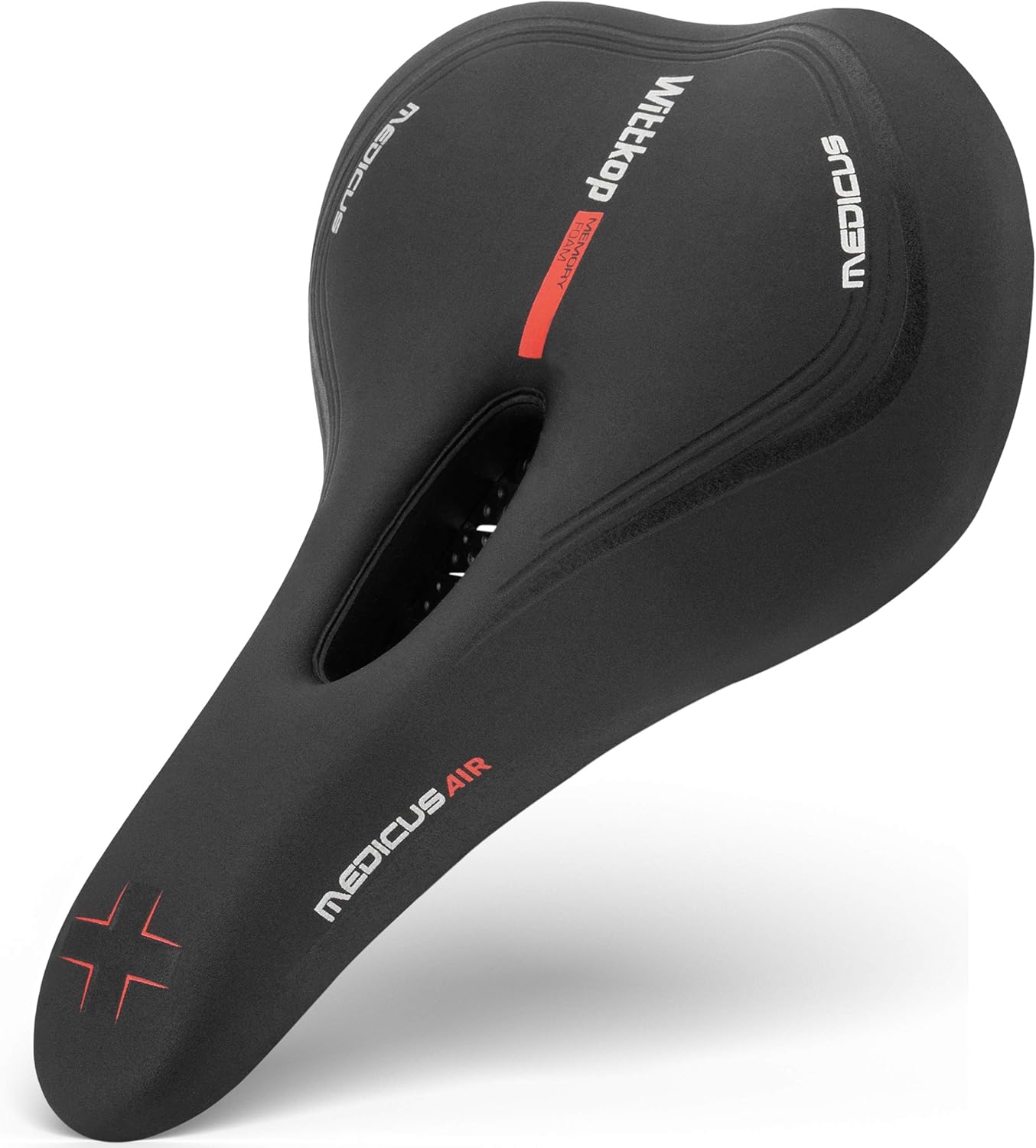
You do not need a recumbent. A cutout or no-nose saddle gets most of the benefit while keeping you on a normal bike.
Dial In These Five Things
First, get the saddle angle right. A nose tilted slightly down relieves a surprising amount of pressure.
Second, choose width based on your sit bones, not on how plush the foam feels under your hand in the shop.
Third, stand up out of the saddle every ten minutes or so to let blood flood back in.
Fourth, raise your handlebars if you are stretched out flat, since an aggressive aero position dumps weight onto the perineum.
Fifth, treat any numbness lasting hours or days after a ride as a signal to change something now, not later.


.webp)