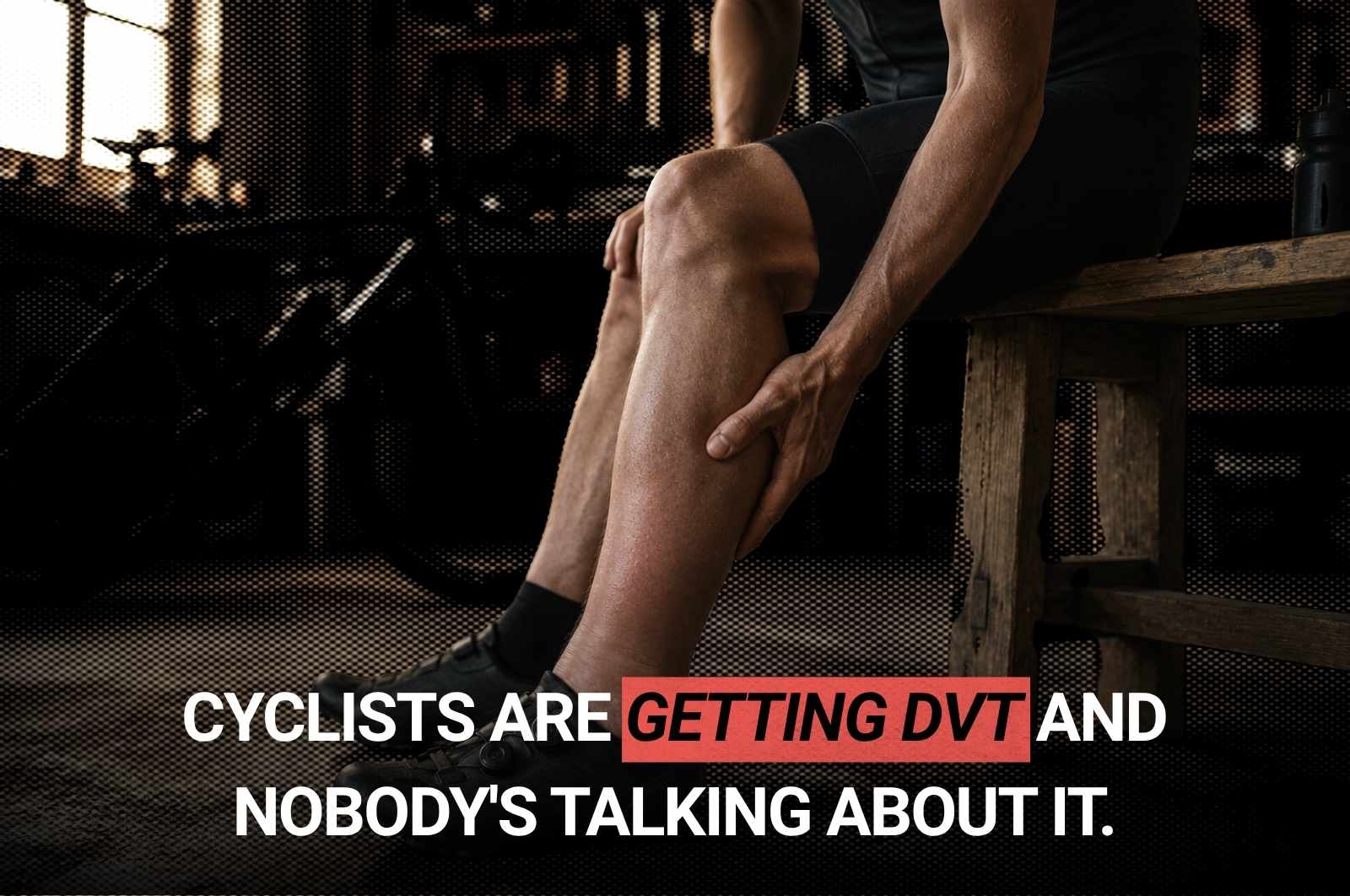
A published cardiology case report documented a young cyclist whose training volume itself became the risk factor..
In 2022, a 22-year-old man walked into an emergency room with a swollen right leg.
He described a month of increasing pain and heaviness from calf to groin.
Otherwise, he was completely healthy.
He was also riding 250 to 300 miles a week.
Imaging showed an extensive acute deep vein thrombosis, a blood clot running through the right iliac vein.
The cause was not smoking, not a car accident, not an inherited clotting disorder.
It was his cycling.
Specifically, the psoas muscle hypertrophy that comes with high-volume cycling had compressed his iliac vein against the surrounding bone.
Blood was pooling.
A clot had formed. If it had broken free, it could have killed him.
That case was published in JACC: Case Reports, the peer-reviewed journal of the American College of Cardiology.
The Condition Cycling Rarely Names
Deep vein thrombosis, or DVT, is a blood clot in one of the deep veins of the body.
Most commonly it forms in the legs, though it can happen in the arms too.
The clot itself can be dangerous. If it breaks free and travels to the lungs, it becomes a pulmonary embolism, which can cause sudden cardiac death.
The mainstream image of a DVT patient is someone sedentary, overweight, on a long flight, or recovering from surgery. That is why cyclists rarely think about it.
That mental model is wrong.
Why Fit Cyclists Are Actually at Risk
There are three well-documented factors that raise DVT risk for endurance cyclists specifically.
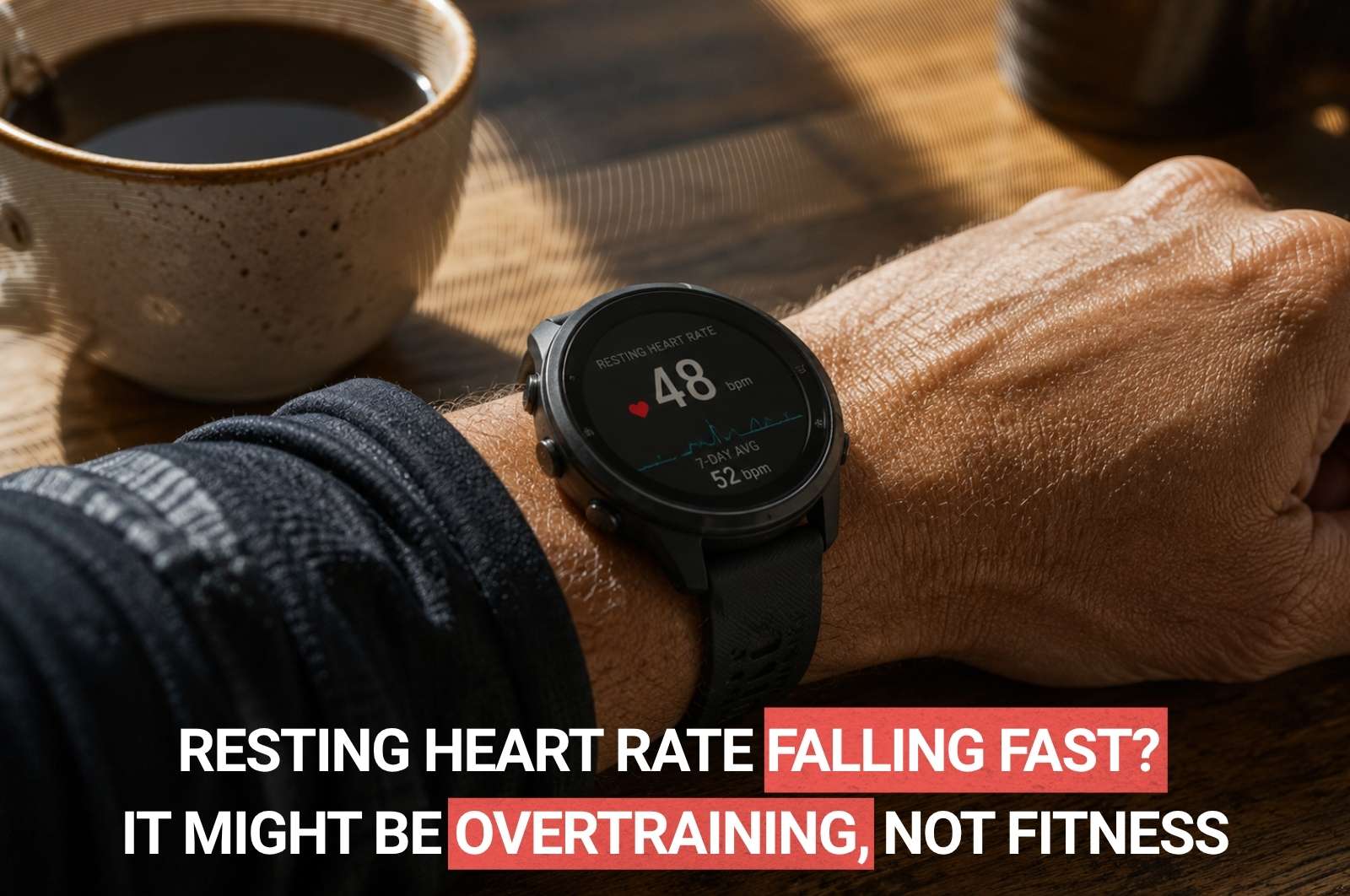
First: low resting heart rate. Trained endurance riders often have a resting heart rate below 50 beats per minute.
That reduces the velocity of blood flow through the venous system, especially in the legs.
Slower blood is easier to clot.
Second: hemoconcentration and dehydration.
Long rides, especially in heat, thicken the blood by pulling water out of the plasma.
The Iowa case report and multiple review studies name this as a contributing factor.
Third, and most cyclist-specific: mechanical vein compression.
The psoas muscle, deep in the pelvis, grows with cycling volume.
In some anatomies it can compress the common iliac vein against the vertebral bodies.
That mechanical compression can trigger the clotting cascade.
This third factor is called May-Thurner syndrome when the anatomy predisposes to it. In a cyclist, it can develop from training alone.
What the Symptoms Actually Look Like
Here is the part that makes DVT dangerous for cyclists specifically.
The early symptoms look like normal training fatigue.
Vicki Barclay, a mountain bike racer for Stan's NoTubes Elite Women's team, described her own DVT experience in an interview with 303 Endurance: "For about a week I just did not feel right. I felt like I had bad indigestion and discomfort on my left side."
She raced a cyclocross event that Saturday with a pounding headache.
Tried to ride the next day and was "insanely breathless." Drove ten hours to a planned ride in Pisgah, North Carolina, and "was so weak she could not even get on her bike."
By the time she was hospitalized, the clot had already caused a pulmonary embolism.
The Warning Signs Every Cyclist Should Know
The classic DVT symptoms are documented across cardiology literature and cycling case reports. The ones to watch:
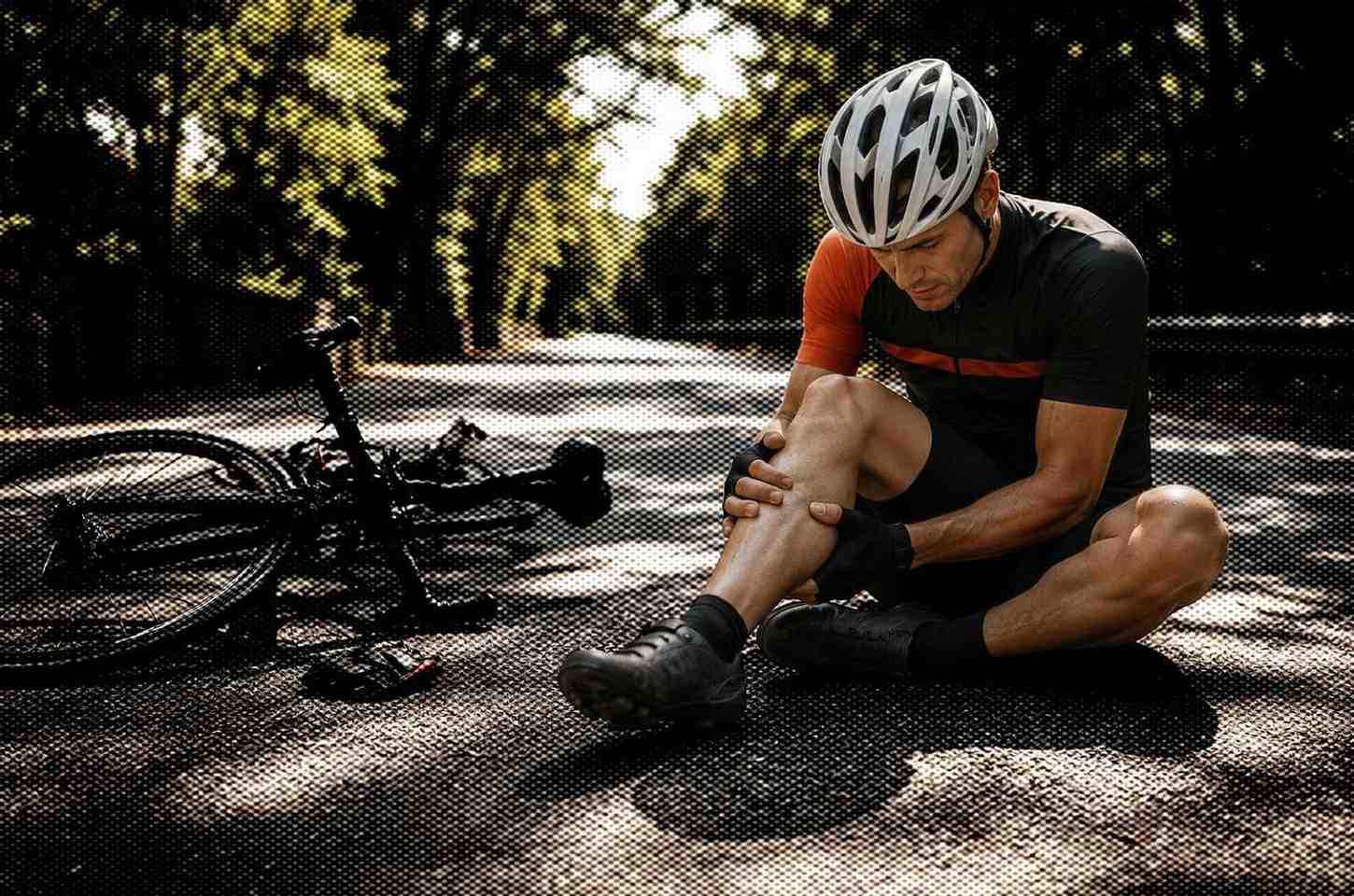
Pain in one leg that feels like a cramp but does not respond to stretching or hydration.
Especially if it is in the calf or thigh and gets worse when you stand.
Sudden swelling in one leg only. Bilateral swelling (both legs) is usually something else. Unilateral is the red flag.
Enlargement of surface veins, or reddish-blue skin discoloration in the affected area.
Unexplained breathlessness, especially breathlessness that comes on suddenly and does not resolve with rest.
This can signal a pulmonary embolism, which is a medical emergency.
Chest pain, dizziness, or coughing up blood are late-stage PE symptoms and require immediate emergency care.
If any combination of these shows up after a long ride or a period of unusual training, do not wait.
The Risk Multipliers Nobody Puts Together
The DVT case reports on cyclists share some recurring context that never gets flagged as a package.
Long-haul travel to races.
Airplane cabins already reduce venous return in the legs. A cyclist flying to a Gran Fondo after a heavy training block is stacking risk factors.
Oral contraceptives and cycling.
Combined oral contraceptives raise DVT risk in the general population. Combined with cycling's other risk factors, this becomes something female cyclists should discuss with their physicians.
Recent illness or minor leg trauma.
Even a small crash bruise can be an inflammatory trigger. If a crash and a low fluid intake and a long transfer stack up in the same week, the risk math changes.
Iron deficiency, which is common in endurance cyclists especially female riders, can also change blood viscosity and clotting profiles.
If a cyclist is diagnosed with a DVT, the standard treatment is anticoagulation, typically for three to six months.
During that window, the risk of serious bleeding from any impact is significantly elevated.
That creates a genuinely difficult conversation.
Cycling itself becomes higher-risk while the medication is active.
The JACC review notes: "There are currently no discrete recommendations provided for return-to-play in VTE guidelines."
In plain English, the sports cardiology community has not written a clear rulebook for cyclists on anticoagulation. Every case becomes a shared decision between the athlete and their doctors.
The Point of This Article
This is not a scare piece. DVT in cyclists is uncommon, and the vast majority of high-volume riders will never experience one.
But the myth that cycling protects you from clotting risk is exactly the myth that lets an athletic 22-year-old ignore a swollen leg for a month before landing in a hospital.
The riders who benefit most from knowing about DVT are the ones who look healthiest.
Low resting heart rate. High weekly mileage. Long transfers to races. Habitual mild dehydration.
That is a lot of the readers of this site.
The Bottom Line
Deep vein thrombosis hides inside symptoms that look like training fatigue. It preys on exactly the metabolic profile endurance cycling produces. It nearly killed a 22-year-old man whose only medical risk factor was the sport he loved.
Know the signs. Especially the one-leg-only swelling and the unexplained breathlessness.
When in doubt, get it checked.
A three-minute conversation with a doctor is worth a lot compared to a pulmonary embolism you did not see coming.
The strongest bodies still bleed.
The fittest hearts still clot.
Cycling does not exempt you from that. It just changes which doors the risk walks through.