The Only 3 Rides Cyclists Actually Need
A 2024 systematic review of 14 studies found the same thing across cyclists, runners, and triathletes. Three ride types, arranged deliberately, out-performs six random sessions every time.
The smartest riders aren't picking sides. They're running a hybrid week that delivers up to 8.8% more power on the road and keeps motivation alive through every season.

The indoor versus outdoor debate is over.
Or it should be. The riders getting faster every season stopped arguing about it years ago.
They figured out something most cyclists miss. Indoor and outdoor aren't competing systems, they're two halves of the same training plan, and using only one is the fastest way to plateau.
Here's the split that works, and the science explaining why.
Most enthusiast riders get 6 to 8 training hours a week, jammed between work, family, and weather.
A workable structure looks like this: two or three indoor sessions focused on intensity, one or two outdoor rides focused on volume and skill. That ratio gives you the controlled stimulus indoors and the variety outdoors without burning either end.
It's not glamorous. It's just what consistently produces results.
Indoor sessions are short, sharp, and repeatable. Outdoor rides are long, messy, and irreplaceable for handling.
Trying to do everything outdoors means weather kills your intervals. Trying to do everything indoors means you arrive at your first event having forgotten how to corner.
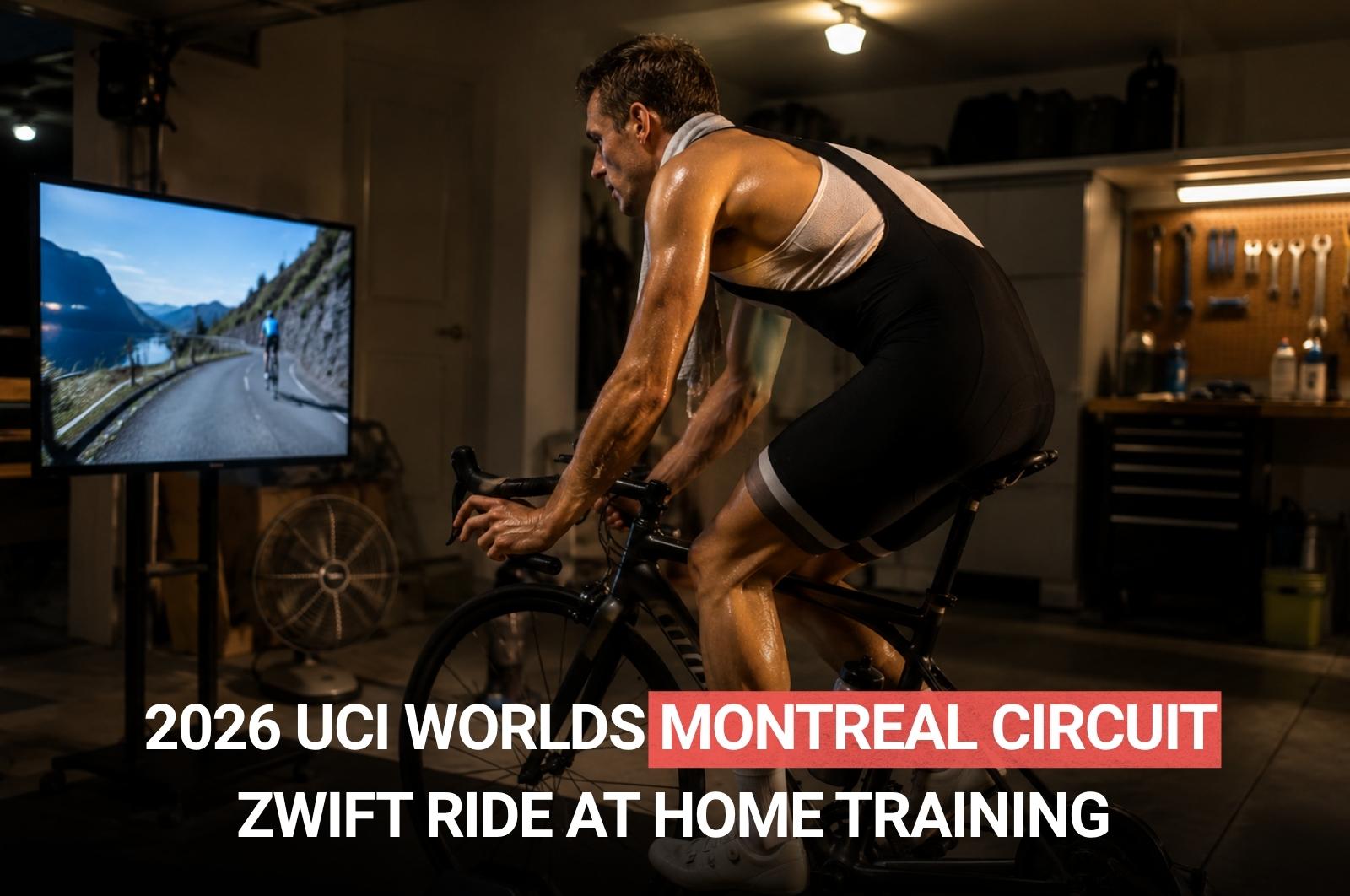
A smart trainer turns your living room into a physiology lab.
You can hold exactly 280 watts for 8 minutes, then repeat that effort next Tuesday and the Tuesday after. There's no draft, no descent, no red light wrecking your interval at minute six.
That control is the entire point.
VO2 max intervals. Three-minute efforts at 110% of threshold are brutal, and they're miserable to nail outdoors with potholes and parked cars. Indoors, you ride the watts and only the watts.
If you've been working on your top-end, the same principles for how to increase your VO2 max so your hard efforts feel easier apply doubly to structured indoor work.
Threshold blocks. Holding sweet spot (88 to 94% of FTP) for 20 minutes is the kind of work that builds the engine. Indoors, it's a clean rep; outdoors, it's an interrupted negotiation.
Cadence drills. Spinning at 110 rpm for 90 seconds to isolate technique works better when you're not also watching for cars.
Indoor sessions are time-efficient. A 60-minute indoor workout, properly structured, delivers the same training stress as a 90-minute outdoor ride.
That's not nothing. For a working cyclist, that's an extra hour of sleep.
Here's where it gets uncomfortable for the Zwift-everything crowd.
A 2022 study published in Frontiers in Physiology found that outdoor cycling produced significantly lower perceived mental load than the same 5-hour effort indoors at 65% of functional threshold power. Riders rated the indoor session as harder mentally, even when the legs were doing identical work.
Translation: indoor cycling fatigues your brain faster than your legs.

Cornering. Lean angle, line choice, weight shift. You learn these by doing them, repeatedly, at speed.
Descending. Every fast descent rewards riders who've done thousands of them. Indoor descending doesn't exist.
Group dynamics. Drafting, pulling through, holding a wheel at 28 mph. None of this transfers from a screen.
Variable power. Real climbs aren't constant gradient. Real headwinds aren't preset resistance, and your body needs to learn the messy version, not just the controlled one.
Here's something the indoor evangelists won't admit. A study of UCI WorldTour and Continental-level riders found that mean maximal power was 4.2 to 8.8% lower indoors than outdoors across efforts from 1 to 14 minutes.
That's huge. Your indoor FTP and your outdoor FTP are not the same number, so if you set your zones from the wrong test, every session is calibrated wrong.
It's not perfect. Nothing in training is.
The calibration problem. If you build your training zones off an indoor FTP test, your outdoor zones will be too easy; build them off an outdoor test, and your indoor sessions will feel impossible.
Most coaches recommend testing in both environments and running parallel zones.
The boredom ceiling. Even with virtual races and group rides, indoor cycling has a hard mental cap. Most riders start dreading the pain cave after 45 to 60 minutes, regardless of how good the workout is on paper.
Weather still wins. A hybrid plan assumes you can ride outside at least once or twice a week. In a brutal winter or a wildfire summer, the ratio collapses, and you're back to 100% indoor.
Heat. Indoor sessions run hotter. Without a serious fan, even moderate efforts push core temperature higher than the same wattage outside.
The structure is simple. Sticking to it is the hard part.
Tuesday (indoor, 60 min): VO2 max intervals. Five reps of 3 minutes hard, 3 minutes easy.
Thursday (indoor, 60 min): Threshold. Two blocks of 20 minutes at sweet spot.
Saturday (outdoor, 2 to 4 hours): Endurance ride with one or two hills full-gas. Real terrain, real wind, real group if you can.
Sunday (outdoor, 90 min to 2 hours): Recovery spin or skills focus. Cornering practice, descending, easy cadence work.
That's it. Two quality indoor sessions, two outdoor rides, three rest days.
Winter: Push indoor to three sessions, outdoor to one. Use the long Saturday ride if weather permits.
Spring and Summer: Flip it. Two indoor, two or three outdoor, with race-specific outdoor work moving to the front.
Pre-event: Three outdoor rides minimum, indoor only for openers or recovery spins. There are real reasons every cyclist should train indoors, but the two weeks before a race aren't them.
Track power and heart rate on both, then compare them. If your indoor power is 30 watts below your outdoor for the same heart rate, that's your calibration gap.
Don't move sessions just because the weather's nice. The plan is the plan.
The riders getting faster aren't the ones who picked a side. They're the ones who stopped treating indoor and outdoor as rivals and started using each for what it does best.
Indoors gives you control, precision, and time-efficiency. Outdoors gives you skill, variety, and the actual sport.
You need both. The 3:2 split is the cheap version of an elite coaching plan, and it works for the same reason: it respects what each environment is good at.
Buy the trainer, keep the bike outside. Use them on different days for different reasons.
That's the entire secret.
Perfect for the new riders!
No spam. Cancel anytime.