Paris-Roubaix is back: 258km, 30 brutal cobbled sectors, and one huge question can anyone stop Mathieu van der Poel from making history with a fourth straight win? A deep dive into past chaos, the 2026 route, and the real contenders.
The Belgian classics might’ve finished, but that doesn’t mean that the entire cobbled classics season is over too, since there’s still one race left to conquer. And that race is none other than the Paris-Roubaix, otherwise known as the “Hell of the North”. Over 250km in length with more than 50 of those ridden on cobbles it truly feels like hell for the participants.
We usually say that in cycling everything is possible, and for this race in particular it’s even more true. It is a race where a lot of things have to go your way in order for you to have a chance at victory. Firstly, you have to stay on your bike the hole way, which is extremely hard on the cobbled roads. Secondly, you need to avoid any kind of mechanical, which are common in a race like this. And finally, you need to have the strength both physically and mentally to come out on top.
Due to its randomness, this is a race, where even if you’re not the strongest, you could still end up in a situation where you are sprinting for the victory in the famous Velodrom. Dylan van Baarle, Sonny Colbrelli and Mathew Hayman have all won this race in the past, even though they probably weren’t the strongest. However, we also had quite a few editions in which the superstars were fighting for the win. Boonen, Cancellara, Gilbert and Sagan have all won this race before, but it had taken them years and lot of suffering in the process to eventually come out on top.
Due to its unpredictability, the Roubaix has rarely been dominated by one rider for a long time. Lately however, there has been a certain Dutch who’s looked unbeatable. Of course, I’m talking about Mathieu van der Poel, who’s looking to become the first rider in the race’s 123 year history to win on 4 consecutive occasions.
So the question is, can anybody stop the Dutchman in the pursuit of his 4th title, which would also equal the all-time record held by Tom Boonen and Roger De Vlaeminck. Well, surprisingly his track record is not perfect at this race, so before we look at his possible rivals, let’s go back in time and analyze how the previous editions have unfolded.
Previous editions
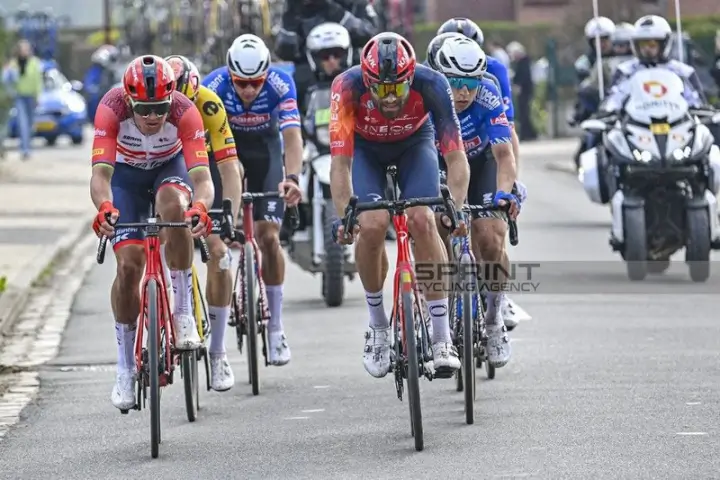
Before the Van der Poel’s debut, it was a race that was often decided in a small group sprint or won after a late attack. But since his debut in 2021, the entire race has turned on its head. Due to Mathieu’s dominance, everybody is trying to anticipate his attack by trying to get into the early breakaway, which makes the breakaway formation super long. But these anticipations usually don’t work, since the Dutchman is so much stronger than his rivals that he can just attack whenever he wants and ride off into the sunset. However, in the first couple of years, that wasn’t the case.
The 2021 edition was one of the most memorable ones due to a multiple reasons. Firstly, it was the first Roubaix we saw in more than in more than two years, due to the pandemic. It was also held in October, which made it even more unusual. Secondly, the weather conditions were terrible. It was raining and there was mud all over the place. And most importantly, the racing itself was also as entertaining as it could get.
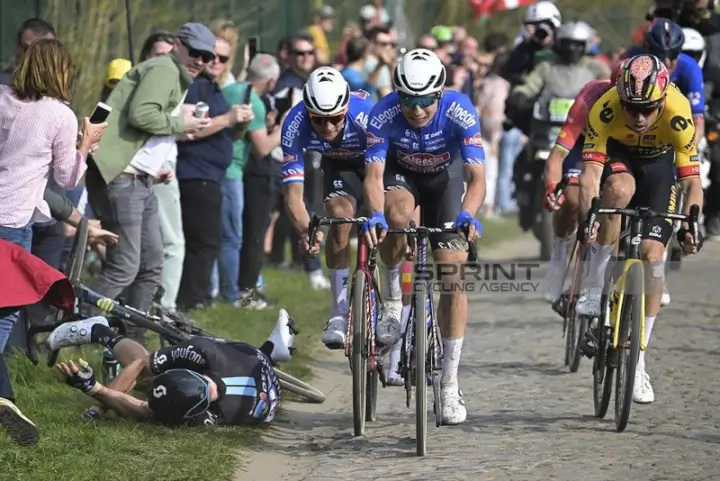
Before the race, there were two big favorites: Mathieu van der Poel and Wout van Aert. Anybody else winning would’ve been a big surprise. However, that day the cycling gods were against both of them. The Belgian had a couple of punctures and also suffered a crash mid-race, which completely ruled him out of the fight for victory. Meanwhile his Dutch rival had a mechanical issue too, which forced him to change bikes, costing him a lot of energy in the process.
Two riders from the early breakaway also played a crucial role. It looked like that Ineos’ Gianni Moscon was gonna run away with the win, as he had more than a minute lead with just a few sectors to go. But then came the plot-twist. Firstly, he had to change his bike because of a puncture, which was followed by an unfortunate crash. Due to these two errors, the 3 chasers (Florian Vermeersch, Sonny Colbrelli, Van der Poel) caught and later dropped him.
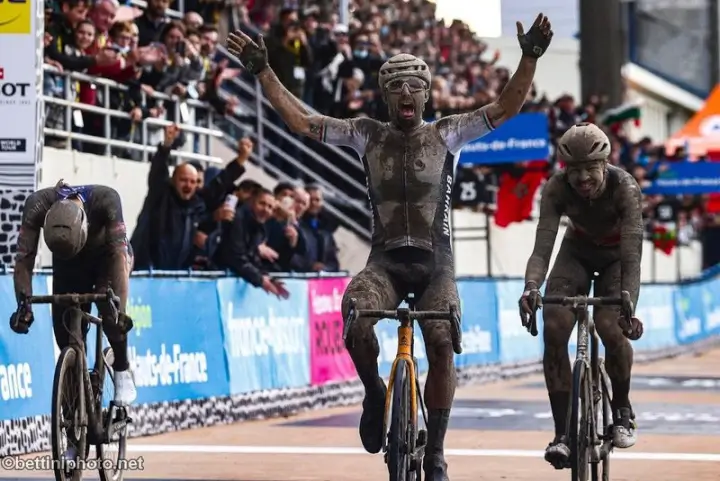
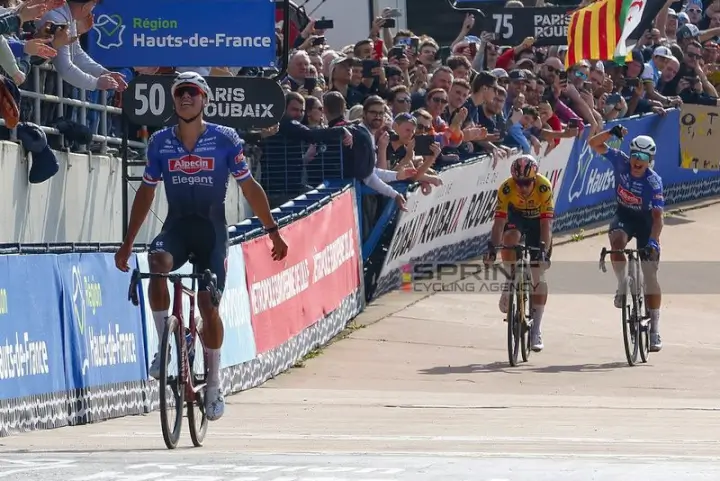
So, we were going to have a sprint in the Velodrom between three riders that were riding this race for the first time. Vermeersch, who had been in the break all day, launched his sprint first, but Colbrelli was able just pass him before the line to get the biggest win of his career. Van der Poel had to go the long way around, hence why he finished 3rd, even though he was the favorite in a small group sprint.
It was a special edition, which had a lots of unexpected events, but there was one conclusion everybody agreed on: Van der Poel would eventually win this race in the future, the question was just when. Could he do it in 2022? Well, not quite.
He was coming into the race with great momentum, as he had won his first Tour of Flanders the week before. However, he couldn’t really capitalize on this great momentum. During the race it was clear that he wasn’t on the level necessary to fight for the win. But this opened up a huge opportunity for the others to get a career defying win. And that is exactly what his fellow countryman, Dylan van Baarle did.
There had been already a lot of chaos before the riders hit the first cobbled sectors, as the peloton split into two pieces due to the crosswinds. In the first group we had riders like Mohoric, Mike Teunissen and the entire Ineos team, including Van Baarle. It took quite a big effort for the riders in the second group to catch back up, meanwhile the riders in the first group could conserve their energy for the decisive part of the race.
As I’ve already said, Van der Poel wasn’t himself on that particular day, but the other pre-race favorite, Wout van Aert was firing on all cylinders. Luckily for the others, the Belgian, just like the year before, suffered a couple of punctures. Tom Devriendt, Yves Lampaert, Mohoric and Van Baarle used this opportunity to get ahead of the Belgian. On the last 5 star sector the Dutchman was able to distance his rivals and get his and Ineos’ maiden Paris-Roubaix.
Just like the year before, it was also a memorable edition with a lot of turn-arounds. But all the cycling fans had one thing on their mind: Could we finally get the rivalry we had all been waiting for: Van Aert vs Van der Poel? Well, in 2023 we just go that.
It took a very long time for the breakaway to form, due to Visma’s aggressive approach. Their plan was clear: isolate Van der Poel as early as possible and use their numerical advantage later in the race. Everything seemed to be going well, up until the first 5 star sector of the day, the infamous Trouée d’Arenberg, after which Christophe Laporte punctured, leaving Visma with only Van Aert in the small group of favorites.
What made this even more frustrating for the Dutch team is that Alpecin had two riders (Philipsen, Gianni Vermeersch) left in the group next to Van der Poel. They were now the ones in the driving seat. In the next 70 kilometers, everyone not named Van der Poel tried to attack, unsuccessfully. Everything was going to be decided on the last 5 star sector, Carrefour de l’Arbre. Philipsen was the one leading everybody into the sector with MVDP on his wheel, ready to make his move. But unexpectedly, it was the 2015 winner, John Degenkolb, who attacked first.
However, this was where the most controversial thing happened in the race. As the German was overtaking the two Alpecin riders, he got pushed off the road by the two of them, resulting in an unfortunate crash for Degenkolb, who’s been riding out of his mind up until that point.
Did the Alpecin riders do it on purpose? I highly doubt it, but even watching back the replay today, it looks very ugly. Following the crash, Wout van Aert immediately attacked and was able to distance everybody. But, as we all know from the previous editions, he can’t have a Roubaix without a puncture, which unfortunately for the Belgian, came at the worst moment possible.
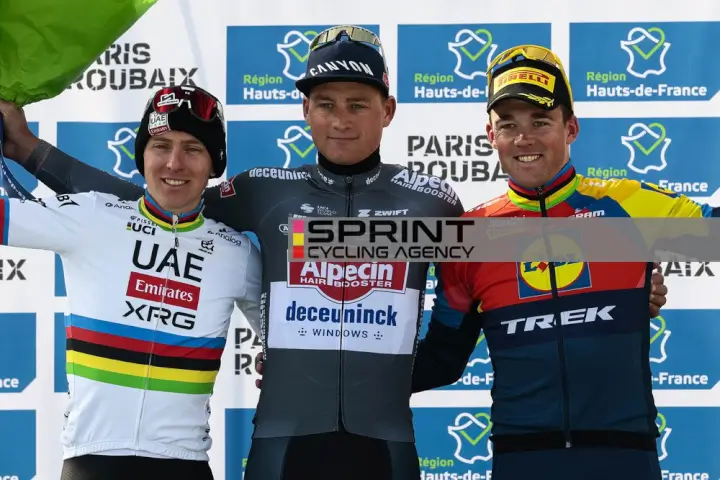
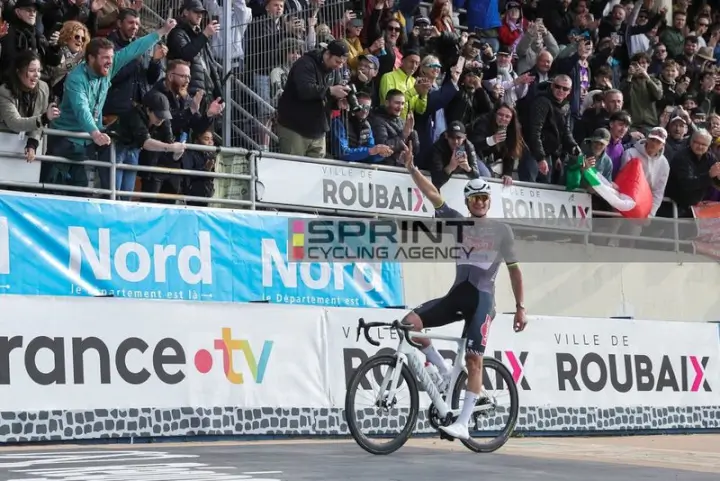
This mechanical allowed Van der Poel to come back and ride away from the him, pretty much winning the race while doing so. Even Mathieu’s teammate, Philipsen caught Van Aert too, and was able to outsprint him for 2nd place, making it a historic 1-2 finish for Alpecin, as the last team to achieve the same was Quick-Step in 2005 with Tom Boonen and George Hincapie.
So, the inevitable finally happened, after years of suffering Van der Poel finally got his first Roubaix title. However, the public had doubts whether he had actually deserved it. One thing is for sure, Degenkolb’s crash and Van Aert’s puncture made the Dutchman’s win look a lot less impressive. As a consequence, in 2024 both Van der Poel and Alpecin were fired up and ready to prove that their dominance in the previous year wasn’t just a fluke.
As everybody expected, they took control right from the beginning, making every sector as hard as possible before the Arenberg, where Van der Poel made his first attack, which reduced to group of favorites to a very limited number of riders. His main rival from the previous year, Wout van Aert, couldn’t even start the race due to a nasty crash he had suffered 2 weeks before at Dwars door Vlandeeren. So without the Belgian in the peloton, and Van der Poel being in the shape of his life after winning the Tour of Flanders in dominant fashion a week before, everybody expected the Dutchman to win comfortably.
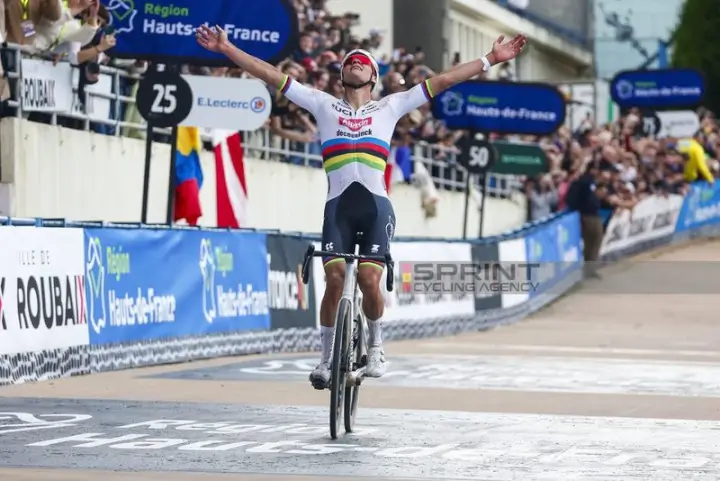
However, what he did was something that even his biggest believers hadn’t expected. He made a huge acceleration with 60km to go, distancing all of his rivals in the process. And from there on nobody could catch him. In the end, he won by 3 minutes, which was the biggest winning margin since 2002, when Johan Museeuw won by 3’04”. His 60km long solo was also the 2nd longest in the race’s entire history, only behind Francesco Moser’s stunning effort from 1980. He also became the first Dutch and only the 7th rider in history to win the Tour of Flanders and the Roubaix in the same year.
It might not have been the best edition in terms of excitement, but Mathieu’s record breaking performance made it a unforgettable one. So, entering 2025, the question was whether anybody could challenge the Dutchman in his pursuit of a 3rd consecutive title, which would equal the all-time record held by Francesco Moser and Octave Lapize. And luckily for us fans, there was one rider who decided to take the fight to Van der Poel.
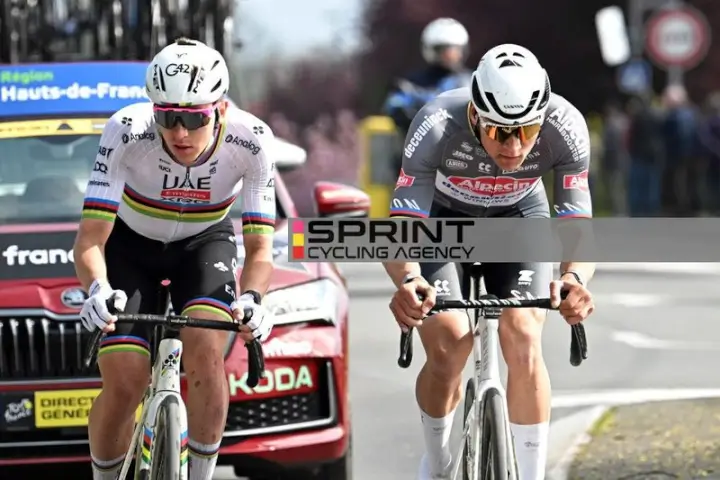
Of course, it was none other than Tadej Pogacar, who made his debut at the race last year. With the Slovenian at the startline, we knew that the race would be a lot more action-packed with attacks flying all over the place, and that’s exactly what happened. The two started attacking each other with well over a 100km to go, which they continued on the Arenberg. As a consequence, after the Arenberg we only had 5 riders remaining in the first group: the two favorites, Bissegger, Philipsen and former world champion Mads Pedersen.
However, it didn’t stay like that for long, as Bissegger got dropped shortly after and Mads Pedersen also suffered a puncture ruling him out of contention for the win. Philipsen also got dropped after Pogacar’s attack on the second 5 star sector, Mons-en-Pévéle, leaving only the two pre-race favorites in the fight for the win.
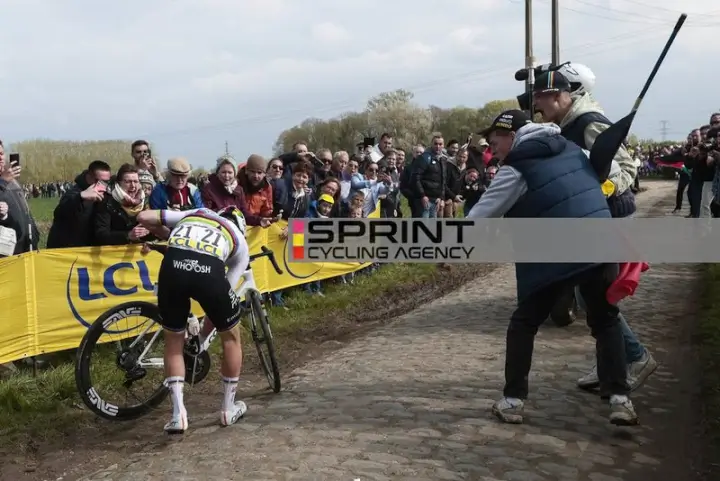
But, as we know from the past editions, previous race experience matters a lot more at Roubaix than at any other races. Due to his lack of experience riding on the cobbles of the North of France in racing conditions, the Slovenian made a slight error in one of the corners, which made him crash with 38km to go.
And that was all MVDP needed. From there on it was a true 1vs1 for the remainder of the race. Pogacar even had to change his bike due to the crash, which pretty much decided the race. Even a puncture on the penultimate sector couldn’t stop the Dutchman, since he had already been over a minute ahead of the Slovenian by that point. So, in the end, just like in previous years, it was Mathieu Van der Poel who came out as victorious.
However, Tadej’s performance on his debut didn’t go unnoticed. What he did was truly remarkable, considering his profile as rider. And with the talent he possesses, he might be the rider who defeats Van der Poel in the coming years. But could he already do that this year? And who are the others, who could disrupt the two’s rivalry and cause a surprise. Before we take a look at them, let’s analyze the route and its secrets in more details!
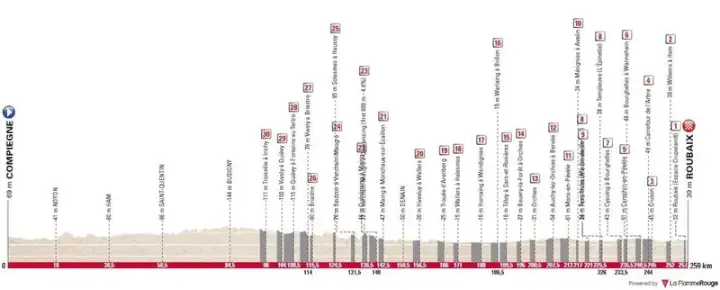
The 2026 parkour is as demanding as it could possibly be. In total there are 30 cobbled sectors, covering 54.8km. The first one (sector #30) comes after 95.8km, which is mostly flat, however that doesn’t mean that the start of the race straightforward. Paris-Roubaix is the kind of race, where the early breakaway can make it deep into the final of the race, hence why the breakaway formation has taken a lot of time recently. Riders like Jonas Rutsch, Tom Devriendt, Laurent Pichon, Florian Vermeersch and Silvan Dillier all achieved career best results by making the early break.
Next to the importance of the breakaway, the wind could also play a crucial role in this part of the race. In 2022, Ineos blew the race apart in the crosswinds, putting their leader Dylan van Baarle into an advantageous situation relative to the other favorites, which ended up helping him in conserving energy for the last sectors. That’s where he was able to drop all his rivals and get the biggest win of his career. But let’s get back to the sectors, shall we?
The sequence of the first sectors has been modified to return to a layout already tested in 2024, one that had blown the race apart, as explained by Thierry Gouvenou: “By veering slightly east towards the village of Briastre, we arrive at a situation where the first four sectors follow one another in quick succession, with almost no asphalt in between, creating an unmatched density of cobbles. Two years ago, Alpecin-Deceuninck had already begun to scatter the peloton at this stage. And at the end of this sequence, we are adding sector #26, even more rarely used and featuring an 800-metre climb.”
So with the return of the 2024 version and with Tadej Pogacar at the startline, I’m sure that we will already see some action in this phase of the race. After the first 5 sectors, the teams and the riders have about 10km to recover and get organized again before the next sequence of sectors start. Sectors 25 through 21 are not necessarily the hardest, as none of them exceed a three star rating, however they are still important for a couple of reasons.
Firstly, even though they are not that hard, positioning still matters a lot before each of them, as I’m sure that none of the favorites want to get caught behind a crash because they weren’t in position beforehand. Speaking of crashes, they are quite common in his part of the race. The peloton is usually still relatively big at this point, which can cause some unnecessary nervousness in the bunch that could lead to crashes. But realistically, the real racing should begin when the riders reach sector 20, from Haveluy to Wallers, with 104.6km remaining.
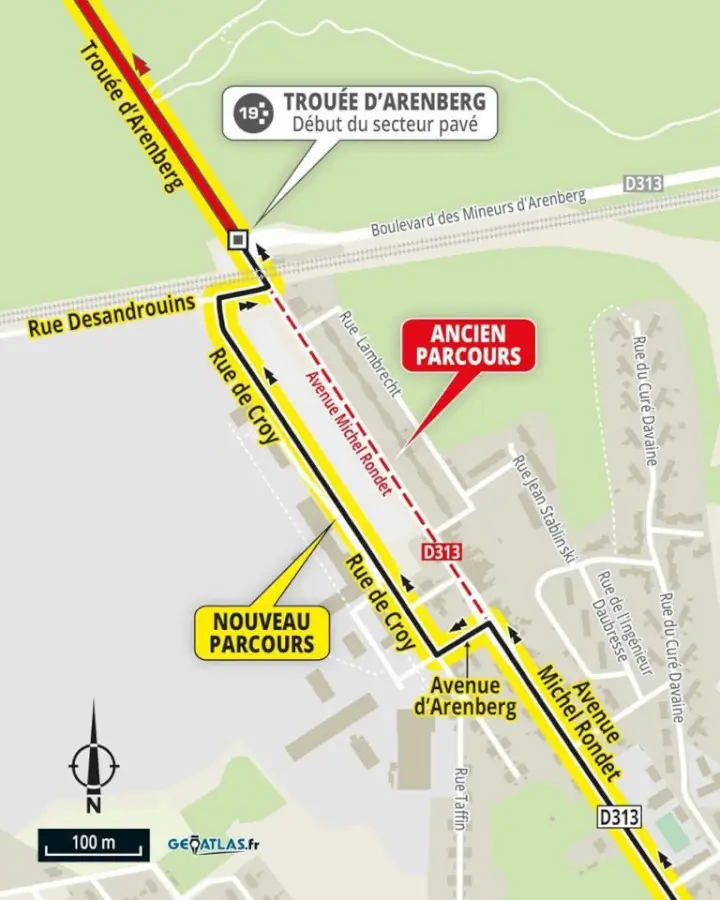
It is a 4 star sector, but more importantly, it comes just before the infamous Trouée d'Arenberg. It is the first of the three five star sectors, and this where we should see the first attacks from the favorites. The fight for positioning has been so dangerous in the previous years, that in 2024 the organizers introduced a chicane to reduce the speed at which the riders hit the cobbles. However, in 2025 that chicane got replaced with a left-right-right-left combination of turns, which you can see in the picture below.
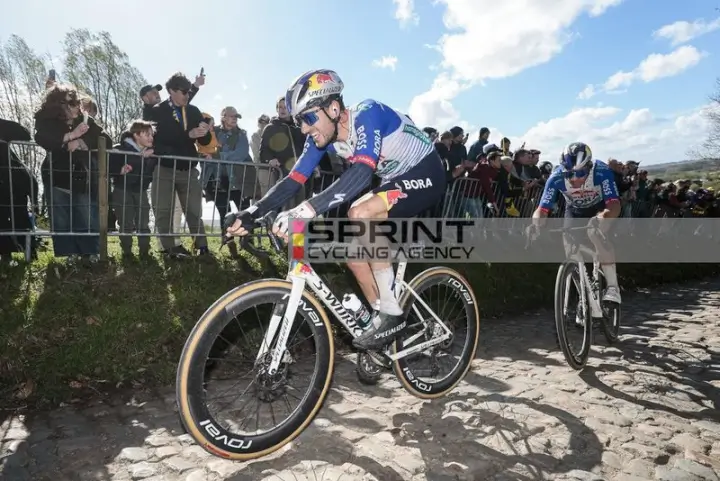
The Arenberg serves as the symbol of the race. With its 2.3km in length, it is a sector where you can’t win the race, as there is still 95km left after it, however with an unlucky puncture or a crash you can definitely lose it. You’d think that after such a hard sector, the riders would have some time to recover and collect their thoughts before the next difficulties, but in that case you’d be wrong.
In about the next 20km, the riders have to navigate through 4 very demanding sectors (sectors 18-15). This is the last part of the race where some anticipation moves could still succeed, because from here on, the favorites will start to attack each other continuously. The next 3 sectors (sectors 14-12), called as the “Orchies”, serve as the perfect launching point to drop some of your competitors before the 2nd 5 star sector of the day, Mons-en-Pévèle.
It is a very long sector, 3km to be exact, and it also has a couple of ninety degree corners, where bike handling becomes very important. After this sector, the shouldn’t be more than 5 riders in the first group. When they come out of the sector, there will be only 48.6km remaining, so from this point onwards every cobbled sector could be the decisive one.
The next 5 sectors (sectors 10-6) are far from the hardest, but with more than 200km in their legs, the riders will definitely have a hard time getting through them. Sector 9, Pont-Thibaut to Ennevelin, is also the spot where Tadej Pogacar crashed last year, which also proves that these sectors should not be underestimated. But what should definitely not be underestimated are the toughness of the upcoming two sectors.
The Camphin-en-Pévèle - Carrefour de l’Arbre duo is the Roubaix’s Kwaremont-Paterberg. What makes this combination so hard are the following things: the first one is a 4 star, while the latter one is a 5 star and they follow each other with almost no asphalt in between, making it the hardest duo of sectors of the race. On paper, this is the last part where differences can made, as the last 3 sectors don’t exceed two stars in difficulty.
Therefore from here on the race becomes very tactical all the way into the Roubaix Velodrome. However, the last time the race was decided in a sprint was back in 2021, so we haven’t really seen a tactical finale recently. But could this be the year we see a sprint again? Are there enough riders on the same level for that to happen. Well, let’s look at each of the favorites one-by-one, and how could they end up as the eventual winners in Roubaix.
Mathieu van der Poel - The odds on favorite is the rider who’s been unbeatable recently. Van der Poel is looking to win Roubaix for the 4th consecutive time, which is a feat that has never been achieved by anybody before. In case of a win, he would also catch Tom Boonen and Roger De Vlaeminck, both of whom who have won this race 4 times. So as you can see, there’s quite a lot at stake next to the win on Sunday. But how can he achieve all of this and write his name into the history books?
Well, as a 3-time winner of this race, he definitely has the skillset to defeat the others. The way he rides on the cobbles and handles his bike in the corners is something nobody else can do in the bunch. He is also probably the best rider at positioning himself before the sectors, which takes a lot of pressure off his teammates, which lets them focus on more important things, such as making the race as hard as possible or controlling attacks. But who will be by the Dutchman’s side exactly?
We have to start with former podium finisher, Jasper Philipsen. He won’t necessarily serve as an all-out domestique, however his presence can make other teams’ life a lot more complicated. Having him at the startline also makes Mathieu’s life a lot easier, as he won’t have to cooperate with the others that much if Philipsen is in the chasing group behind him.
We saw this strategy play out perfectly at this year’s In Flanders Fields, where MVDP was in the front group with Van Aert, with Philipsen sitting in the bunch, conserving his energy for the final sprint. Van der Poel could also rest a bit, since he had Philipsen behind, who was the favorite to win the race if it were to end in a sprint. In the end the two got caught, and just as everyone could’ve predicted, Philipsen won the sprint.
Roubaix is a different race though, as it’s very unlikely that Philipsen can stay close enough to the favorites to still play an important role in the final. But still, Alpecin should use him as a second leader, not as a dedicated domestique, because they have enough of them in the first place.
Silvan Dillier, who by the way finished 2nd in 2018, Edward Planckaert, Florian Sénéchal and Oscar Riesebeek are perfectly built for this race. Tibor del Grosso is another intriguing name in the team. Because of his CX past, people often call him the “next MVDP”, and honestly, he could be the rider who replaces him as the team’s classics leader in the long run. He has never ridden Roubaix before, but I’m sure that he won’t have any problems riding on the cobbles, as he is one of the best riders in the bunch when it comes to bike handling.
So with such a strong team by his side, what should be his and Alpecin’s strategy to win the race. Well, most importantly he is in great shape. Yes, I know he lost the Tour of Flanders last week to Pogacar, but Roubaix is a different kind of race, where being lighter is actually a disadvantage. Therefore, Alpecin’s tactics should be quite simple. They are not the team that has to make the race hard, that is UAE’s responsibility.
However, there are two things they have to watch out for. Firstly, they shouldn’t let any UAE, Visma and Lidl-Trek rider join the early breakaway. That would just make their life a lot more complicated. Secondly, they need to make sure that Van der Poel isn’t not isolated after the Arenberg, which they can do that by sending a rider themselves into the breakaway. After that they have one job only: deliver MVDP to the last 40-50km safely, and then let him do the rest. On paper, only a few riders can follow his attacks, and in a group sprint he would be one of the favorites to win.
Another thing that will probably also help him is Pogacar’s aggressive style of racing. The Slovenian will have to attack constantly due to his lack of top-end speed, which could benefit MVDP, because he just has to follow Tadej and the beat him in the sprint. It sounds easy, right? Well, I’m sure that getting the win will be harder than I’ve described it, but if everything goes according to plan, he will be the man to beat on Sunday. But who is the likeliest to beat the Dutchman?
Tadej Pogacar - The rider who is most likely to end the Dutchman’s reign is of course UAE’s Tadej Pogacar. Just like Van der Poel, with a win he would set multiple records. Firstly, he would become the first rider to win 5 consecutive monuments in a row and he would also be the first who would be the defending champion of all the Monuments simultaneously. He would also become the first rider to win Milan-Sanremo, the Tour of Flanders and Paris-Roubaix in the same season.
The last defending Tour champion to win Paris-Roubaix was the legendary Eddy Merckx back in 1973, and he was only the 3rd man in history to achieve that feat after Fausto Coppi and Louison Bobet. As you can see, it is quite a rare thing to see the TDF winner also conquer the cobbled roads of the North of France, but if someone can do it, it’s Tadej. However, with a win he also has the chance to join Eddy Merckx, Roger De Vlaeminck and Rik Van Looy as the only riders to win all five Monuments. And finally, with a win his chance at winning all five Monuments in the same season would also increase dramatically.
But for all of these records, he has to win, so let’s look at how he can do it. Last year was his first participation, and he was in contention for the win up until his famous crash with 38km remaining. Even though he finished second, with the way he raced against Van der Poel it became very clear: if everything goes according to plan, then he has shot at beating him.
But what should his plan look like? Well, it all starts in the breakaway formation phase. Unlike at the Tour of Flanders, the favorite here is Van der Poel, which means that the responsibility of controlling the race is on the shoulders of Alpecin. Therefore UAE, with all the other teams should try to put pressure on the Belgians by sending riders into early moves and trying to create chaos in the process.
However, they should change their approach when they reach the first cobbled sectors of race. From there on they need to make the race as attritional as possible, because in the long run that helps Pogacar over Mathieu. Molano, Bjerg and Rui Oliviera are perfectly suited for that role. Then, when they hit the Arenberg they should just blow the race apart, just like Alpecin did back in 2024.
In Florian Vermeersch and Nils Politt the Slovenian has two former podium finishers by his side, while Antonio Morgado is a rider with a lot of untapped potential regarding the classics. Ideally, after the Arenberg there will be more UAE riders at the front than Alpecin. That would make Tadej’s job significantly easier. In a scenario like that, they could either continue to make the race even harder or roll attacks on Van der Poel, which would put the Dutchman into a very uncomfortable situation.
Either way it goes, it will likely end up being a 1vs1 between Tadej and Mathieu. Unfortunately for Tadej, his can’t rely on his sprint as much as Van der Poel, which means that he has to find a way to drop him before the finish in the velodrom. Not many riders have been able to do that, but if someone can it’s Tadej. But is there anybody else in the bunch that could disrupt the two’s rivalry? There might just be a couple of riders.
Wout van Aert - One of those riders is undoubtedly Visma’s leader, Wout van Aert. Next to Milan-Sanremo, which he has already won, this is the Monument that suits him the best. And if we look at his history at this race, then we see that he’s been very close to achieving greatness on multiple occasions. Just like in Van der Poel’s case, in his first couple of participations things haven’t quite gone his way.
However, from his 3rd participation he’s been constantly in the running for the victory. In 2021, he finished 7th, which was still a great result considering that he hit the ground a couple of times on that day. His streak of bad luck continued in the following year too. He was by far the strongest, however two badly timed punctures destroyed his chances at winning the race, but he still ended up finishing 2nd.
We all thought that it couldn’t get worse for him, but it did. The next year he had a small gap on Van der Poel on the last 5 star sector, but then bad luck struck again. He had to change his bike due to a puncture, meanwhile his main rival happily road away from him to claim his first Roubaix. Maybe on another day, it would’ve been Wout who got his first title, but the cycling gods denied him that opportunity.
However, in the following year it got even worse for him. He couldn’t even start due to the nasty crash he had suffered 10 days before the race at Dwars door Vlaanderen. In 2025 he came back to the race, and he looked to be in great shape before the race. But that still wasn’t enough, as he couldn’t quite follow the favorites on the Arenberg, which meant that he had to play catch up for the remainder of the race. He ended up finishing in 4th, which considering the circumstances was actually a good result.
But we all know that Wout has only one goal, which is winning. So, could he do that this year. Just like last year, he is coming into this race in great form. A 3rd place at Sanremo, a 2nd place at Dwars door Vlaanderen, where he narrowly missed out on the victory, and a 4th place at last week’s Tour of Flanders are very encouraging results. However, in all those races he was clearly a step below Tadej and MVDP. But how can he bridge that gap?
Well, because there’s only one week between the Tour of Flanders and Roubaix, it is highly unlikely that he will be on their level strength vise. Fortunately for him, he has a very strong supporting cast around him. Christophe Laporte and Edoardo Affini are two very experienced domestiques, that could also probably achieve a great result if they rode for themselves. The same can be said about the team’s two young prospects in Matthew Brennan and Per Strand Hagenes.
The Norwegian is having a breakout year, while Brennan already showed last year that he is ready to compete with the best of the best. Will that be enough against the two aliens though. One thing they should definitely not do is help UAE and Alpecin control the race. In my opinion they should also race passively, because if it comes down to a sprint then either Wout, Laporte or Brennan can win. Tactically they will need to have a perfect race, and if that happens then a surprise might be on the cards too.
Mads Pedersen - Another rider who, if everything goes well for him, could be in contention for the win is former world champion, Mads Pedersen. But why do I say “if everything goes well”? Well, just like Van Aert, he has also had his fair share of bad luck at this race. He crashed heavily both in 2021 and 2022, resulting in a DNF on both occasions. In 2023, he could finally finish the race, which he did in a very respectable 4th place, only 4 seconds behind the podium placings.
As a consequence, he was entering the 2024 edition with hopes of winning the race. However, he was involved in the same crash as Wout at Dwars door Vlaanderen, so he had to wait another year to show what he was really capable of. And that was exactly what he did in the following year. He was coming into the race on a high note, as he had finished 2nd at the Ronde van Vlaanderen a week before the race, beating both Van der Poel and Van Aert in group sprint.
The race started well for him, he was able to follow the Dutchman and Pogacar through the Arenberg, which put him into a great situation for the rest of the race. But that was when he got unlucky, again. He suffered an unfortunate puncture on one of the cobbled sectors, that made him drop back to the 2nd group. From there on the best result he could get was 3rd, which he did.
Unfortunately for the Dane, this year hasn’t quite gone the way he would’ve hoped for. He broke both his collarbone and wrist on his first race day in early February, which set him back by a lot compared to his rivals. He made his comeback at Milan-Sanremo, where he immediately finished 4th, showing that he on a good day he can still take the fight to the best, even though his early season setback. He followed that up with a couple of Top10s in the next few cobbled races, before finishing 5th at the end of a very attritional Ronde van Vlaanderen.
So entering Roubaix, he is in a very complicated situation. He is clearly a level above of most of the riders, however he is nowhere near as strong as Mathieu or Tadej. As a consequence, he will have to rely a lot on his team if he wants to get a good result. Speaking of his team, it is a very strong unit.
Vacek and Kragh Andersen are two very reliable domestiques, meanwhile both Milan and Walscheid are on paper built for this exact race. Another name on their roster to watch closely is the Swedish Champion, Jakob Soderqvist. Just like Milan and Walscheid, he is also built like a beast. Another interesting fact about him is that he finished second at this exact race last year, although it was in the U23 category. But still, it shows that he is rider well suited to the demanding parkour of Roubaix.
Overall, Lidl-Trek are coming into this race with big expectations. They have a rider who even on a bad day can still podium this race in Mads Pedersen, meanwhile the others are also capable of getting a good result if they are allowed to ride for themselves. And that’s what exactly the German team should do. With Pedersen’s shape being a question mark, I would let the others ride their own race to see whether any of them are ready to fill the Dane’s shoes in the future.
What we’ve also seen in recent editions is that Pedersen likes to solve things by himself, often riding at the front even when he has a teammate next to him. It is a habit that can only be changed during the offseason, so you might as well let the others have their own race. I expect open racing from them, with a lots of attacks, which could pay off in Roubaix.
Filippo Ganna - The last individual who deserves a mention is the current world hour record holder, Filippo Ganna. On paper this is a race which should suit his skillset. He even won the U23 edition of this race back in 2016, so he should have some great results at Roubaix by now, right? Well, that’s not quite the case.
He took part in both 2018 and 2019, without a lot of success. Then he skipped the race for multiple years, putting a lot of emphasis on the time-trials, which in hindsight looks like a great decision, as he won pretty much everything in that discipline. In 2023, he made his long-awaited come back to the North of France, and he finished 6th. What was even more impressive, is that he was fighting against the likes of Van Aert, Van der Poel and Pedersen for a very long time.
Therefore a lot of us thought that with a little bit more experience in the future he could even compete for the win. But in 2024 he skipped the race again, due to the Olympics. So in 2025 he came back again, but he was still clearly lacking a lot of experience. He was in a bad position at the start of the Arenberg, so he couldn’t even attempt to follow the attacks from Mathieu and Tadej. In the end he finished 13th, which was a huge disappointment for both him and his team, especially after stating before the season that now that the Olympics had finished he would put more focus on the classics.
So, he started the 2026 season with a point to prove. He wanted to show both his team and the public that he is more than just a time-trial merchant. However, in the first couple of races his performances were very underwhelming. A 33rd place at Sanremo followed by a 34th place at In Flanders Fields are definitely not the results he had hoped for beforehand.
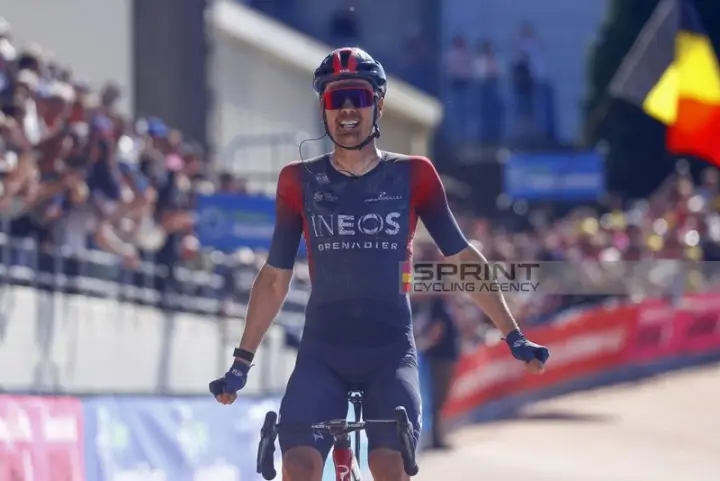
But he found his rhythm just in time at Dwars door Vlaanderen, where he made a very daring move in the last few kilometers in the hopes of catching Wout van Aert, who was leading the race alone at that moment. And his bold decision paid off, as he just had caught the Belgian with 200m to go and raised his arms in the air in disbelief. Surprisingly, that was his first none time-trial win amongst the pros, and it came at the perfect time, as many experts have started to write him off, saying that he will always just be a TT rider.
After the win, him and Ineos decided that the best for him would be to skip the Tour of Flanders and fully focus on Paris-Roubaix. So, he is coming into this race with momentum on his side, but with also a lot of pressure on his shoulders. It will be interesting to see, whether only focusing on Roubaix will actually help him. One thing is for sure, he is a rider who shouldn’t be underestimated, because if he is alone at the front, then not even Pogacar or Van der Poel will be able to catch him.
Outsiders
When it comes to the outsiders, there are plenty of riders that have a chance at getting a great result on Sunday. Next to the teams and the favorites I’ve already mentioned, there are two other teams that could have a big influence on the race due to the depth of their team. One of the two is Soudal Quick-Step.
They used to dominate the classics and with Remco’s departure they are looking to become relevant again at these races. And with the team they have, anything is possible. They are going to use a two leader strategy involving their two new recruits, Dylan van Baarle and Jasper Stuyven. Van Baarle, who as you probably know by now, won this race in 2022. His shape doesn’t seem to be on that level, however if he’s able to get into the early breakaway or anticipate the attacks of the favorites, then he might have a great shot at a good result.
Their other leader, Jasper Stuyven, is also a great card to play. As oppose to his Dutch teammate, he’s in very good form, which he showed by finishing 6th at last week’s Tour of Flanders. Just like Van Baarle, he should be looking to get ahead of the favorites by anticipating, and then hope that he can hang onto them as deep into the race as possible.
Yves Lampaert will also be there to help the two out, but I’m sure that he will be allowed to ride for himself too. The parkour suits the Belgian very well, I think we all remember his unfortunate crash from the 2022 edition. Without that he probably would’ve finished on the podium. One thing is for sure, if any of three is involved in the final showdown, then don’t underestimate them.
The other team that doesn’t have a clear leader, but instead has a lot of cards to play is Red Bull-Bora. The quintet of the Van Dijke brothers, Jordi Meeus, Laurance Pithie and Gianni Vermeersch might just be the strongest one in the entire race. We know that at Roubaix you can get a great result in two ways: either you have a super-leader, such as a Ganna or a Van der Poel, or you use your numerical advantage. The latter one applies to the German team.
As a unit, they’ve been having a very good classics season so far, with a 2nd place at Omloop, a 5th place at Dwars door Vlaanderen and a 3rd place at last week’s Tour of Flanders by Remco Evenepoel. However, in the absence of their Belgian superstar, the others will have to make a step up. A podium is definitely a realistic goal for them, but as such a wealthy organization, I’m sure that they are looking to be involved in the fight for the win. But that may be a year or two early for them.
One of the surprise teams of the year so far has been Decathlon, so it’s not surprise anymore to see them lineup up with multiple strong riders. Last year Stefan Bissegger was impressively able to follow the “Big Dogs” over the Arenberg, and although he got dropped later he still finished in a very respectable 7th place. Next to the Swiss rider, Daan Hoole is also a nice option to have. At almost 2 meters tall and as a heavier rider he’s perfectly built for a race like this. And we shouldn’t forget about the veteran Oliver Naesen either. He just finished 13th at the Ronde van Vlaanderen, which shows that on his best day he can still keep up with the new generation.
Speaking of veterans, John Degenkolb is another older rider who usually performs really well here. As a former winner, he knows the ins-and-outs of the race and he is also fast enough to be competitive in a group sprint. He’s also retiring at the end of the year, so I’m sure that he will be very motivated to achieve something memorable on Sunday. Meanwhile, his teammate, Pavel Bittner, is in a very different situation. He is still quite inexperienced, however with the form that he is in at the moment, I wouldn’t be surprised to see him in the fight for the Top10.
Another rider who’s been in great shape recently is Bahrain’s Alec Segaert. His classics campaign has been very impressive so far, topped by a win at the Grand Prix de Denain, which is a race that is considered by many as the “mini Paris-Roubaix”. His teammate, Matej Mohoric, is also coming into this race with great momentum, after finishing 8th at the Ronde van Vlaanderen.
Uno-X have also a couple of very good cards to play in Jonas Abrahamsen and Soren Warenskjold. The latter one especially seems to be a very intriguing option for the Norwegian outfit. With his huge size (93kg), Soren is built perfectly for a race like Roubaix.
Another rider who is also built for this race is Ineos’ Joshua Tarling. It is still up in the air, whether the Brit will be allowed to ride for himself or help Ganna, but he is a strong rider, who will definitely have an influence on the race in some shape of form. Other riders such as former Tour of Flanders winner Kasper Asgreen, FDJ’s French trio of Gruel, Huens and Tronchon, Astana’s experienced duo of Ballerini and Teunissen, Kubis, Fred Wright, Turgis and Lewis Askey all have a realistic chance at finishing in the Top10.
The last couple of riders I wanted to mention are Girmay and De Lie. I highly doubt whether they can survive the race, but if they do, then they should be the favorites in a group sprint. Lotto also have a young Frenchman on their team in Matys Grisel. This is his first year amongst the pros, but he has already showed multiple times that he belongs into the bunch. And at just 20 years old, his future looks very bright. If he is able to get into the breakaway, then he might just have a breakout race. Therefore, he is my dark horse for Sunday.