Build stronger cycling legs with simple strength exercises that boost power, endurance, and stability on every ride.
Strong legs are the engine behind every good ride. More power in your legs means better endurance, stronger climbs, and less fatigue during long rides.
One of the most effective ways to develop stronger cycling legs is through strength training. While cycling itself builds endurance, targeted exercises help develop the muscles that generate power on the pedals.
Single leg exercises are especially useful for cyclists. When you ride a bike, each leg works independently, so training them separately improves balance, coordination, and overall efficiency. Adding a few focused strength exercises to your routine can significantly improve how your legs perform on the bike.
Below are several exercises that target the key muscles used in cycling, including the quadriceps, hamstrings, glutes, and calves.
Forward Lunges
Lunges are one of the simplest and most effective exercises for building leg strength. They require no equipment and can be done almost anywhere, which makes them easy to incorporate into daily routines.
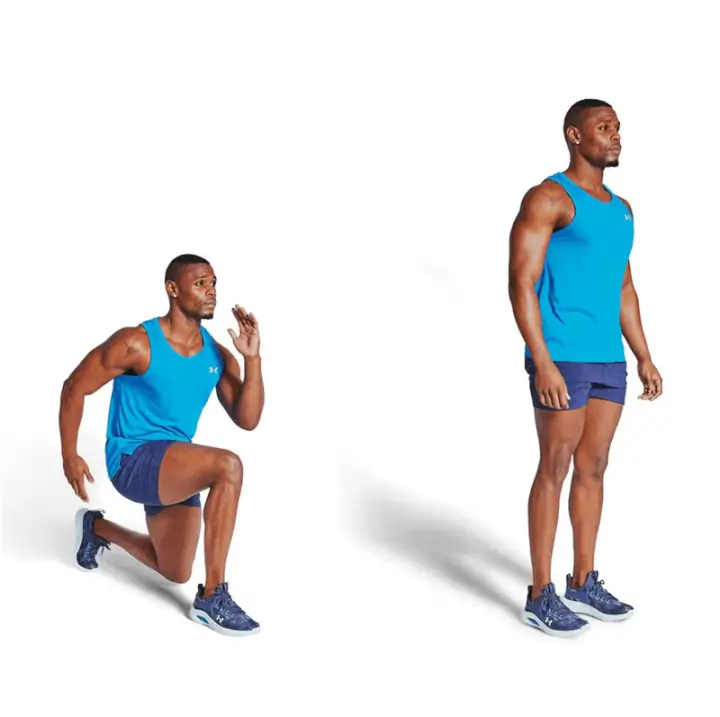
To perform a forward lunge, step forward with one leg and lower your body until both knees form roughly a 90 degree angle. Your front knee should stay above your ankle, and your weight should remain on the heel of the front foot. Push through that heel to return to the starting position and repeat on the other leg.
Beginners can start with bodyweight lunges. As strength improves, adding dumbbells can increase resistance and make the exercise more challenging. A good starting point is 12 repetitions per leg, gradually increasing over time.
This exercise targets the quadriceps, hamstrings, glutes, and calves.
Squats
Squats are another foundational movement that strengthens the entire lower body. They are widely used because they train several major muscle groups at once.
Stand with your feet about hip width apart and keep your core engaged. Lower your body by bending the knees and pushing your hips back, as if you are sitting down in a chair. Continue lowering until your thighs are roughly parallel to the floor. From there, press through your heels to stand back up.
Bodyweight squats are a great starting point. Over time, you can increase difficulty by holding weights. Begin with 12 repetitions and increase as your strength improves.
Squats work the quadriceps, hamstrings, glutes, calves, and core muscles.
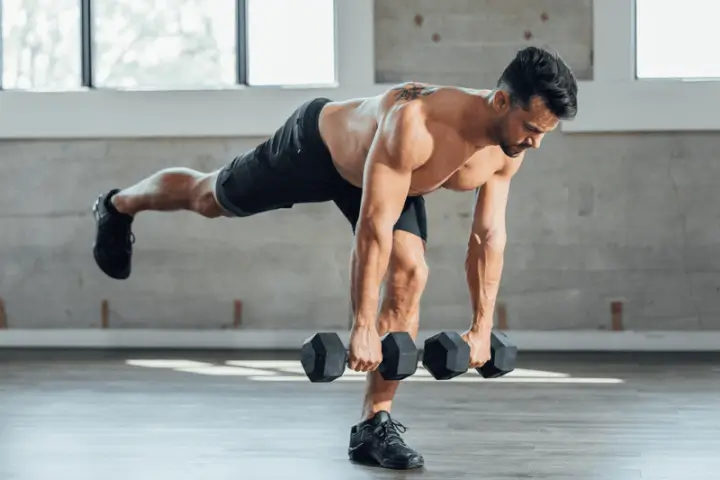
Single Leg Deadlifts
Single leg deadlifts are excellent for improving balance and strengthening the posterior chain, which includes the hamstrings and glutes. These muscles play a major role in cycling power.
Hold a dumbbell or kettlebell in one hand and stand on the same leg. Keep a slight bend in the knee. Slowly hinge forward at the hips while extending the opposite leg behind you for balance. Lower the weight toward the floor while keeping your back straight.
Continue lowering until your torso is close to parallel with the ground, then return to the starting position in a controlled movement. Perform about six repetitions before switching sides.
This exercise strengthens the hips, hamstrings, glutes, and core while also improving stability.
Resistance Band Side Steps
Resistance band side steps activate muscles that are often neglected in traditional strength exercises. These muscles help stabilize the hips and improve control during pedaling.
Place a resistance band around your legs and maintain a slight squat position. Step sideways while keeping tension in the band, taking controlled steps in one direction before returning to the starting point.
Start with about 10 steps to one side and repeat several times before switching directions. Over time you can increase the number of repetitions or the resistance of the band.
This exercise targets the hip flexors as well as the inner and outer thigh muscles that support hip stability.
Calf Raises
Strong calves help stabilize your ankles and transfer power through the pedal stroke. Calf raises are simple and can be done almost anywhere.
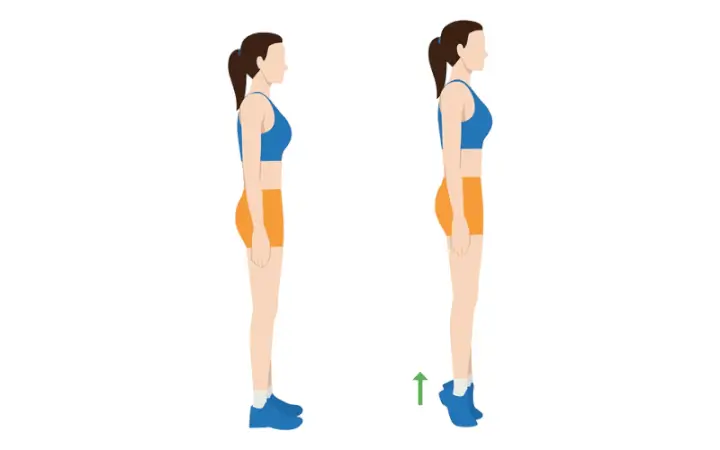
Stand on a step or raised surface with the balls of your feet on the edge and your heels hanging off. Slowly raise your heels as high as possible, lifting your body onto your toes. Lower your heels back down below the level of the step, then repeat.
For an additional challenge, perform the movement on one leg. Beginners can start with about five repetitions per leg and gradually increase.
Calf raises strengthen the calves and ankle joints, both of which are important for efficient cycling.
Leg Press
If you have access to gym equipment, the leg press is a useful machine exercise for building overall leg strength.
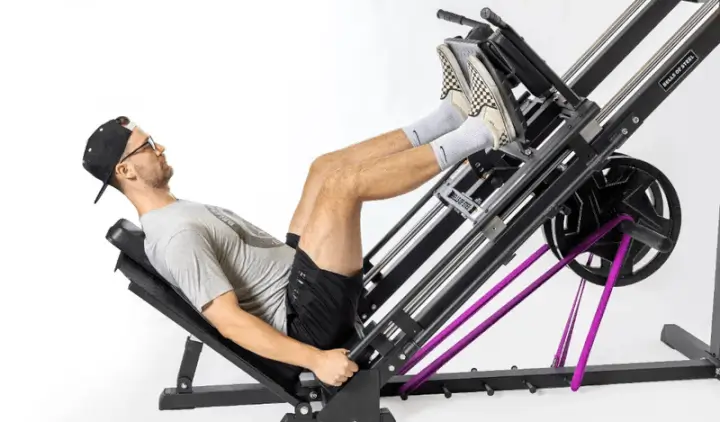
Sit in the machine with your feet placed hip width apart on the platform. Push the platform away until your legs are nearly straight, then slowly bend your knees to lower the weight until your legs form roughly a 90 degree angle. Press the platform away again to complete the repetition.
Make sure not to straighten your legs at the high point, as when you take on more weight in the future it could lead to injury.
Start with about 12 repetitions per set and increase gradually as you build strength.
The leg press primarily targets the quadriceps, hamstrings, glutes, and calves.
Leg Extensions
Leg extensions are useful for isolating the quadriceps, which are heavily involved in cycling. This exercise is typically performed on a dedicated machine.
Sit on the machine with your ankles positioned under the padded bar. Extend your legs forward to lift the weight, then slowly lower them back to the starting position.
Beginners can start with a weight that is roughly 20% of their body weight and adjust as needed. A common starting point is three sets of 10 repetitions.
This movement focuses primarily on strengthening the quadriceps.
Building Stronger Cycling Legs
Adding strength training to your routine can significantly improve your cycling performance. Exercises that target the quads, hamstrings, glutes, and calves help generate more power, improve stability, and reduce the risk of injury.
Even a few sessions per week can make a difference. Over time, stronger legs will translate into more efficient pedaling, better endurance, and a more enjoyable ride.
if(window.strchfSettings === undefined) window.strchfSettings = {}; window.strchfSettings.stats = {url: "https://thecyclingweek.storychief.io/how-to-strengthen-your-legs-for-cycling?id=713512556&type=26",title: "How to Strengthen Your Legs for Cycling",siteId: "23845",id: ""}; (function(d, s, id) { var js, sjs = d.getElementsByTagName(s)[0]; if (d.getElementById(id)) {window.strchf.update(); return;} js = d.createElement(s); js.id = id; js.src = "https://d37oebn0w9ir6a.cloudfront.net/scripts/v0/strchf.js"; js.async = true; sjs.parentNode.insertBefore(js, sjs); }(document, 'script', 'storychief-jssdk'))


.webp)