Discover the most frequent errors that hold cyclists back from reaching their full potential.
Cycling is a sport of beautiful complexity. It blends biomechanics, physics, physiology, and mechanical engineering into a singular pursuit of speed and endurance.
However, this complexity often leads riders into a series of habits that sabotage their performance.
After years of analyzing ride data, fitting bikes, and observing mechanics in the workshop, I have identified the most persistent errors that plague riders from the novice level all the way to the amateur racing category.
We often assume that getting faster requires a lighter bike or carbon wheels.
The reality is that eliminating unforced errors yields the highest return on investment.
If you correct these ten common mistakes, you will unlock free speed, reduce your risk of injury, and significantly improve your enjoyment on the bike.
1. The "Grey Zone" Training Trap
The single most detrimental mistake in amateur training is riding at a moderately hard intensity all the time.
Coaches and physiologists call this the "Grey Zone" or Zone 3. It is a pace that feels like a workout because you are sweating and breathing hard, but it is not hard enough to trigger significant physiological adaptations like increasing your VO2 max.
Conversely, it is too hard to allow your body to recover and rebuild muscle fibers.
When you ride in this middle ground every day, you accumulate chronic fatigue without sharpening your top-end fitness.
A polarized training approach is scientifically superior. This means your easy rides should be genuinely easy (Zone 1 and 2), allowing for conversation and active recovery.
Your hard days should be brutally hard (Zone 4 and 5), pushing your threshold and anaerobic capacity.
By polarizing your effort, you ensure that you are fresh enough to attack the intervals that actually make you faster.
If you finish every ride feeling "kind of" tired, you are likely stuck in the Grey Zone.
2. Neglecting the Drivetrain Efficiency
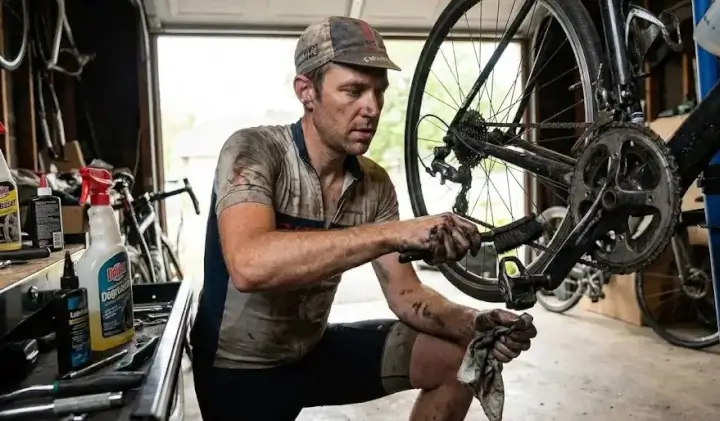
A dirty chain is a silent power thief. Mechanical friction accounts for a surprising amount of wattage loss.
When your chain is covered in a thick black paste of old oil and road grit, it acts like a grinding paste on your cassette and chainrings.
This not only destroys expensive components but also forces you to work harder for the same speed.
Chain hygiene is non-negotiable. You do not need to dissolve your chain in solvents after every ride, but you must wipe it down and re-lubricate it regularly.
A common error is applying lube over dirty lube.
This just traps the grit deeper inside the rollers.
The correct protocol is to degrease the chain, wipe it until the rag comes away relatively clean, and then apply a high-quality lubricant to the inside rollers of the chain.
Let it sit for a few minutes to penetrate, and then wipe off all excess lubricant. The outside of the chain should feel dry to the touch.
A wet chain is a magnet for dirt, which restarts the cycle of wear immediately.
3. Incorrect Saddle Height and Setback
Most riders set their saddle height based on feel rather than biomechanics.
A saddle that is too low causes excessive knee flexion, which increases the compressive forces behind the kneecap (patellofemoral pain).
It also inhibits your glutes from firing effectively, robbing you of power. A saddle that is too high forces your hips to rock side-to-side to reach the bottom of the pedal stroke.
This instability causes lower back pain and saddle sores due to friction.
The setback (fore-aft position) is equally critical.
If your saddle is too far forward, you place excessive weight on your hands, leading to numb fingers and neck strain.
If it is too far back, you close off your hip angle, making it difficult to produce power when riding in an aerodynamic position.
A professional bike fit is the gold standard, but you can start by ensuring your knee has a slight bend (roughly 30 degrees) at the bottom of the stroke and that your weight is balanced between your saddle and handlebars, not dumped entirely onto your wrists.
4. Bonking: The Glycogen Depletion Disaster
"Bonking" is the cyclist's term for hypoglycemia, where your body completely depletes its glycogen stores. It is a miserable experience characterized by sudden weakness, dizziness, and an inability to turn the pedals.
The mistake here is relying on hunger as a cue to eat. By the time you feel hungry on a ride, it is already too late.
Digestion takes time, and your muscles need fuel immediately.
Physiologically, your body can only store enough glycogen for about 90 minutes of intense effort.
For any ride longer than that, you must have a fueling strategy. You should aim to consume 30 to 60 grams of carbohydrates per hour.
This could be in the form of energy gels, electrolyte mix, or solid food like bananas and oat bars. Start eating 45 minutes into your ride, not three hours in.
Consistency is key.
Think of your body as a furnace that requires a steady trickle of coal to keep the fire burning hot.
5. Wearing Underwear Under Bib Shorts
This is a pervasive issue among those new to the sport, and it fundamentally compromises the design of cycling apparel.
Cycling shorts and bibs feature a chamois (the pad) that is specifically engineered to sit directly against your skin. The fabric is antimicrobial, moisture-wicking, and seamless to prevent friction.
When you wear cotton or synthetic underwear underneath your bibs, you introduce seams that chafe your skin with every pedal stroke.
Cotton also holds moisture (sweat), which softens the skin and makes it more susceptible to bacterial infection and saddle sores.
You must go commando. To further reduce friction, apply a high-quality chamois cream to the skin in contact with the saddle.
This creates a protective barrier and ensures you can ride for hours without skin irritation.
6. Misunderstanding Tire Pressure
For decades, the conventional wisdom was to pump tires to the maximum pressure listed on the sidewall, often 110 or 120 PSI.
We now know, thanks to rolling resistance testing, that this is slower and less efficient.
A rock-hard tire cannot deform over imperfections in the road surface. Instead, it bounces and vibrates.
This vibration is energy loss (hysteresis) and causes physical fatigue in the rider.
Lower pressures allow the tire casing to absorb road chatter, maintaining forward momentum and improving grip.
The optimal pressure depends on your weight, tire width, and rim width. For a modern 28mm tire and an average rider, pressures between 60 and 80 PSI are often faster and far more comfortable than 100+ PSI.
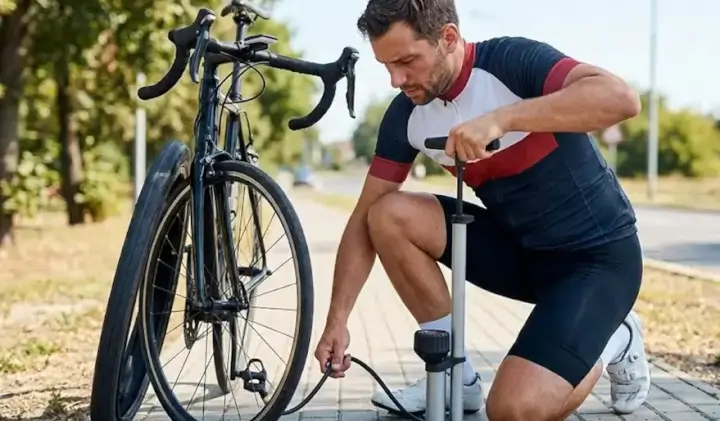
Do not guess your pressure. Use a digital gauge and a tire pressure calculator to find the sweet spot for your specific setup.
If you are running tubeless tires, you can safely go even lower without the risk of pinch flats.
7. Cross-Chaining and Shifting Under Load
Drivetrain sympathy is a mark of an experienced cyclist.
"Cross-chaining" occurs when you run the chain in the big chainring at the front and the biggest cog at the back (Big-Big), or the small ring at the front and the smallest cog at the back (Small-Small).
This creates an extreme diagonal angle for the chain.
This severe angle increases friction, accelerates wear on the chain and gear teeth, and increases the likelihood of the chain dropping.
You can achieve nearly the same gear ratio by using the other chainring and a middle cog, which keeps the chain line straighter.
Furthermore, shifting under heavy load (like when you are standing up on a steep climb) is a recipe for a snapped chain or a broken derailleur.
You must anticipate the terrain.
Shift into an easier gear before the gradient kicks up, and momentarily soft-pedal (ease off the pressure) for the split second the chain is moving between cogs.
This technique ensures a smooth, silent, and safe gear change.
8. Poor Cornering Technique
Many riders lose contact with their group not because they lack fitness, but because they bleed speed in every corner.
The most common error is braking while in the middle of the turn. Braking stands the bike up and forces it to go straight, which is the opposite of what you want in a curve.
Effective cornering requires you to do all your heavy braking before you enter the turn. As you initiate the turn, release the brakes.
Your outside pedal must be down. This presses your tires into the tarmac and lowers your center of gravity. If your inside pedal is down, you risk clipping it on the ground and levering your wheels off the road, resulting in a crash.
Look through the exit of the turn, not at the wheel in front of you or the pothole you are trying to avoid.
Your bike goes where your eyes look. If you stare at the ditch, you will likely end up in the ditch.
9. Prioritizing Upgrades Over the Engine
We all love new bike tech. The allure of a lighter frame, ceramic bearings, or an oversized pulley wheel system is strong.
However, many cyclists fall into the trap of thinking they can buy performance. They spend thousands on marginal gains while neglecting the engine: their own body.
An aerodynamic helmet might save you 10 watts at 40km/h, but a structured training plan could add 30 watts to your threshold power in a season.
Losing 2 kilograms of body weight (if you have it to lose) is free and often more effective for climbing speed than spending $2000 on lightweight wheels to save 300 grams.
Invest in yourself first. Hire a coach, buy a power meter to track your training, or pay for a professional bike fit.
These investments yield tangible, long-term performance improvements that no amount of carbon fiber can replicate.
10. Ignoring Recovery
In our drive to improve, we often forget that training is only the stimulus; recovery is when the adaptation happens.
Overtraining syndrome is real and debilitating. A common mistake is filling rest days with "junk miles" or other strenuous activities, refusing to actually rest.
Your body releases growth hormone and repairs muscle tissue primarily during sleep.
If you are training hard but sleeping only six hours a night, you are under-recovering. You will eventually plateau or get injured. Respect the rest day.
It requires discipline to stay off the bike or ride very slowly when you feel motivated, but this discipline is what allows you to smash your intervals later in the week.
Listen to your heart rate variability (HRV) and resting heart rate. If they are trending poorly, your body is screaming for rest. Ignoring these signals leads to burnout and a weakened immune system.
Conclusion
Cycling mastery is a journey of constant refinement.
By identifying and correcting these ten common mistakes, you move from being a passenger on the bike to being a true pilot.
You will find that you have more energy at the end of rides, your equipment lasts longer, and you climb hills with newfound efficiency. Start by picking one or two of these areas to focus on this week. perhaps check your tire pressure before every ride or commit to a strict fueling strategy. The results will speak for themselves on the road.