Loosen tight hips, hamstrings, and quads from hours in the saddle with 10 cyclist-focused stretches that boost mobility, ease back and knee discomfort, and improve posture helping you ride stronger, recover faster, and stay injury-free.
Cycling is excellent for cardiovascular fitness and lower body strength.
Regular riders develop powerful quads, strong calves, and impressive endurance. But flexibility is rarely a cyclist’s strong side.
The very movement that makes cycling effective also creates a common problem: tight muscles and reduced range of motion.
Over time this imbalance can lead to discomfort, poor posture on the bike, and eventually injury. The solution is simple but often overlooked. Stretching helps restore balance in the body, improves mobility, and allows cyclists to ride more efficiently and comfortably.
Even a short daily stretching routine can significantly improve how your body feels on and off the bike.
Why Cycling Tightens Your Muscles
Cycling is a repetitive movement where muscles contract concentrically. In simple terms, the muscles shorten as they produce force. Unlike sports that constantly stretch and lengthen muscles, cycling keeps them working in a limited range.
This repetitive motion can lead to what is known as adaptive shortening. Muscle fibers gradually become tighter and less flexible. Over time this creates muscular imbalances and can make it difficult to maintain proper posture.
Many cyclists experience tight hips, hamstrings, and lower backs for this reason. Regular stretching helps counteract these effects and keeps the body moving properly.
Flexibility and Range of Motion
Flexibility is often ignored by cyclists. As long as the legs are strong and the rider can stay in the saddle for long rides, mobility may not seem important. However, range of motion around the joints plays a critical role in both performance and injury prevention.
Humans were not designed to stay in a forward-leaning cycling position for hours at a time. Much like sitting at a desk all day, holding one posture repeatedly places stress on certain muscles while others weaken.
Stretching helps restore balance. It allows joints to move freely, reduces stiffness, and improves overall body mechanics while riding.
The Hip Flexor Problem
One of the most common issues for cyclists is tight hip flexors. The cycling position keeps the hips constantly flexed and rarely fully extended. Over time this causes the hip flexor muscles to tighten and shorten.
When this happens, the pelvis can tilt forward, the lower back arches excessively, and core muscles become weaker. This chain reaction can lead to discomfort during rides and even pain in everyday movement.
Addressing hip flexibility is therefore one of the most important parts of any cyclist’s stretching routine.
Why Cyclists Should Stretch
Stretching offers both immediate and long-term benefits for cyclists.
In the short term, stretching improves blood circulation in the muscles. Better circulation helps remove metabolic waste from exercise and delivers nutrients needed for recovery. This can reduce soreness after long rides and speed up recovery between workouts.
Stretching also encourages relaxation in the nervous system. After intense physical activity, the body can remain in a stressed state. Stretching helps shift the body toward recovery and calmness.
Over time, regular stretching provides deeper structural benefits. It improves flexibility, helps maintain healthy connective tissue, and reduces the risk of overuse injuries. It can also improve posture on the bike, which leads to better aerodynamics and more efficient power transfer.
Restore Your Mobility, Release Tension And Build Deep Flexibility With Minimal Effort At Any Age
Although every athlete is different, several muscle groups tend to become tight in nearly all cyclists.
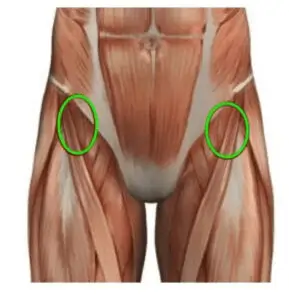
Hip flexors often tighten because the hips remain bent during pedaling. If these muscles become too short, they can cause lower back discomfort and limit power output.
Hip flexors
Hamstrings are another critical area. Tight hamstrings can pull the pelvis backward and reduce the engagement of the glutes, which are essential for generating strong pedal strokes.
Hamstrings and Quadriceps
Quadriceps do most of the work during cycling, so they often need regular stretching to prevent stiffness.
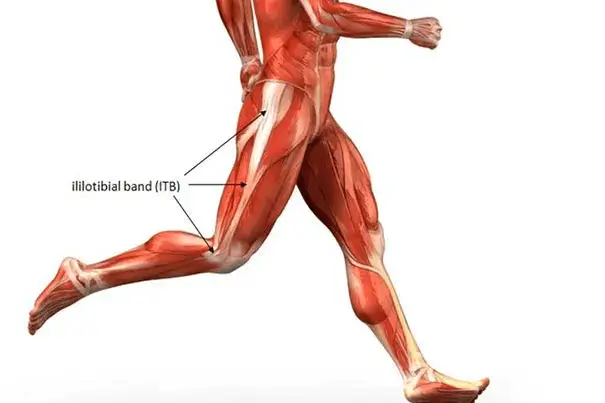
The IT band helps stabilize the knee. When tight, it can cause irritation around the knee joint.
The IT band
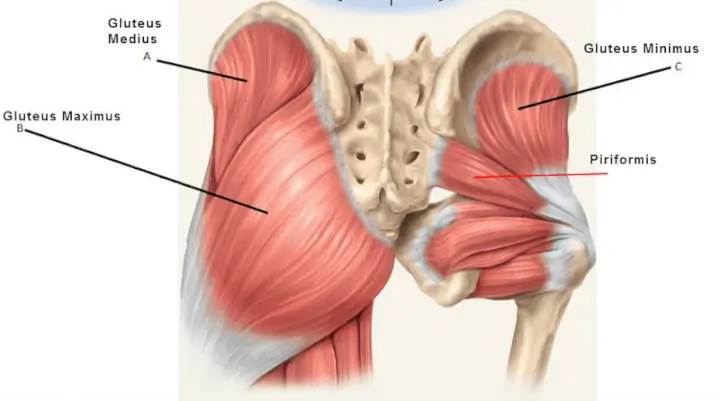
Glutes are some of the strongest muscles in the body, but they are often underused in cycling if other muscles compensate for them.
Glutes
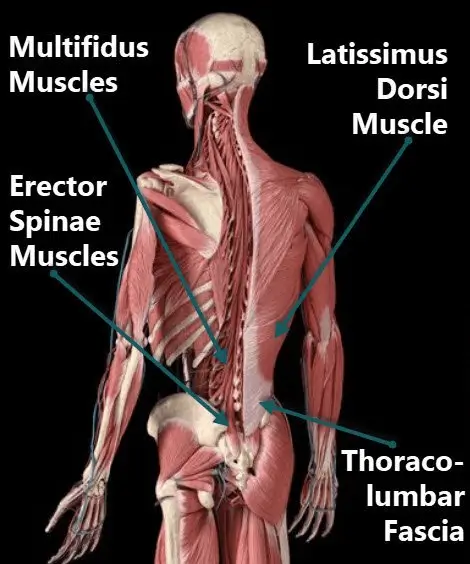
Finally, the lower back frequently becomes tight due to prolonged riding posture and limited hip mobility.
Lower Back Muscles
A balanced stretching routine should address all of these areas.
10 Effective Stretches for Cyclists
After a light warm-up, cyclists can perform four to five stretches per session, holding each for about one minute. Beginners can start with thirty seconds and gradually increase the duration. Performing stretches five days per week is usually enough to see meaningful improvements.
Standing Straddle Stretch
This stretch targets the hamstrings, chest, and shoulders.
Standing Straddle Stretch
Stand with your feet spread comfortably apart. Clasp your hands behind your back and hinge forward at the hips. As your upper body moves toward the floor, allow your arms to lift upward behind you. This position stretches both the hamstrings and the upper body.
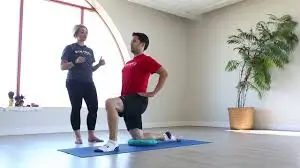
Knight’s Pose Stretch
This movement stretches the hip flexors and quadriceps.
Knight’s Pose Stretch
Start on all fours and step one foot forward so the knee forms a ninety-degree angle. The opposite leg extends behind you. Slowly press your hips forward until you feel a stretch along the front of the hip and thigh.
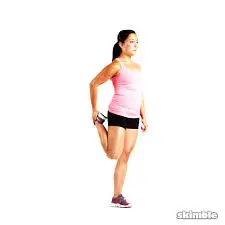
Flamingo Stretch
The flamingo stretch focuses on the quadriceps.
Flamingo Stretch
Stand upright and pull one foot toward your glutes while holding your ankle with your hand. Keep your knees close together and gently push the knee backward to deepen the stretch.
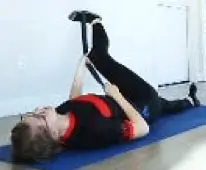
IT Opener Stretch
This stretch helps release tension along the IT band.
IT Opener Stretch
Lie on your back and loop a strap or belt around one foot. Lift the leg toward your chest, then slowly guide it across your body to the opposite side. The stretch should be felt along the outer thigh.
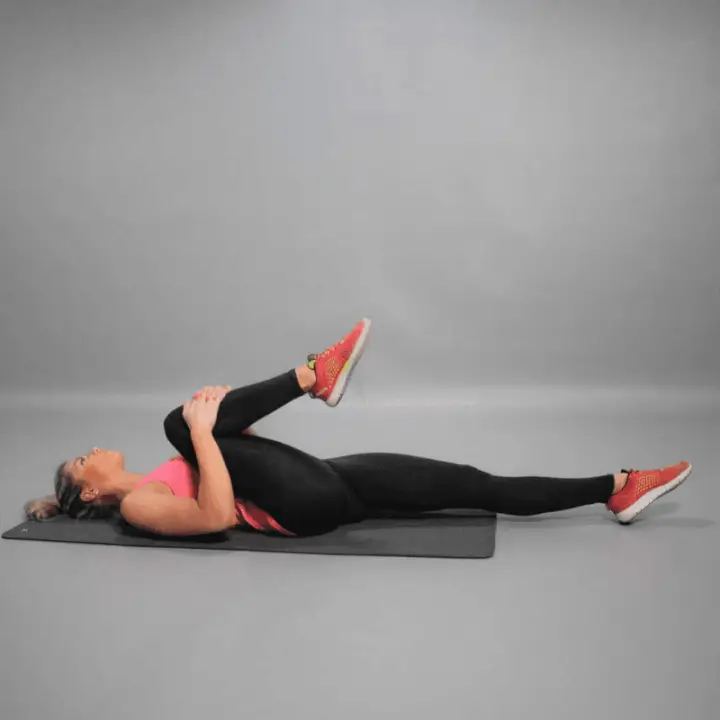
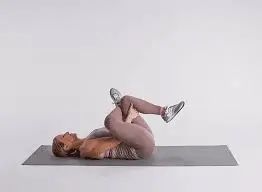
Knee Hug Stretch
This simple stretch targets both the upper and lower back.
Knee Hug Stretch
Lie on your back and pull both knees toward your chest. Wrap your arms around them and hold the position while breathing slowly. Gentle rocking from side to side can also help release tension in the spine.
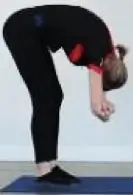
Shoulder Hang Stretch
This movement stretches the hamstrings and spine.
Shoulder Hang Stretch
Stand upright, raise your arms overhead, and hold one elbow with the opposite hand. Slowly bend forward from the hips while letting your upper body hang naturally.
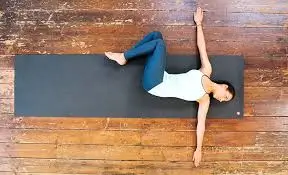
Lower Twist Stretch
This stretch improves mobility in the lower back.
Lower Twist Stretch
Lie on your back with your arms extended to the sides. Bring your knees toward your chest and slowly lower them to one side while keeping both shoulders on the floor.
Figure Four Stretch
The figure four stretch targets the glutes and hips.
Figure Four Stretch
Lie on your back and cross one ankle over the opposite thigh. Pull the supporting leg toward your chest until you feel the stretch in the hip and glute area.
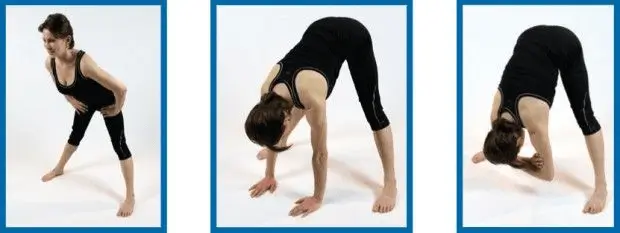
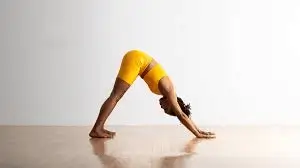
Downward Dog Stretch
This classic yoga position stretches the hamstrings, calves, shoulders, and spine.
Downward Dog Stretch
Start on all fours, then lift your hips upward while straightening your legs and arms. Focus on pushing the hips toward the ceiling while lengthening the back.
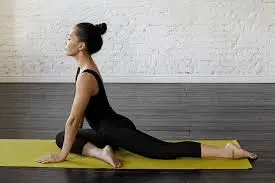
Pigeon Stretch
The pigeon stretch is one of the most effective movements for opening the hips.
Pigeon Stretch
From a hands-and-knees position, bring one knee forward toward your chest and extend the other leg straight behind you. Lower your hips toward the floor and relax into the stretch.
A Small Habit That Makes a Big Difference
Cyclists do not need long yoga sessions to gain the benefits of stretching. Even ten minutes a day can make a noticeable difference in mobility and recovery.
Regular stretching helps maintain healthy joints, improves posture, and reduces the risk of injury. Over time it allows cyclists to ride more comfortably, generate power more efficiently, and stay active for many years.
The strongest riders are not only powerful but also balanced. Stretching is one of the simplest ways to achieve that balance.