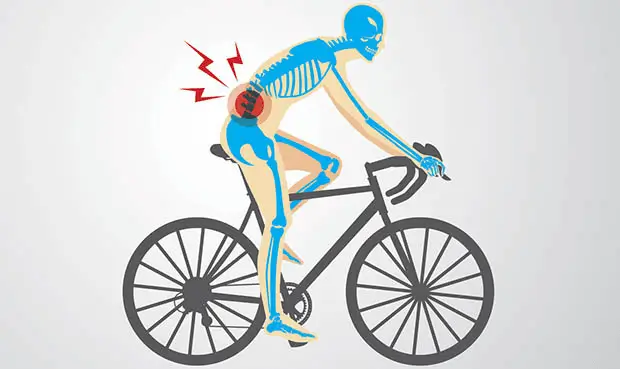
Cycling isn’t bad for your back, but tight hips, a rounded spine, weak core and glutes, too much volume, and a poor bike fit can turn a low-impact ride into recurring pain. Fix posture, strength, recovery, and setup to ride comfortably.
Cycling is often positioned as one of the safest and most accessible forms of exercise. It builds endurance, strengthens the legs, and supports cardiovascular health without putting heavy impact on the joints. For most people, it is a sustainable long term activity.
At the same time, back pain is one of the most common complaints among cyclists. This does not mean cycling itself is harmful.
In most cases, the issue comes from how you ride, how your body is prepared for it, and how your bike is set up.
Back pain in cycling is usually not a single problem. It is a combination of incorrect posture, muscle imbalances, excessive training volume, and small wrong technical details that accumulate over time.
The Real Reasons Cycling Can Affect Your Back
One of the most overlooked issues is tight hip flexors and hamstrings.
Cycling keeps your body in a flexed position for long periods, which gradually shortens these muscles. Over time, this pulls the pelvis out of alignment and increases the arch in the lower back. The result is tension and discomfort that builds up ride after ride.
Another major factor is spinal position. Many cyclists ride with a rounded back, especially during longer sessions.
This constant forward flexion puts pressure on the lumbar spine and can compress spinal discs. If this becomes a habit, it increases the risk of more serious issues like disc irritation or nerve pain.
Muscle imbalance also plays a key role. Cycling heavily relies on quads and calves, while the glutes and core often remain underactive. When stabilizing muscles are weak, the spine lacks proper support. The body compensates, and the lower back takes on more load than it should.
Training volume is another trigger. Riding too many kilometers without proper recovery creates fatigue in both muscles and connective tissue. When fatigue sets in, posture worsens, technique breaks down, and the risk of pain increases.
Bike setup is often the silent contributor. Even small misalignments in saddle height, handlebar position, or cleat placement can shift your posture just enough to create long term strain.
Many riders adapt to discomfort without realizing the root cause is mechanical.
Finally, posture on the bike matters more than most people think. Dropped shoulders, an overextended neck, or a collapsed torso all increase tension in the back. A stable position with a neutral spine and engaged core distributes the load much more efficiently.
Why Core Strength Changes Everything
Core strength is one of the most underestimated elements in cycling performance and injury prevention. A strong core stabilizes the spine and allows force to transfer efficiently from the legs into the pedals.
When the core is weak, the lower back compensates.
This leads to fatigue, tightness, and eventually pain. Strengthening the core is not just about aesthetics or general fitness. It directly affects how your body handles time on the bike.
Simple exercises like planks, bridges, and rotational movements can significantly improve stability and reduce strain during rides.
How to Deal With Back Pain From Cycling
If back pain starts to appear, the first step is to reduce the load. Lower your weekly mileage and give your body space to recover. Pushing through discomfort usually makes the problem worse rather than better.
Adjusting your bike setup is one of the fastest ways to improve how you feel on the bike. A proper fit aligns your body with the mechanics of the ride instead of forcing you to adapt to the bike.
Recovery strategies also matter. Alternating cold and heat can help manage inflammation and muscle tension. Over the counter pain relief can be useful in the short term, but it should not replace fixing the underlying issue.
If pain continues, a physiotherapist can help identify what is actually causing it.
In many cases, the problem is not where the pain appears, but somewhere else in the movement chain.
What Prevents Back Pain in the First Place
Prevention in cycling is mostly about consistency and small adjustments rather than drastic changes. Proper bike setup is the foundation.
Handlebars, saddle, and overall geometry should match your body, not the other way around.
Mobility work is equally important. Regular stretching of the hips, hamstrings, and lower back keeps your movement range balanced and reduces stiffness.
Your position on the bike should feel stable, not forced. A neutral spine, relaxed shoulders, and slight engagement in the core create a more sustainable posture over long distances.
Strength training supports everything else. A stronger core and lower back reduce the load on passive structures and make your riding more efficient.
During rides, changing position regularly helps redistribute pressure. Standing up occasionally, shifting hand positions, and adjusting weight keeps the body from locking into one pattern.
Equipment also plays a role. Wider tires can reduce vibration and absorb impact from the road, which translates into less stress on the back.
Finally, progression matters. Increasing intensity or volume too quickly is one of the fastest ways to create problems. The body adapts well, but only when given time.
So, Is Cycling Actually Bad for Your Back
Cycling itself is not the problem. In many cases, it can even support back health by improving circulation, endurance, and general strength.
What creates issues is how cycling is approached. Poor setup, weak support muscles, and excessive load turn a low impact activity into a source of strain.
When technique, strength, and recovery are aligned, cycling becomes sustainable and pain free. Not because the activity changed, but because the system around it did.
A Recovery Cream Many Cyclists Use for Back Pain
If your lower back feels stiff or sore after long rides, recovery becomes just as important as training.
Many cyclists focus on stretching and bike fit, but muscle tension and inflammation can still build up, especially after hours in the same riding position. Because of this, some riders also use topical relief creams to relax the muscles and reduce discomfort after training.
One product that has become popular among people dealing with recurring back pain is this natural relief cream designed to support muscle recovery and ease tension in the lower back area.
It’s easy to apply after a ride and can be a helpful addition to your normal recovery routine, especially if you often feel tightness after long or intense sessions.