Build endurance the smart way: avoid the 12 biggest long-ride mistakes cyclists make, from ramping up distance too fast to poor pacing, fueling, hydration, and gear choices so you finish strong, not cooked.
Summer is when many cyclists start planning longer rides. Maybe you are joining your club for a 50-mile weekend ride. Maybe you are preparing for your first century or a 100-kilometer challenge with a friend. Some riders go even further and aim for 200 kilometers or more.
Whatever distance you are targeting, long rides are very different from short training sessions. Endurance cycling requires preparation, strategy, and patience. Many riders think success comes only from fitness, but that is only one part of the equation. Pacing, fueling, hydration, and smart training decisions often determine whether a long ride feels strong and enjoyable or turns into a struggle.
Sports science shows that endurance performance depends on several factors working together: gradual training progression, proper fueling, and consistent hydration during effort.
For example, nutrition research suggests that cyclists riding longer than an hour should consume around 60 to 90 grams of carbohydrates per hour, spreading intake across the ride to maintain energy levels.
Despite this knowledge, many riders repeat the same mistakes. Here are twelve of the most common problems endurance cyclists face and how to avoid them.
1. Not Training Enough
The most obvious mistake is also one of the most common. Riders sometimes sign up for a long ride without preparing properly.
Endurance events require time in the saddle. The body adapts to long efforts gradually by improving aerobic capacity, muscle endurance, and energy metabolism. Without that preparation, fatigue appears quickly and the final miles become extremely difficult.
A good rule is to build your training until your longest training ride reaches about 2/3 to 3/4 of your event distance. If you plan to ride 100 kilometers, your training should include rides of around 65 to 75 kilometers over similar terrain.
2. Increasing Distance Too Quickly
Another classic mistake is increasing mileage too fast.
The body needs time to adapt to new workloads. Rapid jumps in training volume can lead to fatigue, injuries, or burnout. Many endurance coaches recommend gradual increases. A widely used guideline suggests raising training mileage by no more than about 10% per week to allow the body to adapt safely.
This principle also applies to long rides. If your longest ride this month is 50 kilometers, jumping to 90 kilometers the following week may overload your body.
Consistency beats sudden leaps in training.
3. Riding Every Training Session at the Same Intensity
Some cyclists ride at exactly the same pace every time they train. They push moderately hard but never vary intensity.
This limits improvement. Effective endurance training usually includes three types of rides.
First, there are endurance rides at a steady aerobic pace. These build the cardiovascular system and improve fat metabolism. Second, there are harder efforts or intervals that challenge the heart and lungs. Third, there are easy recovery rides that help the body rebuild after stress.
Research in endurance sports consistently shows that most training should be low intensity, with only a small portion done at high intensity.
4. Training Too Hard Too Often
Many riders push themselves on every ride. They ride hard because it feels productive.
However, endurance training works differently. The majority of your riding should feel comfortable. Coaches often describe this as a “conversational pace,” where you can speak normally while riding.
When cyclists train too hard too often, recovery becomes difficult and performance eventually stalls. Long rides in particular should usually stay in a controlled aerobic zone.
Ironically, slowing down during training often leads to better endurance performance later.
5. Trying New Things on Event Day
Cyclists sometimes try a new energy bar, a new pair of shorts, or unfamiliar equipment during a big event. Small problems that seem minor during a short ride can become serious after several hours.
Training rides should serve as testing sessions. Use them to experiment with nutrition, clothing, hydration systems, and equipment. By the time the event arrives, everything should already be familiar and comfortable.
6. Skipping Breakfast
Some riders start long rides with very little food. This can quickly lead to energy problems.
The body stores carbohydrates in the form of glycogen in muscles and the liver. These stores are limited and can be depleted during long workouts. Starting a ride without fueling properly reduces your available energy.
A balanced breakfast rich in carbohydrates helps replenish glycogen levels before the ride begins. Professional cyclists often rely heavily on carbohydrate-rich foods before races for this reason.
7. Not Eating Enough During the Ride
Even if you eat a good breakfast, energy stores alone cannot sustain several hours of cycling.
During long endurance rides, the body burns large amounts of fuel. To maintain energy, cyclists must replace some of those calories during the ride itself.
Sports nutrition guidelines commonly recommend 30 to 90 grams of carbohydrates per hour, depending on ride intensity and duration.
For many recreational cyclists, this translates roughly to 200 to 300 calories per hour from foods like energy bars, bananas, sandwiches, or sports drinks.
8. Eating Too Infrequently
Some riders wait until rest stops to eat. They consume a large amount of food at once and then ride several hours before eating again.
This strategy often leads to energy crashes. Blood sugar levels fluctuate and fatigue increases between stops.
A better strategy is to eat small amounts regularly. Many cyclists take a few bites every 20 to 30 minutes. Spreading food intake across the ride helps maintain stable energy levels and prevents sudden fatigue.
9. Hydrating Improperly
Hydration is essential for endurance cycling, but the balance can be tricky.
During exercise, cyclists lose water and electrolytes through sweat. Replacing fluids helps maintain performance and temperature regulation. General guidelines suggest consuming roughly 500 to 750 milliliters of fluid per hour depending on temperature and sweat rate.
However, drinking excessively can also cause problems. If athletes consume too much plain water without electrolytes, blood sodium levels can become dangerously diluted, a condition known as hyponatremia.
The simplest strategy is to drink regularly but listen to thirst signals and include electrolytes during longer rides.
10. Starting Too Fast
Pacing mistakes ruin many long rides.
Riders often feel strong in the beginning and follow a fast group. The excitement of the start makes it easy to ride harder than planned. Unfortunately, the consequences appear later.
The second half of a long ride reveals pacing errors quickly. Riders who started too fast may experience severe fatigue, cramps, or a dramatic loss of speed.
The smartest strategy is to ride conservatively early on. If the group around you is moving too fast, let them go. The right group is the one that matches your pace.
11. Not Paying Attention to the Route
Getting lost is a surprisingly common problem in organized rides.
Cyclists sometimes assume that the riders around them know the route. But groups can easily take a wrong turn, especially in unfamiliar areas.
Before the ride, spend a few minutes studying the course map or cue sheet. During the ride, double-check major turns and road signs. A little preparation prevents unnecessary detours.
12. Using the Wrong Equipment
Comfort and reliability matter during long rides.
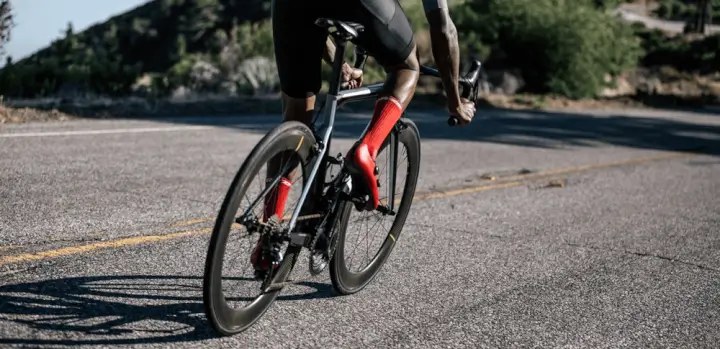
Some road bikes are designed primarily for racing. They may have aggressive geometry with a large drop between the saddle and handlebars, which improves aerodynamics but can become uncomfortable after several hours.
Similarly, ultra-light wheels or minimal equipment may prioritize speed over durability. On very long rides, stability and comfort often matter more than small aerodynamic gains.
Choosing equipment that suits endurance riding can make a huge difference in how you feel after several hours in the saddle.
Finish Strong, Not Exhausted
Long rides are one of the most rewarding experiences in cycling. They combine endurance, scenery, and the satisfaction of covering serious distance under your own power.
Most cyclists who struggle during long rides are not lacking determination. They simply make small mistakes that compound over time.
With gradual training, smart pacing, consistent fueling, and the right equipment, long rides become much more enjoyable. Instead of surviving the final miles, you may find yourself finishing the ride strong, relaxed, and already planning the next adventure.