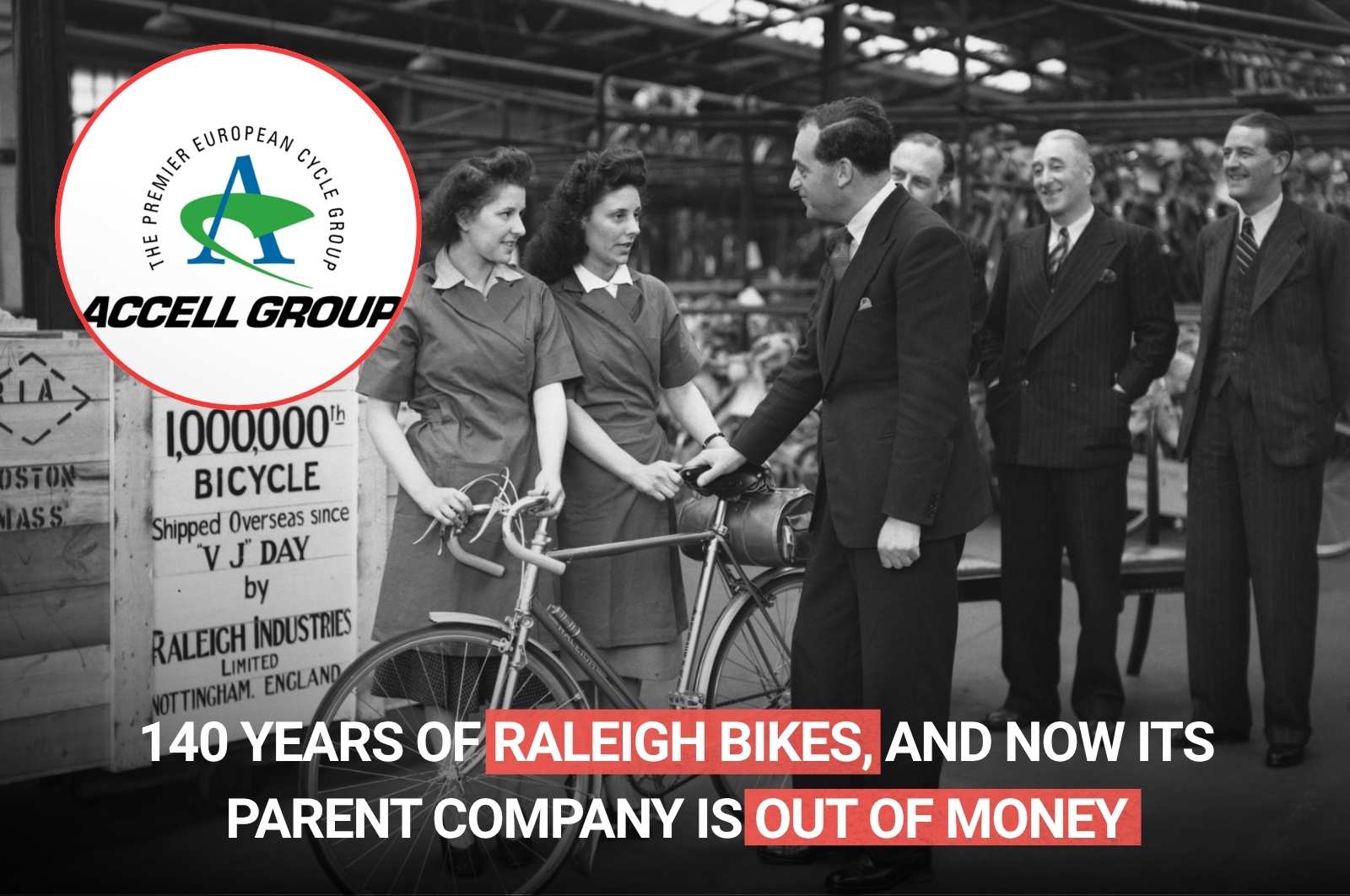
Accell Group, owner of Raleigh, Lapierre, Haibike, Ghost and Batavus, was granted a suspension of payments after a rescue deal collapsed. If one of those bikes is in your garage, here is what actually changes.
Picture source Douglas Miller/Hulton Archive/Getty Images
A Dutch court granted Accell Group a suspension of payments on August 5, 2026.
That is the formal beginning of insolvency. It is not a shutter coming down overnight, but it is not a restructuring either.
The brands underneath it are not obscure. Raleigh, founded in 1885, and Lapierre, the bike supplier to WorldTour team Picnic-PostNL.
Also Haibike, Ghost, Batavus, Sparta, Winora, and the Babboe cargo bike line.
Here is the part nobody is writing about.
Thousands of people own one of these bikes right now.
So let's be precise about what changes for them, and what does not.
What Actually Happened, In Plain Numbers
Private equity firm KKR led a €1.8 billion buyout of Accell in 2022, betting that the e-bike boom would keep climbing.
It did not. Revenue fell 22% to €1.009 billion in 2024, and the industry drowned in discounted inventory it had ordered during the pandemic surge.
Two debt restructurings followed.
Creditors cut Accell's debt from roughly €1.4 billion to €800 million in October 2024, and in February 2026 KKR handed control to the group's senior lenders in exchange for fresh funding.
KKR's losses on the venture have been put at over €1 billion.
Then came the near-miss. A takeover was on the table in July 2026 and competition authorities in Germany, Austria and Poland had already signed off.
It did not complete.
The court granted the suspension of payments a day after the deal fell through.
The Babboe Recall Nobody Talks About
Buried in the financial story is a product one.
Accell's Babboe cargo bike division recalled 22,000 bicycles after Dutch authorities intervened over frame safety.
Recall costs land on a balance sheet like a stone. For a group already carrying restructuring expenses and a 22% revenue drop, it was one more weight on a boat that was already low in the water.
That is not the cause of the insolvency. It is a reminder that the pressure came from several directions at once.
What This Means If You Own A Raleigh, Lapierre Or Haibike
Your bike still works. Nothing about a court filing in the Netherlands changes the bearings in your bottom bracket.
The three things genuinely at risk are warranty claims, proprietary spare parts, and resale value. In that order.
Warranty Is The Real Exposure
A manufacturer warranty is a contract with a company.
When that company enters insolvency proceedings, unsecured claims join a queue, and consumer warranty claims sit low in that queue.
Both Raleigh and Ghost UK websites now direct visitors to administrators, and as Cyclingnews reported, Lapierre's French site offered a dead link to a press release about the company's situation. If you have an open warranty claim, document it now.
Email records, purchase receipts, and dated photographs are worth more than a phone call you cannot prove happened.
Spare Parts Are A Slower Problem
Standard components are fine. A Shimano derailleur is a Shimano derailleur regardless of what happens to the frame builder.
The exposure is proprietary, meaning parts made for one brand and one model year only: integrated seatpost clamps, brand-specific dropout hangers, e-bike battery packs, display units, and mounting hardware that only ever fit one model year.
Haibike and Babboe owners should pay closest attention here, because e-bike battery and controller systems are the least substitutable parts on any modern bicycle.
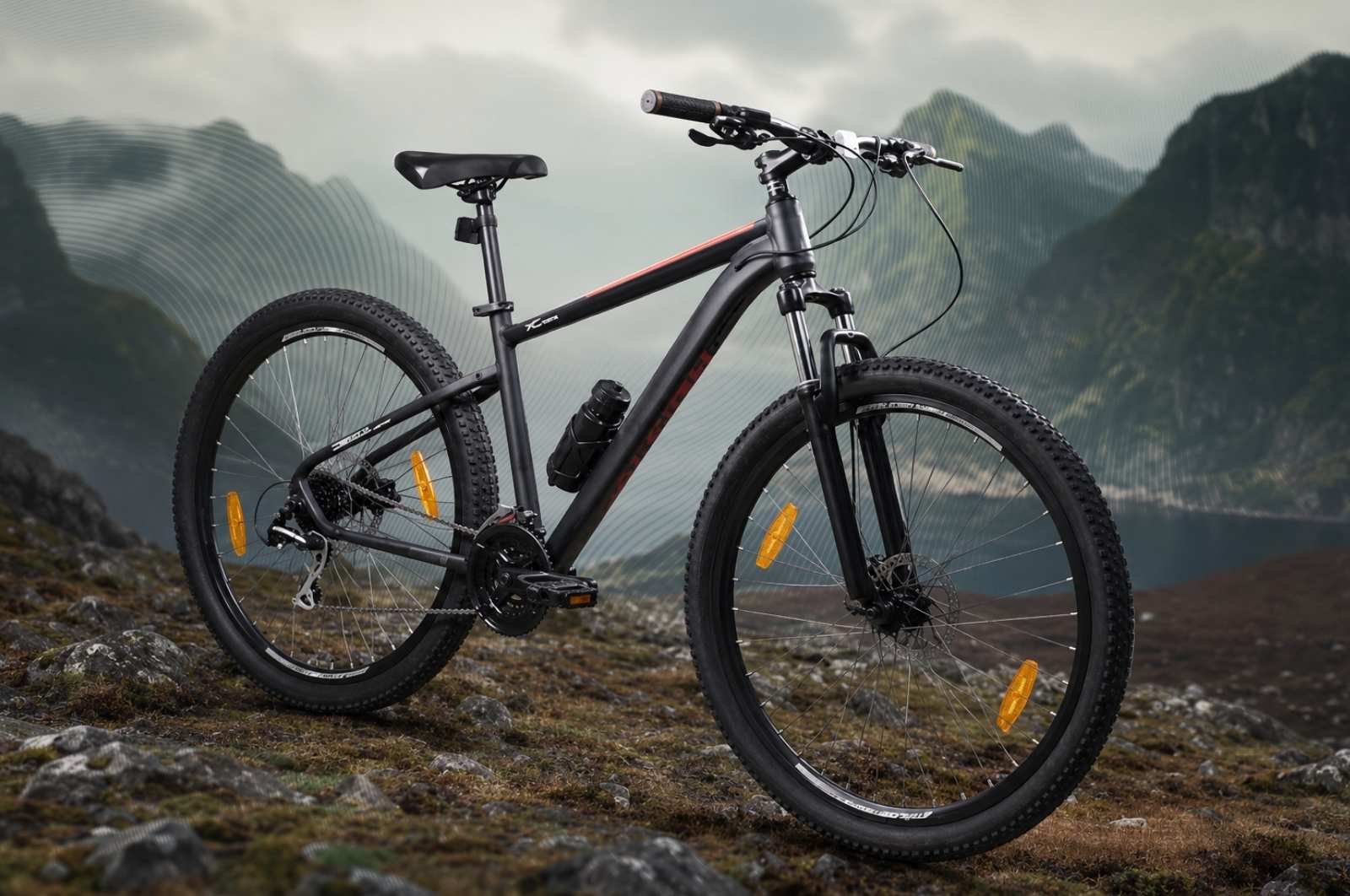
Picture by RaleighBikes
Resale Value Will Take A Hit, Then Partly Recover
Used-bike pricing responds to headlines faster than it responds to reality.
Expect a short-term dip on listings for all Accell brands.
Historically, heritage brands that survive an insolvency in some form recover a chunk of that.
Raleigh has been sold and restructured before and the name kept its value.
But if you were planning to sell this autumn, you are selling into the worst possible news cycle.
Where The Story Is Not Over Yet
This is the honest part. Insolvency proceedings are not liquidation, and treating them as the same thing is how bad advice spreads.
Lapierre has filed for judicial reorganisation with the Dijon Commercial Court, which if approved gives it an observation period to continue operating and find an investor.
According to BikeRadar, CEO William Perrier said the company would fight to preserve as many jobs as possible and keep the story alive in Dijon. In the UK, Accell UK and Ireland filed a notice of intention to appoint administrators, which buys roughly 10 days of legal protection to restructure or sell.
Court-appointed administrators are now assessing which operations and jobs can be saved.
A post-insolvency acquisition remains theoretically possible.
Translation: some of these brands will probably survive.
Nobody can tell you which ones yet, and anyone who claims otherwise is guessing.
Why This Keeps Happening To Bike Companies
Accell is not an outlier. It is the biggest name in a pattern.
The pandemic taught the industry to forecast demand off a two-year spike, then the spike ended and the containers kept arriving.
What followed was oversupply, aggressive discounting, and margins that could not carry the debt taken on to fund the growth.
Put those together and you get a sector where a €1.8 billion buyout can evaporate in four years.
What To Actually Do This Week
If you own one: photograph your bike, your serial number, and your receipt. Save the files somewhere that is not your phone.
If you have an open warranty claim: put it in writing to the retailer you bought from, not just the manufacturer. In many jurisdictions the retailer carries its own obligation to you, independent of the brand.
If you were about to buy one: a heavily discounted Accell-brand bike from a dealer with its own service department is a very different risk from the same bike bought online from a liquidation seller.
And if you are shopping in this market generally, the calculus around what a bike is actually worth has shifted.
Buy the dealer, not just the badge.
That advice was always true. It just got expensive to ignore.
The Quiet Lesson In A 141-Year-Old Brand
Raleigh started making bicycles in Nottingham in 1885, and it sponsored top-level professional teams for decades. Accell bought the name for $100 million in 2012.
None of that heritage stopped a court in the Netherlands from granting a suspension of payments on a Wednesday in August.
Brand history is a story about the past. It is not a warranty.
The riders who will feel this least are the ones who built a relationship with a local shop that can service anything, source anything, and pick up the phone when a manufacturer stops answering.
That was never the exciting advice.
This week, it turned out to be the correct one.