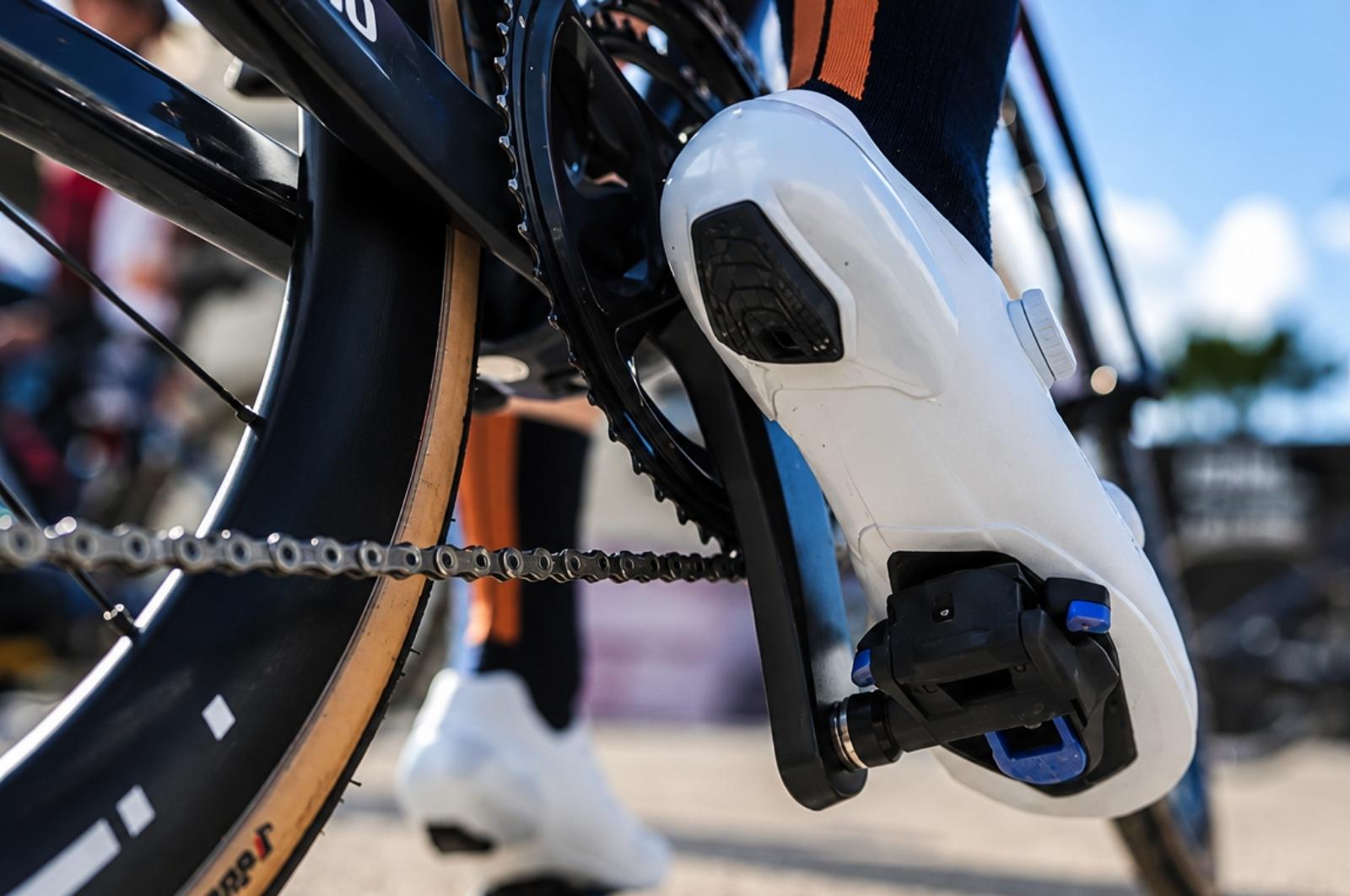
The new SPD-SLR platform lowers stack height by 2.3 mm, cuts cleat weight by 22%, drops the engagement angle from 15.5 degrees to 10.5, and refuses to talk to a single one of the SPD-SL cleats sitting in your workshop drawer.
The last time Shimano touched its core road pedal interface, George W. Bush was president, and since then the yellow, blue, and red cleats have outlived four Grand Tour eras.
On September 16, 2026, that ended.
Shimano released SPD-SLR, a full teardown and rebuild of the pedal, cleat, and shoe system. The three-bolt interface stays, but almost nothing else does.
And the new cleats will not fit your old pedals.
What Actually Changed
Most Shimano "updates" over the past two decades were minor tweaks. New body shape, different bearing, same cleat.
SPD-SLR is not that.
The pedal platform, the cleat, and the shoe interface were re-engineered together as one system, bringing the rider's foot 2.3 mm closer to the pedal axle. Stack height dropped from 14.6 mm to 12.3 mm, which is genuinely aggressive by road standards.
The engagement angle got smaller too. Old SPD-SL clipped in at 15.5 degrees, while SPD-SLR does it at 10.5 degrees with a wider catch zone at the toe end of the cleat.
That means the moment where you stab the pedal and hope for a hit is now less of a gamble.
The cleats themselves shed weight. Shimano claims 55 grams per cleat with hardware, down from 71 grams on an SPD-SL SM-SH12, which works out to a 22% cut or about 32 grams per pair.
For a component that already weighed almost nothing, that reads as small, and it is. But cutting 22% out of anything on a road bike in 2026 counts as a redesign.
The Compatibility Break Is the Real Story
Here is the part that will annoy people.
The new pedals will accept the current S-Phyre and RC-series SPD-SL road shoes, and Shimano says this openly. But the new CL-SL 120 cleat does not fit the old PD-R9200 Dura-Ace or PD-R8100 Ultegra pedals, and the old SPD-SL cleats do not fit the new pedals.
So if you own SPD-SL pedals and want to try the new cleats, you cannot.
If you buy the new pedals and want to keep using your existing cleats, you cannot.
There is one hedge. A separate CL-SL 130 cleat option offers fore and aft adjustment, but taking it means giving up the lower stack and the weight savings.
That option exists mostly for bike fitters who want a wider adjustment window during a fit session, not for everyday riders.
Shimano did not have to break compatibility. It chose to.
That is the kind of decision that usually points at power meter integration coming later, or at a proprietary shoe cleat mounting pattern that is easier to control once the installed base is fresh. Shimano has not confirmed either.
Why the Stack Height Number Matters
A 2.3 mm change sounds trivial until you understand what pedal stack does.
Every millimeter between your foot's sole and the pedal axle is a millimeter of leverage that has to be transferred through the shoe, cleat, and pedal body. Lower stack means the axle sits closer to where your force actually originates, which changes how the shoe feels on hard efforts and how stable the foot sits during standing sprints and out-of-saddle climbs.
It also lets you drop the saddle by roughly the same amount without changing your leg extension, which some riders will translate into a lower center of gravity in the drops.
None of this is revolutionary. What is notable is that Shimano finally caught up to what smaller brands like Wahoo Speedplay and Look Keo Blade have been marketing for years.
Speedplay has been shouting about 8.5 mm stack for a decade, and Shimano's 12.3 mm still leaves Speedplay ahead on paper.
The gap is closing, though. And Shimano's install base is not.
The Engagement Angle Change Deserves More Attention
The stack story is the headline. The engagement geometry is the more interesting change.
Old SPD-SL riders know the sensation. You unclip at a light, then go to clip back in.
Your shoe hits the pedal at the wrong angle and skids. You look down and try again.
That happens because SPD-SL demanded roughly 15.5 degrees of angular alignment between the cleat nose and the pedal jaw. Miss that window and the cleat glances off the retention plate.
SPD-SLR shrinks that window to 10.5 degrees and widens the catch zone at the front of the cleat. In plain English, the pedal is now much more forgiving of a sloppy foot stab.
That matters at criteriums, at traffic lights, and every time someone has to get out of the saddle after a soft-pedal stretch. Any rider who has botched a re-clip on a punchy climb knows how much time and rhythm that costs.
Image credit: Shimano
What This Means for the Rest of the Market
The three-bolt road pedal market has been stable for 20 years, with Shimano, Look, and Wahoo Speedplay each holding their share. Riders picked a system, bought two or three pedal replacements over a lifetime, and stayed.
A forced compatibility break resets that inertia.
Riders on old Dura-Ace 9100 and Ultegra 8000 pedals who were planning to buy fresh Shimano pedals now have to decide: upgrade to the new platform, or jump to Look Keo or Wahoo Speedplay while they are already shopping for cleats.
The next 18 months will tell us whether Shimano's install base is loyal enough to eat a full system replacement, or whether this becomes the moment Look and Wahoo pick up meaningful share. The pedal category does not usually move fast, but this is one of the rare windows where it might.
For our take on the earlier launch that started raising these questions, we covered the Look Keo Vision pedals with built-in lights when they arrived and flagged how much the category had gone quiet before this year. Should You Actually Buy Them
Not yet.
If your current SPD-SL setup works, keep it. The performance gap between a well-fit SPD-SL and the new SPD-SLR at recreational and even competitive amateur speeds is small enough that most riders will not feel it until the second or third ride.
The riders who should pay attention are the ones who were already shopping: new bike build, worn-out pedals, or upgraded shoes.
If you were about to spend money on the pedal, cleat, and shoe side of the equation anyway, the SPD-SLR system is where that money should probably go.
The stack height and engagement improvements are real, and the weight savings are marginal but honest. Shimano's road pedal quality control has been the industry benchmark for a long time.
Just do not throw away your working SPD-SL setup to chase 2.3 mm.
The biomechanics research on shoe-pedal interfaces and plantar pressure is clear on this point. A recent controlled study on plantar pressure and pedaling force distribution found that the shoe outsole and cleat interface matter far more for injury prevention and comfort than they do for measured power output at recreational intensities. For most riders, the SPD-SL you own is still doing its job.
The Bigger Signal Shimano Just Sent
The compatibility break is not a technical decision. It is a market decision.
Shimano watched Wahoo buy Speedplay in 2021 and turn it into a real product line, and it watched Look quietly modernize the Keo Blade platform. It also watched power meter pedals from Favero, Garmin Rally, and SRM eat into what used to be safe territory.
And it decided that a slow refresh would not be enough.
SPD-SLR is Shimano telling the market it is willing to burn compatibility to defend its road pedal position.
Whether that gamble works depends on one thing: how much the pros use them at the Spring Classics and the 2027 Tour. If Pogačar, Van der Poel, and Vingegaard are on SPD-SLR by April, the amateur market will follow within a season.
That is the pattern every road pedal launch of the last two decades followed. And it is the pattern Shimano is betting on again.
Twenty-three years of SPD-SL dominance is a long time. The next 12 months will decide whether it was 23 years of a very good platform, or 23 years of Shimano refusing to build the next one until it had no choice.
If you want to see how Shimano's pedal design compares to how top pros actually equip themselves, we wrote about why Pogačar sticks with lace-up cycling shoes even when the industry pushes dial-and-cable systems. The pedal category just woke up.
What Comes Next for the Category
Expect two things over the next 12 months.
First, an SPD-SLR power meter pedal. The trademark filings from earlier in 2026 hinted heavily at this, and Shimano's decision to break compatibility makes far more sense if the roadmap includes an integrated power meter version at Dura-Ace level.
Second, an entry-level 105-tier SPD-SLR pedal. Right now the system launches at Dura-Ace PD-R9300 and Ultegra PD-R8200 only, and if Shimano wants to force the entire road install base to convert, a 105 version has to follow within a season.
And when that arrives, the last argument for staying on SPD-SL is going to evaporate.
Shimano did not just release a new pedal.
It killed the old one.