
Why Are So Many Young Pro Cyclists Retiring Before Their Careers Even Begin?
The Pogačar effect is quietly breaking the generation that was supposed to replace him. Here is what the retirements are actually telling us.
Look’s new Keo Vision pedals feature built-in lights that move with every pedal stroke, making riders 5.5 times more visible than traditional seatpost lights.
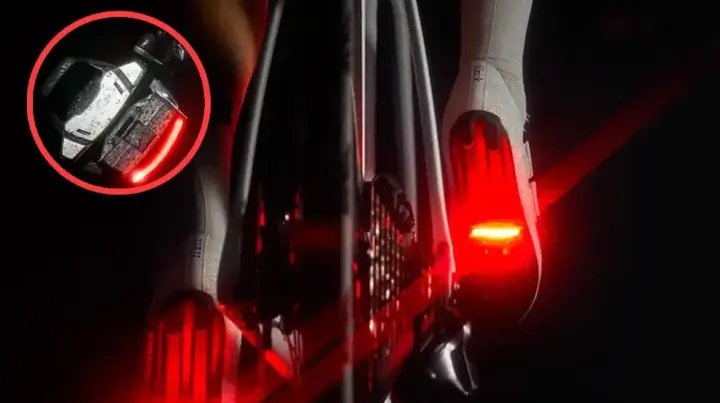
Look’s latest Keo Vision pedals combine performance and safety, featuring integrated lights designed to make riders more visible from up to 1km away.
The lights are embedded in the rear of the pedals and move with each pedal stroke, highlighting a rider’s “biomotion.”
Look claims this motion-based illumination makes cyclists 5.5 times more visible than a standard seatpost-mounted light.
The moving lights also help drivers judge a rider’s speed and distance more accurately.
Providing 180° visibility, the pedals offer four light modes day flash, night flash, steady, and night steady ensuring riders stay seen in any conditions.
While Look has previously offered the Geo City flat pedals with lights for urban riders, the Keo Vision range is designed specifically for performance road cycling.
Alexandre Lavaud, Look’s head of product, explains that integrating and miniaturising the light technology into a road pedal was a major engineering challenge.
He adds, “The result is not just a pedal; it’s a commitment to a safer, more confident ride for everyone.”
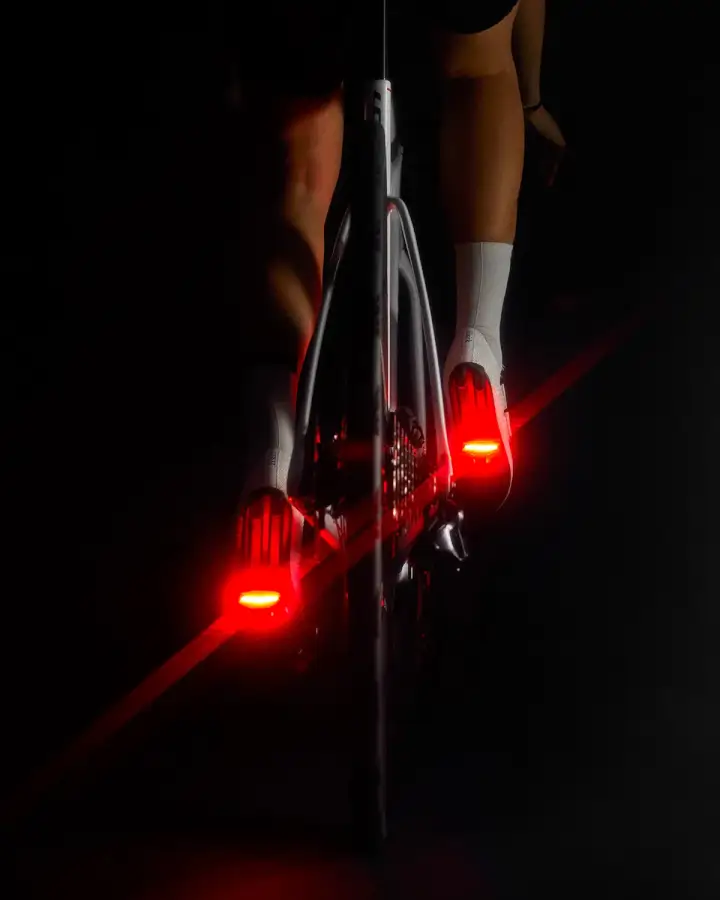
The Keo Vision collection launches on 1 November and includes two models:
Both pedals feature the integrated lights, each weighing only 20g, with a battery life of 40 hours and a 2-hour USB-C recharge.
For riders who already own Keo Blade V4 pedals, Look will offer a Keo Vision kit for €60, allowing lights to be added to existing pedals.
This update follows other recent changes to Look’s road pedal range, including wider Q-Factor options introduced earlier in October.
Perfect for the new riders!
No spam. Cancel anytime.


