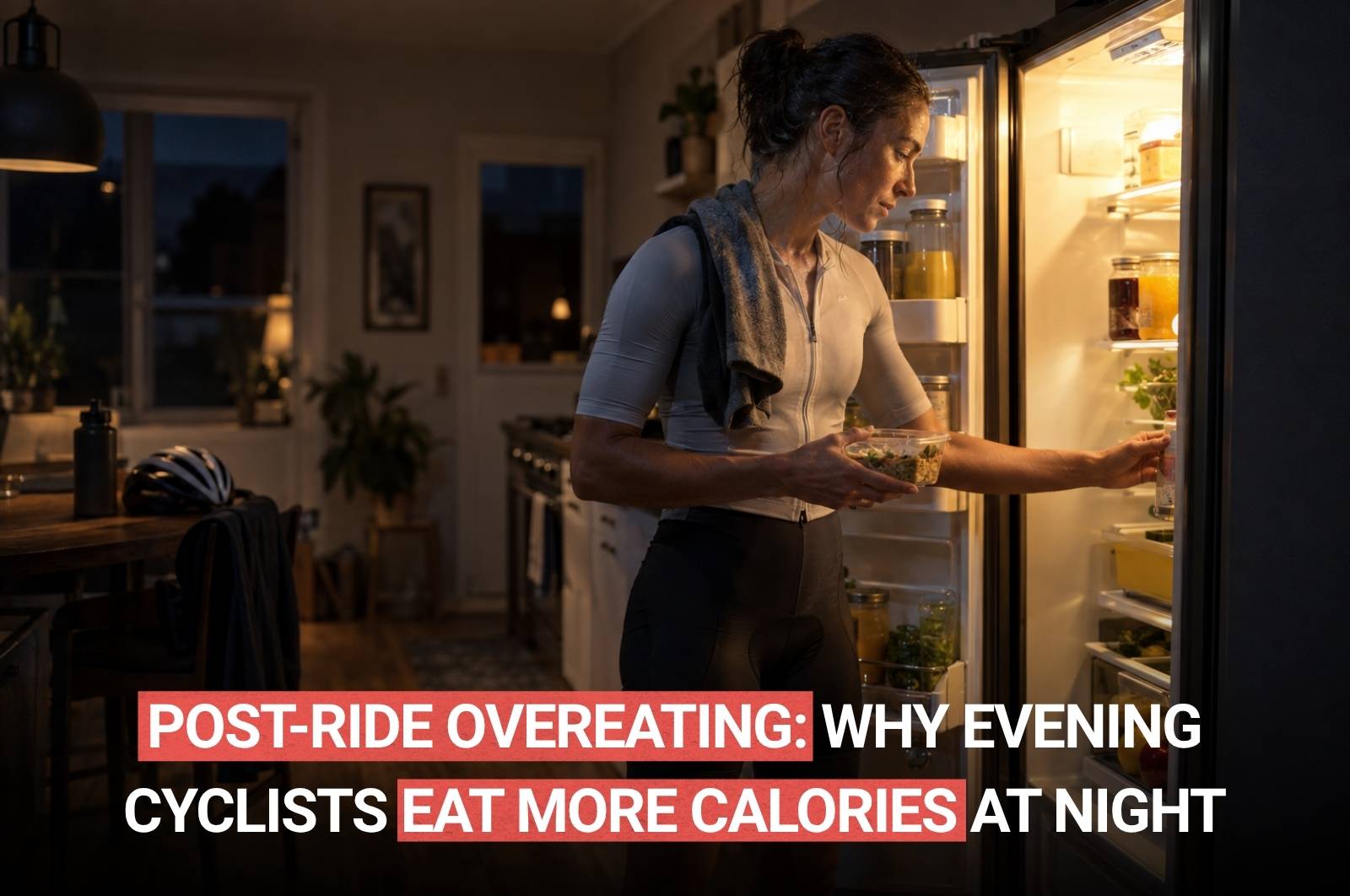
A randomized crossover study just proved that evening riders eat 400 to 700 more calories in the 24 hours after training than morning riders do, even when the workout is identical, and pre-fueling does not stop it.
The pattern is embarrassingly consistent.
You finish a two-hour ride at 7:30 PM, have dinner, and feel fine. You sit on the couch at 10:45, and by 11:15 you are standing in front of the open refrigerator, eating leftover pasta out of the container.
You are not weak. You are not undisciplined. Your appetite hormones are following a well-mapped, well-documented biological script, and cycling in the evening is the trigger.
A randomized crossover trial published in July 2026 in The American Journal of Clinical Nutrition took 35 healthy adults through three fasted exercise conditions: morning after a 12-hour overnight fast, evening after 12 hours of fasting, and evening after a shorter 6-hour fast. Each session was a controlled 30-minute run at 65% of VO2 peak.
The finding was blunt.
Evening exercise produced pronounced compensatory eating and elevated 24-hour appetite compared to morning exercise, and pre-feeding the riders before the workout did not fix it. Fat oxidation went up. Food intake went up more.
That is why you cannot outride the fridge.
The Metabolic Trap Nobody Warns Cyclists About
The mainstream conversation about post-ride nutrition is about recovery windows and macronutrient ratios. 20 grams of protein within 30 minutes, that kind of thing.
Almost nobody talks about what happens six hours later.
Here is what the research actually shows. Endurance exercise creates a temporary short-term suppression of hunger during and immediately after the effort, which lasts roughly 30 to 90 minutes and is driven by elevated peptide YY and reduced acylated ghrelin.
That suppression window is where most riders form their opinion about post-ride hunger. They finish a ride, feel fine, eat a normal dinner, and assume the story is over.
It is not.
Once that acute suppression clears, appetite regulation flips: ghrelin rebounds and leptin sensitivity is altered. Subjective hunger, desire to eat, and prospective food consumption all climb higher than they would have on a non-exercise day.
And in the 2026 evening exercise trial, the total 24-hour energy intake after evening fasted riding exceeded morning fasted riding by roughly 0.77 kcal per minute of measurement, which over the observed window translated into hundreds of extra calories eaten before bed and the following morning.
That is the kitchen raid, measured in a lab.
Why Evening Cycling Is Worse Than Morning Cycling for Appetite
The timing of your ride matters more than the intensity for post-workout appetite regulation, which is a genuinely counterintuitive finding for anyone who assumed harder rides trigger bigger hunger.
The mechanism is circadian.
Morning exercise sits in a hormonal window where cortisol is naturally high, glucose regulation is sharp, and appetite hormones are calibrated toward the day ahead. Evening exercise sits in a window where melatonin is rising, insulin sensitivity is falling, and the body is preparing to shift into a fasted overnight state.
Riding hard in that window sends conflicting signals. The exercise creates a large short-term energy demand. The circadian system says the pantry is closing.
The body's compromise is what researchers call hyperphagic rebound. You eat more, later, and often past the point where you feel hungry, because the neural systems that regulate satiety are being overridden by the systems that regulate energy replenishment.
The 2026 trial made this explicit. Even when riders ate a meal 6 hours before evening exercise instead of 12, the acute post-meal intake dropped, but the 24-hour appetite did not budge.
Pre-fueling the evening ride did not solve the fridge raid.
Why Underfueling During the Ride Makes It Worse
There is a second mechanism running underneath the circadian one, and it is easier to control.
Riders who consume less than 30 grams of carbohydrate per hour on a two-hour or longer ride finish the effort in significant energy debt. The body registers that debt. It starts working through appetite pathways to close it.
The exercise nutrition literature is consistent on this. Sessions completed in low carbohydrate availability produce larger post-exercise ghrelin rebounds and higher subjective hunger ratings than the same sessions completed with 60 to 90 grams of carbohydrate per hour on the bike.
That is why the rider who does a hard two-hour ride with just water often eats twice as much post-ride as the rider who ate two energy chews per hour during the effort.
The energy debt did not disappear. It just moved from the ride to the kitchen.
Does Post-Ride Overeating Actually Matter?
Yes and no.
If you are riding to build fitness and race well, occasional post-ride overeating is not a problem, and can be a signal that your training load is finally moving your baseline metabolism into a productive stress zone. Elite endurance athletes routinely eat 4,000 to 6,000 calories on hard training days and their body composition stays stable.
The problem is when the pattern becomes chronic and unaware.
The typical amateur cyclist rides three to five times a week. If two of those rides are in the evening and each triggers 400 to 700 extra calories of post-workout intake, the extra 800 to 1,400 calories per week is roughly the caloric surplus that produces 8 to 15 pounds of weight gain per year.
That is how riders end up frustrated. Training hard, watching their weight climb, and blaming their diet, when the cause is the timing of the ride, not the content of the diet.
The Four Practical Moves That Actually Work
The research points at four interventions that have real evidence behind them.
1. Shift One Weekly Ride to Morning
If you cannot move all your rides, move one. A single morning fasted or lightly-fueled ride per week has been shown to produce a lower 24-hour appetite response than the same ride done in the evening.
The mechanism is the circadian window. Morning riding also tends to reduce evening snacking behavior for reasons that go beyond the exercise itself, likely tied to daytime dopamine reward regulation.
2. Fuel During the Ride, Not Just Before or After
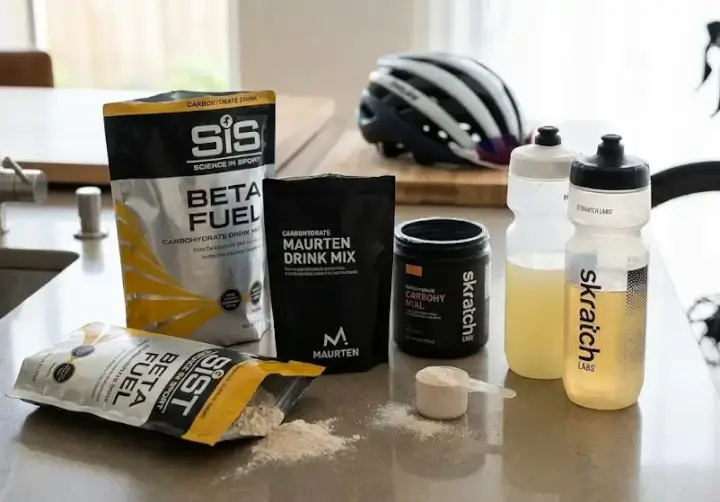
Aim for 60 to 90 grams of carbohydrate per hour on any ride longer than 90 minutes. That is one banana plus one energy chew per hour, or one bottle of properly-mixed sports drink per hour.
Underfueled endurance work is the fastest way to program a big post-ride hunger rebound. Fueling during the ride blunts it substantially.
If you want a breakdown of exactly what and how much to eat around a ride, our cycling nutrition 101 guide covers the pre-ride side of the equation in detail. 3. Prioritize Protein at the Post-Ride Meal
The 2026 trial and prior appetite hormone research both show that protein-forward post-exercise meals produce longer-lasting satiety than carbohydrate-forward meals of the same total calories.
Target 30 to 45 grams of protein in the meal you eat within 60 minutes of getting off the bike. This blunts the acute ghrelin rebound and extends satiety into the evening window where the fridge raid usually happens.
4. Add a Deliberate Late-Evening Protein Snack
This is the counterintuitive move. Instead of trying to white-knuckle through the evening hunger, plan a small 150 to 200 calorie protein snack at around 9 PM.
Greek yogurt, cottage cheese, or a small casein protein shake all work. The point is not to add calories. The point is to give the appetite rebound a defined, portion-controlled endpoint before it becomes an unplanned pasta container at 11.
Research on late-evening protein consumption in the appetite literature shows that a small pre-bed protein feeding does not disrupt sleep, does not blunt fat oxidation overnight, and substantially reduces morning hunger.
What This Means for Anyone Trying to Race Weight
The riders most affected by post-ride overeating are the ones trying to hit race weight while training seriously. The evening ride problem is the reason most of them cannot.
You cannot outride evening hyperphagia if the rides are always in the evening. The circadian window is not something you willpower your way through.
Two options exist. Shift the ride, or shift the eating.
If your work schedule locks the ride into the evening, the four interventions above are the only reliable path. Fuel during the ride, protein-load the immediate post-ride meal, add a planned protein snack at 9 PM, and stop treating the post-ride hunger as a moral failure.
It is not. It is a well-documented physiological response to exercising in a window your endocrine system was not designed to burn calories in.
The Uncomfortable Bottom Line
Cycling makes you hungry. Cycling in the evening makes you extremely hungry, in ways that override normal satiety signals for 12 to 18 hours after the ride ends.
If you were blaming yourself for the 11 PM fridge raid, you can stop.
The answer is not to eat less. The answer is to eat smarter around the ride, with protein-forward meals, mid-ride carbohydrate, and a planned late-evening protein feeding that gives the rebound a controlled endpoint.
The riders who solve this get their training weight back within four to six weeks. The ones who keep trying to willpower through the hunger stay stuck in the same loop.
The fridge is not the problem. The timing is.