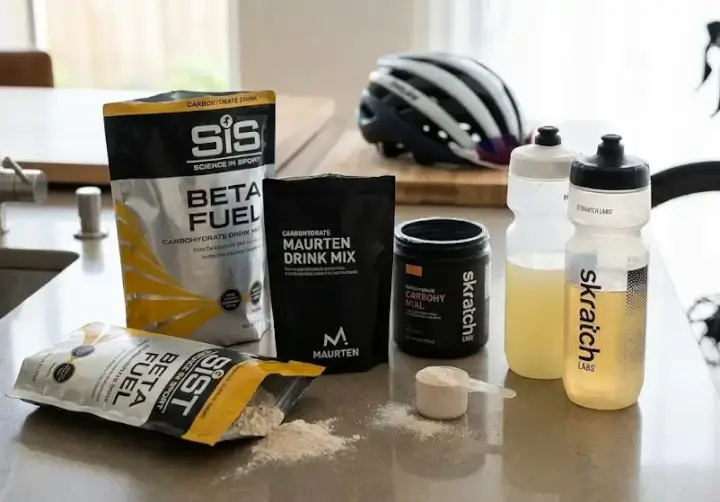
Cut through the hype and focus on what really moves the needle: carbs, caffeine, nitrates, bicarbonate, protein, electrolytes, and key micronutrients. This guide shows cyclists where supplements can add a small (but real) edgeand where training, fueling, and recovery still win.
Cyclists live in a world of marginal gains. A slightly better position, a slightly smoother cadence, a slightly smarter fueling strategy... stack enough of those and you suddenly feel like a different rider.
Supplements sit right in that space. Not essential. Not magic. But sometimes useful.
The science is clear on one thing: most performance improvements in cycling come from training, nutrition, and recovery habits. Supplements, at best, add a small edge, often in the range of 1–3% performance improvement.
And yet, in endurance sports, that margin can be the difference between holding the wheel… or getting dropped on the climb.
So instead of listing everything on the market, let’s focus on what actually works for cyclists.
Do Cyclists Really Need Supplements?
Not always.
If your diet is consistent, calorie intake matches your training load, and you recover properly, you can meet most needs through food alone. Whole foods provide not just nutrients, but also fiber, antioxidants, and complex interactions that supplements simply can’t replicate.
But cycling has its own reality:
- Long training hours
- High carbohydrate demand
- Repeated glycogen depletion
- Significant sweat losses
- Indoor training with limited sun exposure
Over time, this creates gaps. Supplements can help fill them if used strategically.
Carbohydrates
The real foundation of cycling performance.
Carbohydrates are not just “fuel”. They are the primary driver of sustained power output. When glycogen stores drop, performance drops with them.
For rides longer than 60–90 minutes, carbohydrate intake becomes essential. This is one of the most consistently supported strategies in endurance research and is even classified among the most effective performance aids in cycling.
The most proven ergogenic aid in cycling.
Caffeine is one of the few supplements with strong, repeatable evidence across studies. It improves endurance, reduces perceived effort, and increases power output.
Meta-analyses show that moderate doses (around 4-6 mg per kg of body weight) can significantly improve cycling time trial performance.
Even smaller improvements (around 2-4%) are meaningful in competitive settings.
This is the best caffeine pill you can find on Amazon.
The quiet weapon for high-intensity efforts.
Sodium bicarbonate works by buffering acidity in muscles, delaying fatigue during hard efforts. This is particularly useful in:
- Short climbs
- Attacks
- Time trials
- Sprint-heavy races
Research shows a measurable performance benefit in high-intensity endurance efforts, with improved average speed and fatigue resistance.
It’s not for every ride, but in the right context, it can extend your ability to push above threshold.
Nitrates improve how efficiently your body uses oxygen. That means you can maintain the same power output with slightly less energy cost.
Studies show that nitrates can reduce oxygen demand and improve muscle efficiency, particularly in submaximal efforts.
However, the effect is not universal. Benefits tend to be:
- More noticeable in less-trained athletes
- More relevant in moderate-duration efforts
And importantly, nitrates don’t stack well with caffeine. Combining them doesn’t necessarily improve performance further.
Recovery, repair, and adaptation.
Cycling doesn’t cause as much muscle damage as running, but long or intense sessions still break down muscle tissue.
Protein supports:
- Muscle repair
- Training adaptation
- Reduced soreness
It’s also one of the most consistently supported supplements in sports nutrition research.
For cyclists doing high volume or double sessions, protein intake becomes increasingly important.
Beta-alanine increases muscle carnosine levels, which helps buffer acid buildup during intense efforts.
That translates to:
- Better tolerance to sustained high effort
- Improved performance in intervals and climbs
Evidence shows it enhances high-intensity exercise capacity, especially in efforts where fatigue builds quickly.
The overlooked performance killer.
Cyclists lose significant amounts of sodium through sweat, especially during:
- Long rides
- Hot weather
- Indoor training
Electrolyte imbalance can lead to:
- Cramping
- Fatigue
- Reduced performance
While sodium-based supplements show mixed results in controlled studies, they remain essential in real-world endurance conditions, particularly for hydration balance. This is less about optimization and more about preventing decline.
Iron plays a central role in carrying oxygen through the blood. Low levels mean:
- Reduced endurance
- Early fatigue
- Poor recovery
Cyclists, especially those training at high volume or following plant-based diets, are at higher risk of deficiency.
Vitamin D affects:
- Bone health
- Muscle function
- Immune response
Cyclists, especially those training indoors or living in low-sun environments, are frequently deficient.
Low levels can subtly reduce performance and increase injury risk. Supplementation is often necessary in winter months or during heavy indoor training blocks.
Inflammation control and long-term resilience.
Cycling is repetitive. Same motion, thousands of times per ride.
Omega-3s help regulate inflammation and support joint health, which becomes increasingly important with higher training volume.
They don’t make you faster directly, but help you stay consistent.
What About Trendy Supplements?
There’s always a hype surrounding supplements. One day something’s in, the next day other super molecule appears on the market. Often, it’s just marketing.
Ketone supplements, for example, gained massive popularity in the peloton. But more recent evidence shows no meaningful benefit for performance or recovery, leading governing bodies like the Union Cycliste Internationale to advise against their use.
Other popular options like BCAAs or CoQ10 show inconsistent or minimal benefits for most cyclists.
In many cases, these most supplement fall into the category of “interesting, but not necessary.”
The Real Key to Top Performance
It’s easy to get pulled into the world of supplements because they create a sense of control. They feel like something you can add, adjust, and optimize, a small lever that promises better performance without changing the bigger picture.
But cycling performance doesn’t start there. It’s built on a much simpler, less glamorous foundation. You need enough calories to support your training load, enough carbohydrates to fuel your rides, and a structured approach to training that allows your body to adapt over time. Just as important is consistent recovery, giving your body space to rebuild, and quality sleep, where most of that rebuilding actually happens.
Supplements exist at the very top of that system, not at its base. They can enhance what’s already working, but they can’t fix what’s missing underneath.
They might sharpen the edge, but they don’t replace the blade.
In reality, the biggest performance gains usually come from the basics done well. A properly fueled ride, a balanced meal after training, or simply getting enough rest will take you further than most powders or pills ever could.