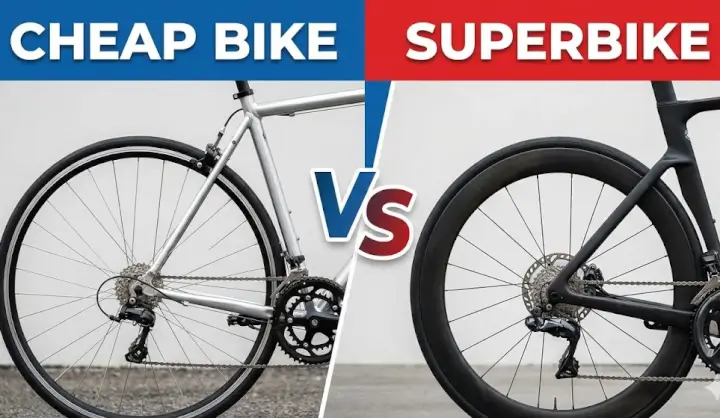
We break down the massive engineering, component, and performance differences between an entry-level road bike and a World Tour superbike to help you decide if the upgrade is truly worth the investment.
Walk into any bike shop and you will likely see two machines that look remarkably similar from ten feet away.
They both have two wheels, a drop handlebar, a saddle, and a drivetrain. Yet one costs as much as a nice dinner out, while the other costs as much as a decent used car.
As a cyclist, it is easy to get lost in the marketing jargon of "high modulus carbon" and "aerodynamic optimization."
But what does that money actually buy you? Is the difference between a budget bike and a superbike just about weight, or is there a fundamental shift in how the machine behaves on the tarmac?
We are going to strip away the glossy paint and dig deep into the engineering, mechanics, and ride quality differences between the entry-level and the elite tier.
The Frame: Alloy vs. Carbon Engineering
The heart of any bicycle is the frame. It dictates the handling, the comfort, and the efficiency of your ride.
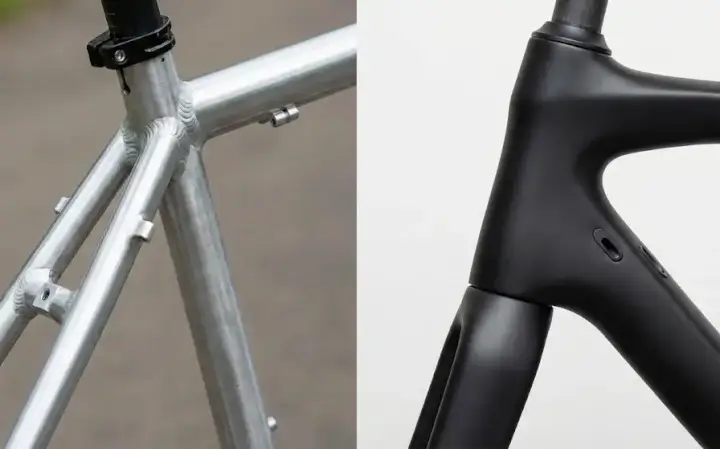
On a cheap bike, you are almost certainly looking at aluminum or basic steel.
Modern aluminum is actually quite good, but cost constraints mean these frames are built for durability and ease of manufacturing rather than performance tuning.
The tubes are often straight gauge, meaning the wall thickness is consistent throughout.
This makes the bike heavy and often results in a harsh ride quality because the metal transmits road vibration directly to your hands and spine.
A superbike frame is an entirely different beast. It is constructed from carbon fiber, but not just any carbon. Manufacturers use high-modulus fibers and complex layup schedules.
Hundreds of individual sheets of carbon are hand-placed into a mold. This allows engineers to tune the frame with incredible precision.
They can make the bottom bracket area incredibly stiff for power transfer while making the seat stays paper-thin to flex and absorb bumps.
The result is a chassis that feels alive. It snaps forward the instant you touch the pedals but somehow floats over rough pavement.
You are paying for the hundreds of hours of R&D and the labor-intensive manufacturing process that creates this "stiff yet comfortable" paradox.
The Cockpit: Integration and Aerodynamics
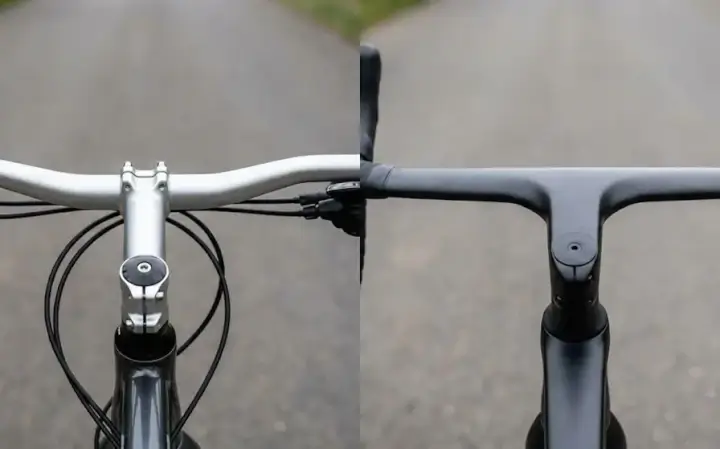
Look at the front of a budget bike and you will see cables. Lots of them. Brake cables and gear housing loop out from the handlebars and enter the frame or run along the outside of the tubes.
Cheap bikes use standard stems and round handlebars.
This is actually a benefit for the home mechanic because it makes adjusting your position or swapping parts incredibly easy.
However, round tubes and exposed cables are aerodynamic disasters.
They churn the air and create drag, which slows you down significantly at higher speeds.
Superbikes are obsessed with cheating the wind.
The cockpit is often a one-piece integrated carbon bar and stem.
Every cable and hose is routed internally, running through the handlebars, down the stem, and into the frame without ever seeing the light of day.
This looks stunning and saves watts, but it is a nightmare to service. Changing a headset bearing or adjusting your stem height on a superbike can take hours of labor.
You are paying for speed and aesthetics, but you are sacrificing serviceability.
The Drivetrain: Mechanical vs. Electronic
The engine room of the bike has seen the biggest technological leap in the last decade.
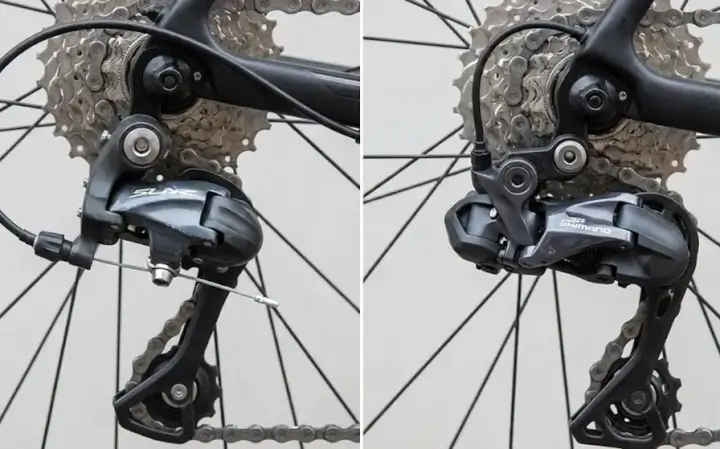
Cheap bikes rely on mechanical shifting. You push a lever, which pulls a steel cable, which physically drags the derailleur into the next position.
At the entry level, these groupsets (like Shimano Claris or Sora) are reliable workhorses. However, they lack precision.
Under heavy load, like sprinting or climbing a steep hill, a budget mechanical derailleur might hesitate or clunk noisily.
Over time, cables stretch and housing gets dirty, requiring frequent adjustments to keep shifting smooth.
Superbikes almost exclusively use electronic shifting (Shimano Di2, SRAM AXS, or Campagnolo Super Record Wireless).
There are no cables to stretch.
You tap a button and a servo motor executes a perfect shift every single time. The computer brain of the derailleur auto-trims to prevent chain rub.
The real difference here is performance under pressure.
You can stand up and mash the pedals at 1000 watts and an electronic drivetrain will still shift gears seamlessly. It removes the margin for human error.
Furthermore, with satellite shifters, you can shift gears from the drops or the tops of the handlebars, something impossible with mechanical systems.
Braking Systems: Stopping on a Dime
Speed is nothing without control. The evolution of braking has completely divided the market.
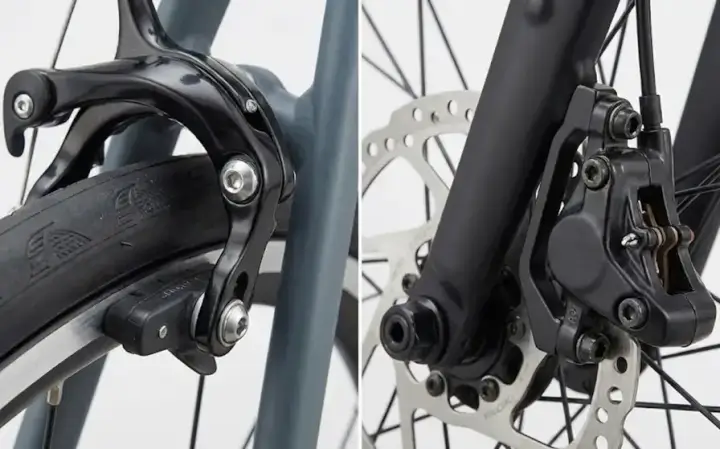
Cheap bikes often still use rim brakes or mechanical disc brakes.
Rim brakes are light and simple, but their performance suffers drastically in wet weather. Mechanical disc brakes are a step up, but they use a cable system similar to the shifters.
This means you lose some power to cable friction, and they often feel "wooden" or require a strong hand grip to stop quickly on a steep descent.
Superbikes utilize hydraulic disc brakes.
This is the same technology found in cars and motorcycles. Fluid is pushed through a hose to clamp the pistons.
The modulation is exquisite. You can feather the brakes with a single pinky finger to scrub off a little speed, or you can lock the wheels instantly with a light squeeze.
This reduces hand fatigue on long descents and provides consistent power whether it is sunny, raining, or snowing.
The Rolling Stock: Wheels and Tires
If there is one upgrade that transforms a bike, it is the wheels.
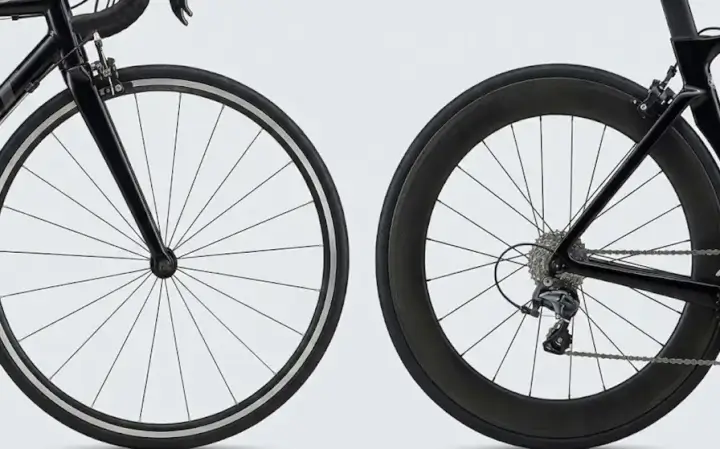
Cheap bikes come with heavy, shallow aluminum box-section rims.
Manufacturers often cut costs here because wheels are the first thing people upgrade. These stock wheels are durable, but they are heavy where it matters most: at the rim.
This rotational mass makes the bike feel sluggish when you try to accelerate. It takes more energy to spin them up to speed.
Superbikes come equipped with deep-section carbon fiber wheels.
These are aerodynamic marvels designed in wind tunnels. They slice through the air, essentially giving you "free speed" once you are rolling over 20 mph.
More importantly, they are incredibly stiff and light. When you push on the pedals, the bike accelerates instantly.
They also often use tubeless technology and high-end tires with low rolling resistance compounds, providing grip that budget tires simply cannot match in corners.
The Weight Weenies Factor
We have to talk about the scale.
A typical cheap road bike weighs between 9 and 11 kilograms (20 to 24 pounds). While this doesn't matter much on the flats, you feel every single gram when gravity starts working against you on a climb.
A superbike often hits the UCI weight limit of 6.8 kilograms (14.9 pounds), or comes very close to it, even with disc brakes and aero features. That is a massive difference.
Carrying three or four fewer kilograms up a mountain pass saves you significant energy.
The bike feels nimble, responsive, and easier to throw around when you are dancing on the pedals.
The Law of Diminishing Returns
This is the most critical part for a buyer to understand. The relationship between price and performance is not linear.
Going from a $500 department store bike to a $2,000 enthusiast bike is a revelation. The bike becomes 50% better in every way.
However, going from a $5,000 bike to a $15,000 superbike does not make the bike three times better.
You are paying exponential amounts of money for marginal gains.
You are paying thousands of dollars to save 200 grams or to save 4 watts of drag at 45 km/h.
Conclusion: Who Needs What?
So, what is the verdict?
The cheap bike is honest. It will get you fit, it will get you to your destination, and it is durable enough to take a beating.
It is perfect for beginners, commuters, or riders who want to enjoy the scenery without obsessing over data.
The superbike is a precision instrument. It is designed for racing and for riders who demand the absolute best ride quality.
It offers a sensation of speed and effortlessness that is addictive. It encourages you to push harder because the bike responds so beautifully to your effort.
If you have the budget, a superbike is a joy to own. But do not let the marketing fool you.
The rider is still the engine. A fit rider on a cheap bike will always drop an unfit rider on a superbike.
The bike makes a difference, but your legs make the result.