Rising temperatures across France are pushing Tour de France stages into riskier heat territory, with a 50-year analysis showing more July afternoons now crossing the UCI’s high-risk WBGT threshold and experts warn organizers may not stay lucky much longer.
A new scientific study has warned that rising temperatures in France are increasing the risk of dangerous heat conditions during the Tour de France.
The research, published in Scientific Reports, analyzed 50 years of climate data from 1974 to 2023.
Scientists examined six locations that regularly host stages of the race: Paris, Alpe d’Huez, Nîmes, Toulouse, Col du Tourmalet and Bordeaux.
They calculated the wet-bulb globe temperature, or WBGT, a measure used to assess heat stress.
The International Cycling Union considers a WBGT of 28C or higher to be high risk for athletes.
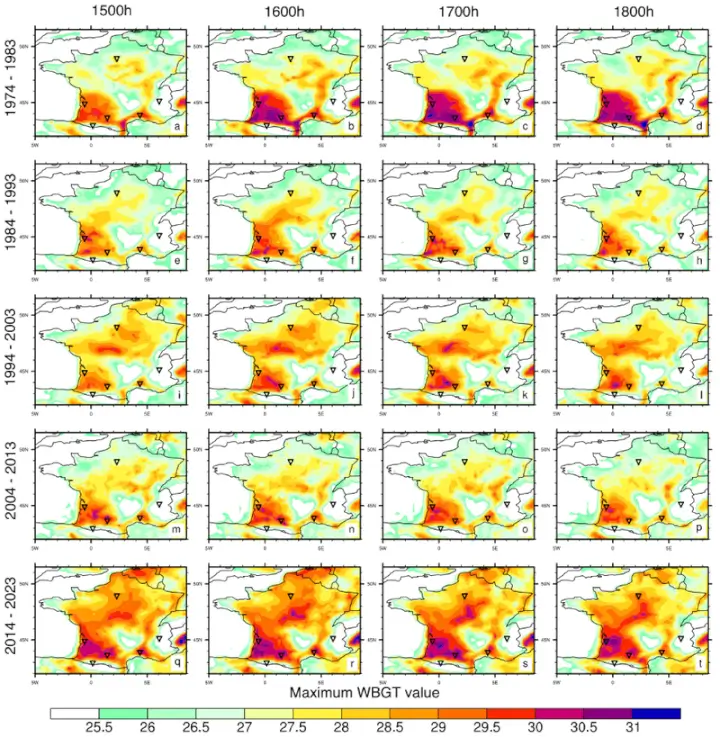
Maximum WBGT across France in July from 1974-2023. Triangles mark the six Tour de France locations analyzed in the study. Source: Cvijanovic et al.
The study found that heat stress levels have steadily increased across France over the past five decades.
Southern and eastern regions have warmed the fastest. In the last decade, most parts of the country have exceeded the 28C risk threshold at least once during July afternoons, when many Tour stages take place.
So far, those extreme heat days have rarely coincided with the race itself. But researchers say that may change.
Lead author Dr Ivana Cvijanovic said organizers have been “lucky” until now, adding that it will become harder to avoid high heat as extreme events grow more frequent.
The findings raise questions about whether race stages should start earlier or routes be adjusted in future years.