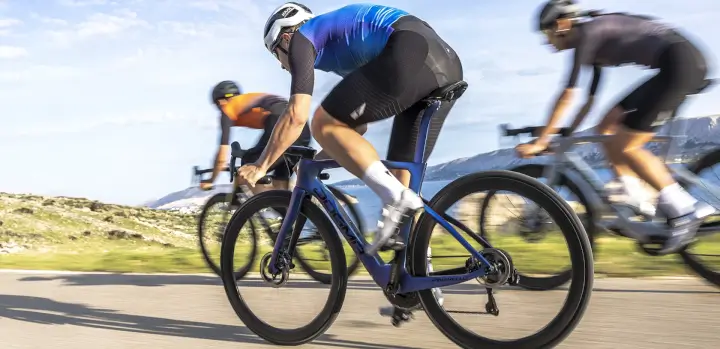
Your first ride can feel awkward and chaotic, but that’s normal. Build a plan that fits real life: short, predictable rides, proper setup, and rest. Stay consistent, and cycling becomes something you miss.
You’ve got the bike. You’ve got the helmet. You’ve got the shorts.
And then you get on… and reality hits.
The first ride rarely feels smooth. It feels awkward, heavy, slightly chaotic. Your legs don’t cooperate, your breathing feels off, and somewhere in the middle of it all you start wondering why you didn’t just go for a run instead.
That moment is normal. Everyone goes through it. There’s nothing wrong with you, and it’s not a sign that cycling “isn’t for you.” It’s just the starting point.
What actually matters is what happens next.
A cycling plan that sticks is not about intensity, discipline, or motivation. It’s about building something that fits into your life so naturally that you don’t have to fight yourself every time you ride.
And that starts small.
Start With The Basics That Make Riding Easier
Before anything else, make sure the experience itself is comfortable.
A helmet is non-negotiable. Safety always comes first. Bike shorts are not a luxury. They make a real difference, especially in the beginning. Water matters more than you think. Even short rides can dehydrate you quickly.
If something feels physically off, check your bike setup. Your seat should allow a slight bend in your leg at the lowest pedal point. Your handlebars should feel natural, not stretched or cramped. If things still feel wrong, a quick adjustment at a bike shop can save you a lot of frustration.
Why You Need A Plan In The First Place
It’s easy to say “I’ll just ride when I feel like it.”
That works for about three days.
Then something else takes priority. Work. Weather. Mood. Netflix. Life in general. And suddenly riding becomes something you “meant to do.”
A plan removes that negotiation.
Think of it less like a strict schedule and more like a framework. It gives you direction without pressure. It keeps you moving even when motivation disappears.
Without it, progress feels random. With it, even small efforts start to add up.
Step 1: Build Around Your Real Life, Not An Ideal One
Most people start by trying to redesign their entire schedule.
That almost never works.
Cycling does not need to take over your life to become part of it. The better question is simple: what can you realistically fit in right now?
Maybe it’s ten minutes. Maybe twenty. That’s enough.
You are not trying to build the perfect routine. You are trying to build a repeatable one.
Short, low-pressure sessions remove resistance. They make it easier to start, which is the only thing that really matters in the beginning.
Consistency always beats perfection.
Step 2: Keep Your Rides Short And Predictable
Once you’ve found time in your schedule, keep things simple.
Two to three rides per week. Twenty to thirty minutes each.
No need to go hard. No need to push limits. At this stage, the goal is not performance. It’s adaptation.
You are getting used to the movement. Your body is learning what this activity feels like. Your heart, your legs, your breathing all start adjusting quietly in the background.
This is where progress actually begins.
It may feel too easy. It may feel like it’s not enough. But this is exactly where most people make the mistake of doing too much, too soon.
Small efforts compound.
Every ride strengthens your cardiovascular system. Your legs become more efficient. Your endurance builds without you noticing it.
Over time, what felt difficult starts to feel manageable. Then normal.
Step 3: Treat Rest As Part Of The Plan
Riding is only half of the process.
Recovery is where progress happens.
After each ride, your muscles need time to repair. That is how they become stronger. Skipping rest or pushing through fatigue slows everything down and increases the risk of injury.
Instead, give your body space to adapt.
After a ride, don’t stop abruptly. A few minutes of easy pedaling helps your body transition into recovery. Hydration matters, especially within the first hour. A proper meal with protein, carbohydrates, and fats supports muscle repair and energy replenishment.
If your legs feel heavy or unusually tired, adjust. That might mean taking a full rest day or keeping your next ride very light.
Rest is not a break from progress. It is part of it.
What This Builds Over Time
At first, cycling feels like something you have to convince yourself to do.
Then it becomes something you expect yourself to do.
Eventually, it becomes something you miss when you skip it.
That shift does not come from intensity or discipline. It comes from repetition that fits your life.
A cycling plan that sticks is not about doing more. It is about doing enough, consistently, until it becomes part of who you are.
And once that happens, everything else becomes easier.