Road bikes look “pro” for a reason: they’re built to turn your effort into speed on pavement, with lightweight frames, thin tires, and drop bars that cut drag. But modern road bikes aren’t just for racers they span comfort, commuting, touring, and all-road adventures at every budget.
At some point, almost everyone who gets into cycling asks the same question: what exactly is a road bike, and why does it look like something built for professionals in tight Lycra rather than normal people with lives and errands?
The short answer is simple. A road bike is designed to move you forward on paved surfaces as efficiently as possible. Everything about it, from the frame to the tires, exists to reduce resistance and convert your effort into speed. It is less about brute force and more about elegance. You pedal, and the bike responds instantly, almost like it understands momentum as a language.
The longer answer is more interesting. Road bikes are not just for racers. Today, they exist across a wide spectrum of use cases, budgets, and personalities. Some are built for speed, some for comfort, some for long-distance adventures, and some for people who just want to ride through the city without feeling like they are dragging a piece of furniture behind them.
A Short History of Road Bikes
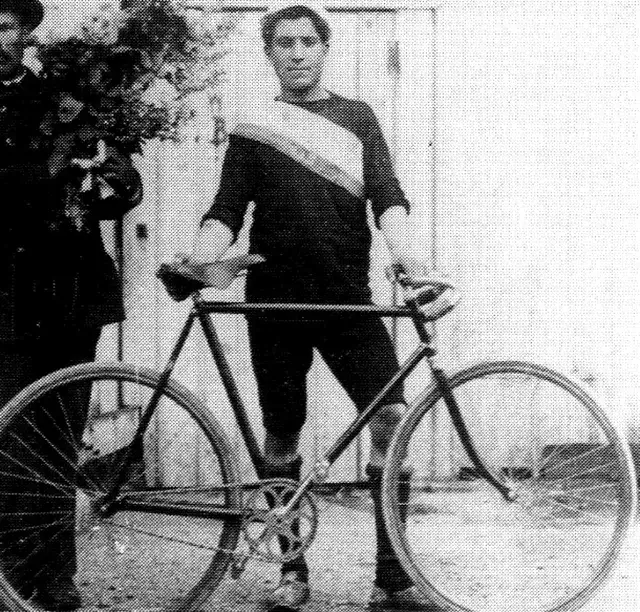
If you zoom out, the road bike is the result of nearly two centuries of iteration. Early bicycles in the 1800s were wooden, pedal-less, and frankly uncomfortable. Then came pedal bikes without proper tires, which improved usability but still felt rough and unforgiving.
The penny-farthing era introduced the iconic oversized front wheel. It looked dramatic and slightly dangerous, and it was both. These bikes were faster but unstable, and falling from one was not a minor inconvenience.
Everything changed with the introduction of chain-driven bicycles. Suddenly, bikes became lower, safer, and easier to control. Air-filled tires added comfort, and the basic structure we recognize today was born.
What is fascinating is that the core design has not changed much since then. The silhouette remains familiar, but the materials and technology have evolved dramatically. Modern road bikes use carbon fiber, advanced aerodynamics, and even electronic shifting systems. They are lighter, faster, and more precise than anything riders in the 19th century could have imagined.
Why Road Bikes Are So Efficient
The defining trait of a road bike is efficiency. It is engineered to waste as little energy as possible. Thin tires reduce rolling resistance. Lightweight frames make acceleration easier. Aerodynamic shapes cut through the air instead of fighting it.
This means that the limiting factor is rarely the bike. It is you. Your endurance, your cadence, your willingness to keep going when your legs start negotiating with you.
And that is exactly why road bikes feel addictive. They reward effort immediately.
Core Components That Define a Road Bike
At the heart of every road bike is the frameset, which includes the frame and the fork. This is the skeleton of the bike. Most modern frames are made from aluminum or carbon fiber. Aluminum is more affordable and still performs well. Carbon fiber is lighter, smoother, and more refined, which is why it dominates higher-end models.
Frame geometry has also evolved. Modern road bikes are more compact and optimized for both speed and comfort. Subtle changes in angles and tube shapes can completely transform how a bike feels over long distances.
Wheels are another key element. They are designed to be light and aerodynamic, often with fewer spokes and slightly wider tires than in the past. Interestingly, wider tires are not slower anymore. They can actually improve both comfort and performance due to better rolling dynamics.
Then there are the handlebars. Drop bars are a signature feature of road bikes. They allow multiple hand positions, which is not just about comfort but also control and aerodynamics. You can ride upright, lean forward, or fully tuck in depending on the situation.
Finally, the drivetrain is where precision lives. It includes the chainrings, cassette, derailleurs, and shifters. Together, they determine how smoothly you can adjust your effort across different terrains. Modern systems can be mechanical or electronic, but the goal is always the same. Seamless shifting, minimal friction, maximum control.
Types of Road Bikes
Road bikes are no longer a single category. They have evolved into distinct types, each designed for a specific kind of rider or experience.
Touring bikes are built for endurance in the literal sense. They are designed to carry weight, handle long distances, and remain stable under load. Comfort and durability matter more than speed here.
Endurance bikes focus on long rides on paved roads but with added comfort. They are ideal if you want performance without feeling like your body is being folded into an aggressive racing position.
All-road bikes are the hybrids of ambition. They are designed to handle both pavement and rougher terrain. If your routes are unpredictable or you like the idea of turning onto that random gravel path just to see where it goes, this is your category.
Aero bikes are built for speed and nothing else. Every line, every component is optimized to reduce drag. They are fast, sharp, and slightly unforgiving, like a machine that expects you to keep up with it.
Road Bike vs Other Bikes
Compared to mountain bikes, road bikes are lighter, faster, and far less tolerant of rough terrain. They are built for smooth surfaces and efficiency, not rocks, roots, or jumps.
Racing bikes are essentially a subcategory of road bikes. They push everything to the extreme. Lighter frames, more aggressive geometry, and components designed for performance rather than comfort.
What Are Road Bikes Actually Good For?
Road bikes are one of the most efficient forms of low-impact exercise. They are also practical. You can commute, explore, or simply clear your head after a long day.
There is also something intangible about them. They turn distance into something manageable. Places feel closer. Time feels different. You are not just moving through space, you are participating in it.
How Much Should You Spend?
Entry-level road bikes can be surprisingly good and often start below $1,000. They are more than enough for beginners or casual riders.
Once you move into carbon frames and higher-end components, prices climb quickly into the $3,000 range and beyond. At the top end, professional bikes can cost as much as a small car. At that point, you are not just buying a bike. You are buying marginal gains.