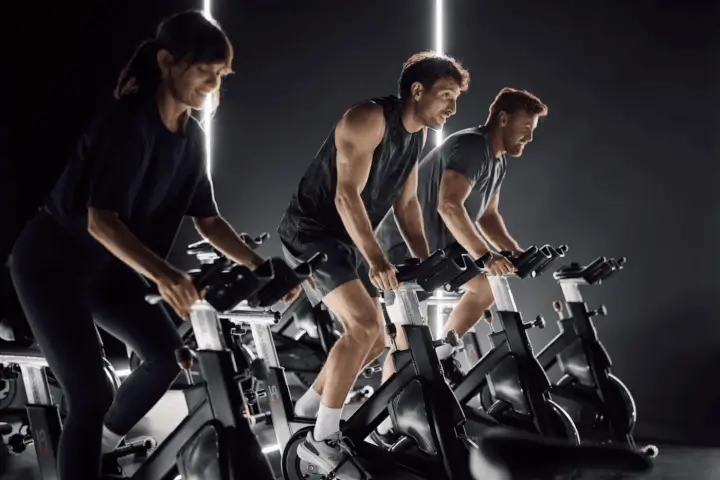
Indoor cycling can feel awkward and uncomfortable at first, but it gets better fast. Learn proper bike setup, focus on form, warm up, hydrate, and use simple intervals to build confidence, comfort, and results from your first rides.
Here’s the truth: the first few rides can feel surprisingly uncomfortable, confusing, and more intense than expected.
The good news is that this phase passes quickly.
Once you understand how to set up your bike, pace yourself, and move correctly, indoor cycling becomes one of the most efficient and flexible workouts you can do.
These tips will help you skip the most common beginner mistakes and get comfortable faster.
1. Expect Discomfort at the Beginning
The first thing to understand is that indoor cycling may not feel great right away.
If you’re not used to sitting on a bike saddle, you will likely feel soreness after your first few sessions. This is completely normal. Your body needs time to adapt to the pressure and positioning.
This discomfort usually fades within a couple of weeks if you stay consistent.
If it feels too intense, padded cycling shorts can help. They reduce pressure and make longer sessions much more manageable while your body adjusts.
2. Take Time to Set Up Your Bike Properly
A poorly adjusted bike is one of the fastest ways to ruin your experience.
Start with saddle height. When you stand next to the bike, the seat should be around hip height. When you pedal, your leg should be almost fully extended at the bottom of the movement, but not locked.
Handlebars should be high enough that your back stays neutral, not rounded. If they are too low, you will feel strain in your lower back and shoulders.
This setup may take a few rides to get right. Small adjustments make a big difference, so don’t rush this step.
3. Focus on Form From the Start
Form matters more than intensity, especially in the beginning.
Your back should stay straight, your core engaged, and your shoulders relaxed. Avoid rounding your spine or collapsing into the handlebars.
Your elbows should have a slight bend, and your grip should be light, not tense.
If something feels uncomfortable in your back or joints, it’s usually a sign that your position needs adjustment, not that you need to push harder.
4. Never Skip the Warm-Up
Jumping straight into a hard ride makes everything feel worse.
A short warm-up prepares your muscles, helps you find your rhythm, and allows you to check your position before the intensity increases.
Even three to five minutes of easy pedaling can make the rest of the workout feel smoother and more controlled.
Think of it as setting the tone for the ride rather than wasting time.
5. Learn When to Sit and When to Stand
Indoor cycling is not meant to be done in one position.
Sitting is more efficient for steady effort and endurance. Standing is useful for higher resistance, climbs, and short bursts of intensity.
If the resistance increases and sitting becomes too difficult, it’s normal to stand. When you do, keep your core engaged and avoid swaying side to side.
Switching positions also helps reduce fatigue and keeps the workout more dynamic.
6. Always Have Water Nearby
Indoor cycling is intense, even if the session is short.
You will sweat more than you expect, especially in a warm indoor environment. Dehydration can quickly affect your performance and how you feel during the ride.
Keep a water bottle within reach and take small sips regularly.
A towel or headband can also help keep sweat out of your eyes and make the experience more comfortable.
7. Use Resistance and Intervals
Pedaling at the same pace with the same resistance gets easier quickly.
To make progress, you need variation. This is where intervals come in.
Alternate between lower and higher resistance, or between slower and faster cadence. Short bursts of higher effort followed by recovery periods help build endurance and burn more energy.
You don’t need a complicated plan. Even simple changes in intensity during your ride will make a noticeable difference.
8. You Don’t Need Special Shoes
Clip-in cycling shoes are common, especially in spin classes, but they are not required.
Regular athletic shoes work perfectly fine when you’re starting out. The most important thing is that they fit securely in the pedals.
Choose shoes that are relatively lightweight and stable. Avoid overly bulky soles, as they can feel awkward on the pedals.
If you continue cycling regularly, you can consider upgrading later.
9. Wear Comfortable, Fitted Clothing
What you wear affects how comfortable your ride feels.
Loose or heavy clothing can trap heat and become uncomfortable quickly. Indoor cycling generates a lot of sweat, even during short sessions.
Lightweight, fitted clothing helps regulate temperature and prevents fabric from getting in the way.
This is not about appearance. It’s about practicality and comfort.
10. Practice Before Your First Class
If you’re planning to join a spin class, it helps to try a bike on your own first.
Even a short session will help you understand how the bike works, how to adjust it, and what pedaling feels like.
This reduces stress during your first class and allows you to focus on following instructions rather than figuring out the basics.
Confidence makes a big difference in group settings.
11. Arrive Early and Set Up Properly
If you’re attending a class, don’t walk in at the last minute.
Arrive at least 10 minutes early so you have time to adjust the bike to your height, check the resistance, and get comfortable.
It’s also a good idea to let the instructor know you’re a beginner. Most instructors will give you simple guidance or keep an eye on your form during the class.
Your first session is not about pushing to your limits. It’s about learning the movement and building a foundation.