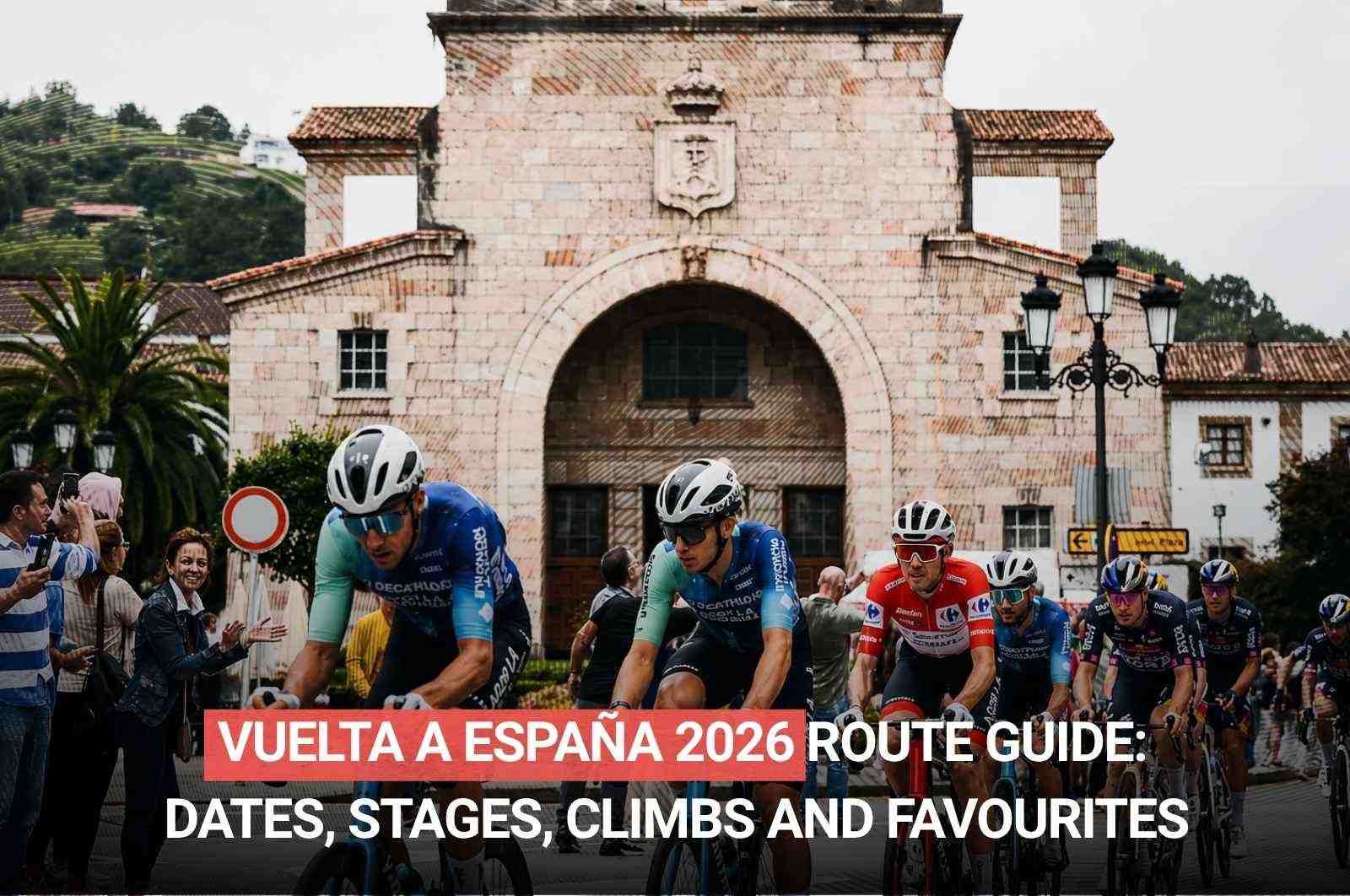
The 2026 Vuelta starts August 22 in Monaco and ends September 13 in Granada. 3,275km, 58,156m of climbing, and the first gravel in race history.
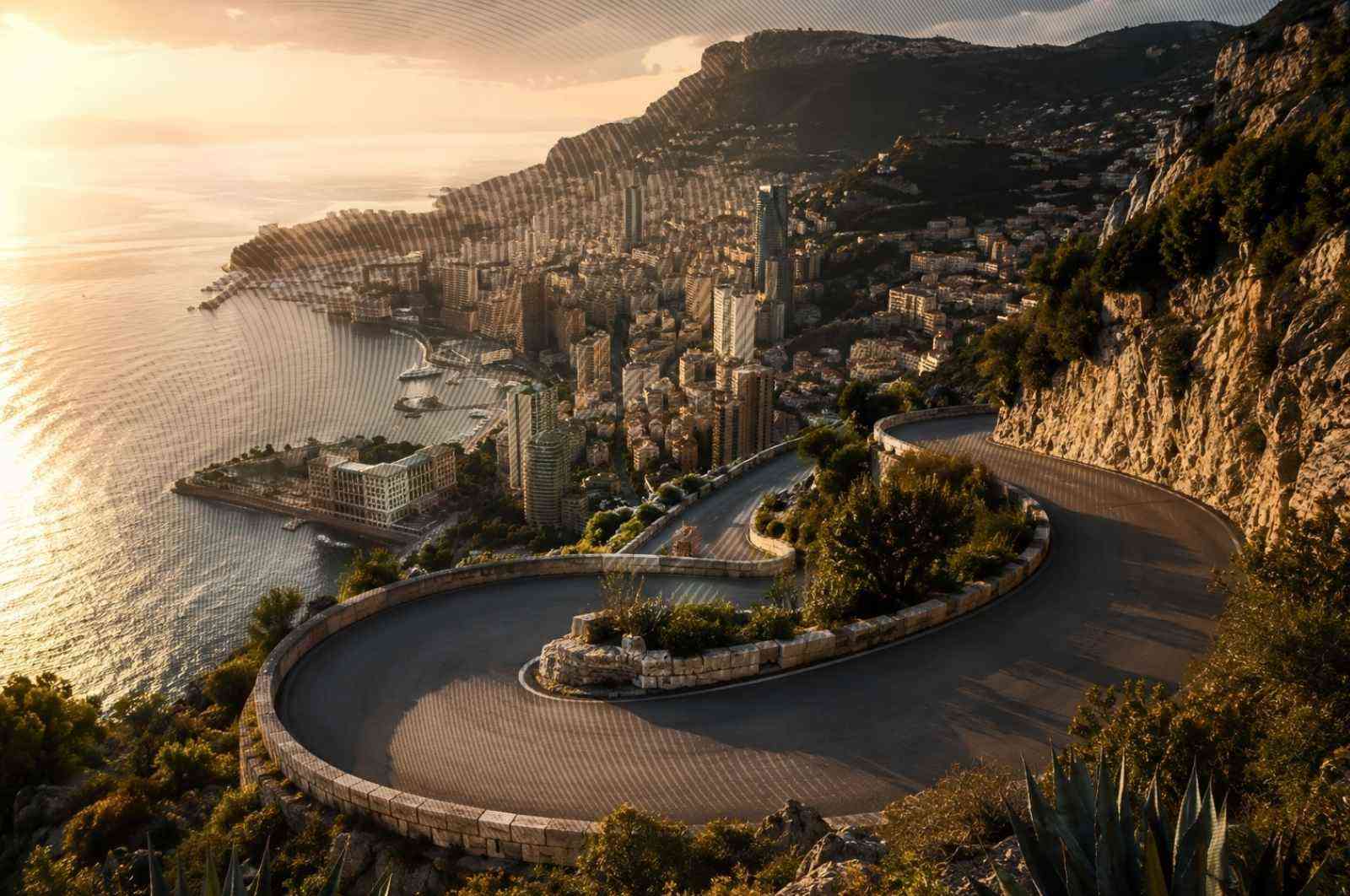
Picture from Monacolife
The 81st Vuelta a España rolls out of Monte Carlo on August 22.
It finishes in Granada on September 13, which is not where Grand Tours usually end.
Between those two points sit 21 stages, roughly 3,275 kilometres, and 58,156 metres of climbing.
That elevation figure is the whole story. This is not a route that hides its intentions.
Monaco Just Did Something No City Has Done
Stage 1 is a 9.4 kilometre individual time trial held entirely on Monegasque territory, starting beside the casino in Monte Carlo and finishing where the Formula 1 Monaco Grand Prix traditionally ends.
It is also a historical footnote worth more than a footnote.
Monaco hosted the Grand Départ of the 1966 Giro d'Italia and the 2009 Tour de France. With this Vuelta start, it becomes the first city ever to host the opening stage of all three Grand Tours. That is a genuinely unrepeatable record. Every other candidate city is now competing for second place.
Why A 9km Prologue Matters More Than It Should
Nine kilometres does not create big gaps.
It creates small ones, which is a different problem.
The Vuelta's general classification tends to be decided by narrow margins because the climbs are steep, short and repetitive rather than long and selective.
Twenty seconds gained on a technical Monaco circuit can still be sitting on the standings sheet in Granada three weeks later.
This is the third consecutive foreign start for the Vuelta, and only the seventh in the race's history.
The Route Refuses To Wait
Most Grand Tours ease in. This one does not.
Stage 4 on the official route is a circuit stage starting and finishing in Andorra la Vella. It is only 104 kilometres, which sounds gentle until you read the rest. Four climbs and a downhill finish, packed into a stage short enough that nobody has a reason to ride conservatively.
Short mountain stages are the most reliable chaos generator in modern stage racing.
Riders attack early because there is no distance left to punish them for it.
By the end of day four, the general classification will already look like something.
The First Gravel In Vuelta History
Stage 6, from Alcossebre to Castellón, includes 3.5 kilometres of unpaved road.
That is the first time unpaved sectors have ever appeared in a Vuelta stage.
Three and a half kilometres is short. It is also enough, on a hot day with a nervous peloton and narrow entry, to end somebody's overall classification in about forty seconds.
The Giro and the Tour have both learned this lesson repeatedly.
The Vuelta is about to learn it for the first time.
Where This Race Is Actually Won
The structure is unusual.
There is no Asturias, no Madrid, and almost nothing in the centre of Spain.
Instead the race runs down the Mediterranean and then hands the final ten stages to Andalusia.
The stage breakdown across the 21 days: two individual time trials, five flat stages, six hilly stages and eight mountain stages. Rest days fall on 31 August and 7 September.
The Time Trial Balance
Total time trialling across the route is 41 kilometres.
Nine of those are the Monaco opener, which leaves a 32.5 kilometre effort in the third week, in Jerez, as stage 18.
Placing the long time trial that deep is a deliberate choice.
It means a climber cannot simply build a cushion and defend, and a time trialist cannot be written off after week one.
The Summit Finishes That Decide It
The mountain finishes to circle are Calar Alto on stage 12, La Pandera, Peñas Blancas, and the Collado del Alguacil in the Sierra Nevada on stage 20.
Stage 20 is the queen stage and it is the last real opportunity.
A Sierra Nevada finish on the penultimate day leaves no recovery room whatsoever.
Then Granada, and a circuit finale past the Alhambra with five ascents of the same climb.
A closing circuit with repeated climbing is not a procession. It is a final exam with an audience.
Who The Route Suits
Jonas Vingegaard won in 2025.
He rode the Giro-Tour double this season, which leaves the door open.
Names on the long provisional start list include João Almeida and Primož Roglič, both of whom have histories with this race that need no explanation.
The honest read is that the route favours a pure climber who can survive 32.5 kilometres against the clock in week three. That is a narrower profile than it sounds.
Heat is the other variable, and it is not a small one.
Ten stages in Andalusia in late August and early September is a physiological event as much as a sporting one.
Where The Route Falls Short
It is very long on climbing and slightly short on variety.
Eight mountain stages plus six hilly stages means fourteen days where the same twenty riders are relevant.
Sprinters get five flat opportunities across three weeks, which is thin.
There is also a repetition problem.
When a route stacks summit finish onto summit finish, the racing can become conservative rather than aggressive, because everyone knows another chance is coming tomorrow.
The Vuelta's counterweight is the short stages.
Stage 4 at 104km and the gravel on stage 6 are the route's answer to that criticism, and they are good answers.
Whether they are enough answers is the question the first week will settle.
What To Watch For On Day One
Watch the gaps in Monaco, not the winner.
Nine technical kilometres will separate the GC contenders by seconds rather than minutes, and those seconds are the reason stage 20 in the Sierra Nevada will be raced the way it is raced.
Then look at Andorra on day four.
A 104km stage with four climbs and a downhill finish will tell you within ninety minutes who arrived at this race in form and who arrived hoping to find it.
Three weeks is a long time to hope.