Bridge the gap between riding and riding well with the core road-cycling skills that turn fitness into real performance from better vision and smoother braking to confident cornering, drafting, climbing, descending, and fueling on the move.
There is a quiet gap between riding a bike and riding it well. Most cyclists focus on fitness first. They track distance, speed, and effort. But skill is what shapes how that effort translates into performance.
Riding a road bike is not just about pedaling forward. It is about control, awareness, and small decisions that add up over time. The more precise you become, the more comfortable and confident you feel on any road.
The good news is that these skills can be learned and improved at any stage. You do not need to be a beginner to benefit from practicing them. In fact, experienced riders often gain the most by refining the basics.
Below are the core skills every road cyclist should know and revisit regularly.
Know Where to Look
Where you look determines how you ride. Your body and your bike naturally follow your gaze. If your eyes are fixed too close to your front wheel, your reactions become delayed and your line becomes unstable.
Instead of focusing on a single point, train your vision to scan the road in layers. Look ahead to spot changes in terrain, turns, and traffic. At the same time, stay aware of what is happening closer to your wheel, such as debris or rough pavement.
This constant scanning helps you anticipate rather than react. It gives you time to adjust your position, speed, or direction smoothly.
When riding in a group, this becomes even more important. It is tempting to stare at the wheel in front of you, but this limits your awareness. Try to look past that rider and read the movement of the group as a whole.
Checking behind you also requires control. Make sure the road ahead is clear before turning your head. Keep your hands steady on the handlebars and avoid sudden movements.
Over time, this habit becomes automatic. Good vision is one of the simplest ways to improve both safety and efficiency on the bike.
Get Comfortable With Clipped-In Pedals
Clipless pedals can feel intimidating at first. Many riders experience a few awkward starts or even a slow fall while learning. This is completely normal.
The key is to focus on momentum and simplicity. When starting, clip in one foot first. Position that pedal so it is ready to deliver a strong downward push.
As you begin moving, look ahead instead of down. Push firmly on the clipped-in pedal and bring yourself onto the saddle. Let the bike gain a bit of speed before worrying about clipping in the second foot.
Trying to do everything at once often leads to instability. Give yourself time to settle into motion before completing the process.
Choose a good environment to practice. A flat, smooth surface makes starting easier. Avoid steep inclines or soft ground, as both reduce your ability to build momentum.
With repetition, clipping in becomes automatic. What feels awkward at first eventually turns into a seamless part of your ride.
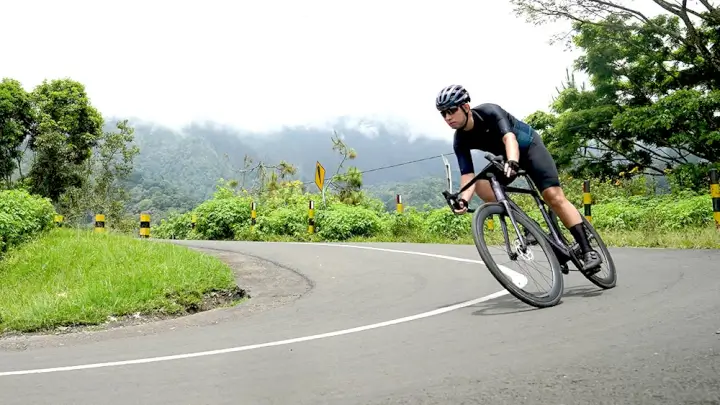
Figure Out How to Corner
Cornering is a skill that improves both safety and speed. Even small adjustments in technique can make a noticeable difference.
Before entering a corner, reduce your speed. Braking should happen while you are still riding in a straight line. Entering a turn too fast or braking during the turn can reduce traction and increase the risk of slipping.
As you approach the corner, take a wider line if the road allows it. Move toward the outside, then aim for the apex, which is the tightest part of the turn, and exit wide again.
Your body and bike should lean together. Keep your inside pedal up and your outside pedal down. Press your weight into the outside foot to create stability.
Do not make sudden changes while turning. Avoid shifting your hand position or braking sharply. Smoothness is what keeps you in control.
Practice different types of corners. Tight turns, wide curves, and varying road conditions all require slight adjustments. The more variety you experience, the more confident you become.
Smooth Out Your Starts and Stops
Braking is often underestimated as a skill. Many riders treat it as an emergency action rather than a controlled process.
Think of your brakes as something you modulate gradually. Apply pressure smoothly instead of grabbing them abruptly. This helps you maintain balance and avoid sudden jolts.
Modern road bikes, especially those with disc brakes, respond quickly. This makes it even more important to develop a gentle touch.
Use both front and rear brakes together for balanced stopping. The front brake provides most of the stopping power, while the rear brake adds stability.
When you need to slow down significantly, shift your weight slightly backward. This helps prevent the rear wheel from lifting and keeps the bike stable.
Practicing controlled stops can make a big difference. Try slowing down gradually and stopping at a specific point. Over time, this builds confidence in your braking ability.
Work on Drafting
Drafting allows you to ride more efficiently by reducing wind resistance. It is a valuable skill for group rides, but it requires attention and practice.
Start by riding behind an experienced cyclist. Keep a comfortable distance at first. You do not need to ride very close to benefit from drafting.
Focus on maintaining a steady speed. Sudden changes in pace can create instability and increase the risk of contact.
Pay attention to signals from the rider ahead. They may point out obstacles or adjust their position to avoid something on the road. Listening and observing are essential.
Communication is important. If you need to slow down or adjust, speak up. Clear signals help everyone stay safe.
As your confidence grows, you will naturally become more comfortable riding closer to others. This progression should happen gradually, not by force.
Perfect Your Climbing Skills
Climbing is not just about strength. It is about pacing, efficiency, and maintaining control over your effort.
A common mistake is starting too hard. This often leads to fatigue before reaching the top. Instead, try to divide the climb into sections.
Begin at a pace that feels easy. Gradually increase your effort as you progress. Finish strong rather than struggling at the end.
Stay relaxed in your upper body. Keep your hands on the hoods or tops to allow for better breathing. Avoid unnecessary tension in your shoulders and arms.
Most of the time, staying seated is more efficient. Standing can be useful for short periods, but it requires more energy.
Focus on smooth pedal strokes. Try to keep your movement consistent and controlled rather than pushing unevenly.
Practicing different types of climbs helps build skill. Vary the length and steepness of your routes to develop a more complete ability.
Learn How to Descend
Descending can feel intimidating, especially at higher speeds. The key is to stay controlled and relaxed.
Ride in a lower position, typically in the drops, to improve stability. Keep your hands ready on the brakes so you can adjust your speed when needed.
Your body should remain loose. Tension makes the bike harder to control. Allow your arms and legs to absorb small bumps in the road.
Distribute your weight evenly between both wheels. This helps maintain balance and traction.
When approaching a corner on a descent, reduce your speed before entering the turn. Avoid braking while leaning, as this can reduce grip.
Always stay aware of your surroundings. Roads are unpredictable, and conditions can change quickly. Riding with awareness allows you to react calmly.
Confidence in descending comes from practice. Start on familiar roads and gradually build your comfort at higher speeds.
Rehearse Your Eating and Drinking While Riding
Eating and drinking while riding may seem simple, but it requires coordination and balance.
One of the most common mistakes is looking down while reaching for a bottle or food. This can cause the bike to drift. Keep your eyes focused ahead.
Practice the motion in a controlled setting. You can even rehearse it on an indoor trainer. The goal is to make the movement automatic.
Choose easy-to-reach pockets for your nutrition. This reduces the time your hand is off the handlebars.
Take advantage of natural pauses, such as stopping at traffic lights, to eat or drink when possible.
Maintain enough speed to stay stable while reaching for your bottle. Moving too slowly can make balancing more difficult.
With repetition, these actions become part of your normal riding routine. Good fueling habits support both performance and comfort.