Yungcheeezy rode a scrapyard drivetrain for 4,000 miles and pedaled 3,000 miles in sandals held together by three screws and a nail. His trip is a receipt cycling didn't want.
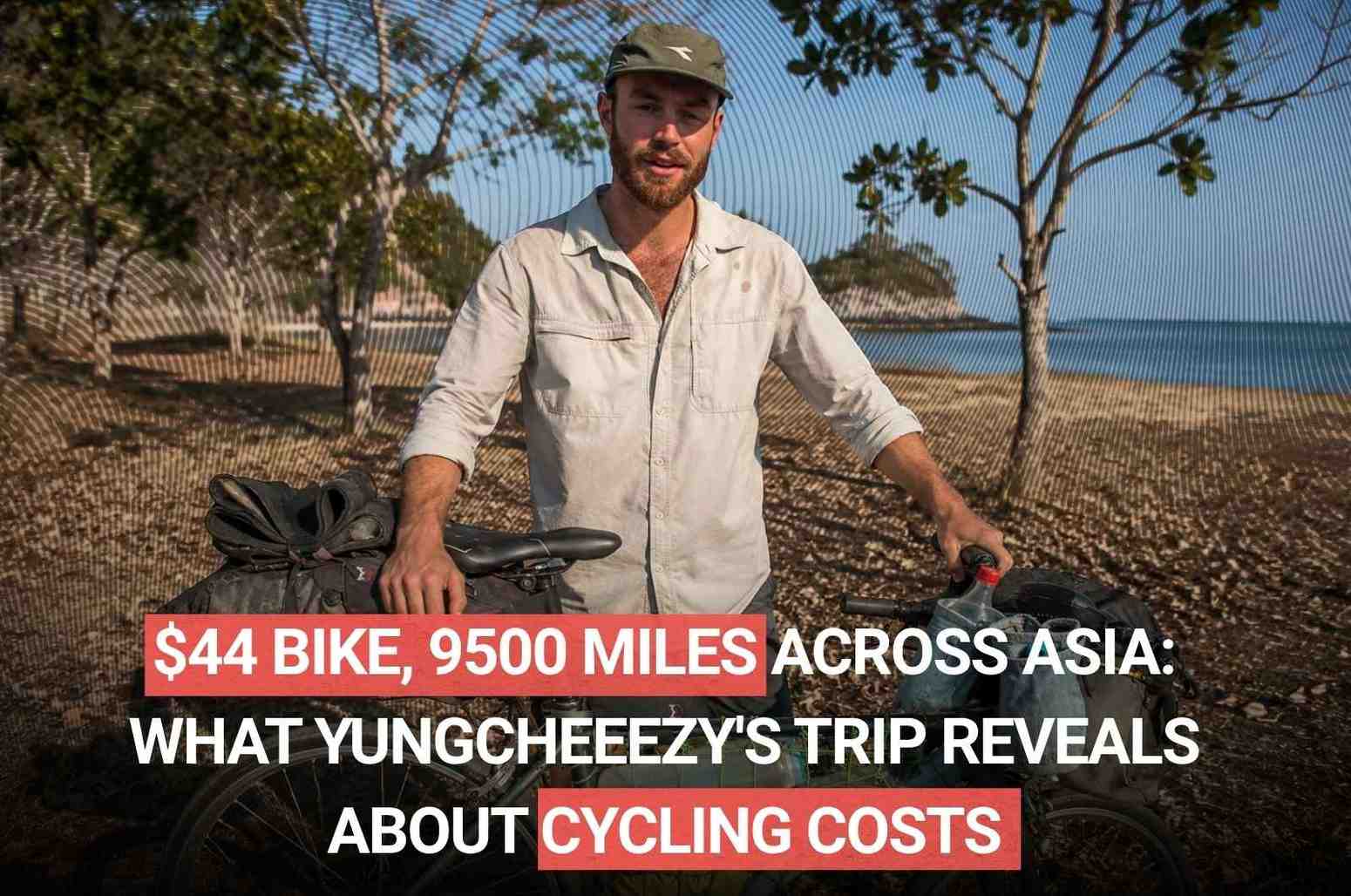
Somewhere in the last 1,400 miles of a 9,500-mile ride through Asia, a $44 bicycle stopped breaking.
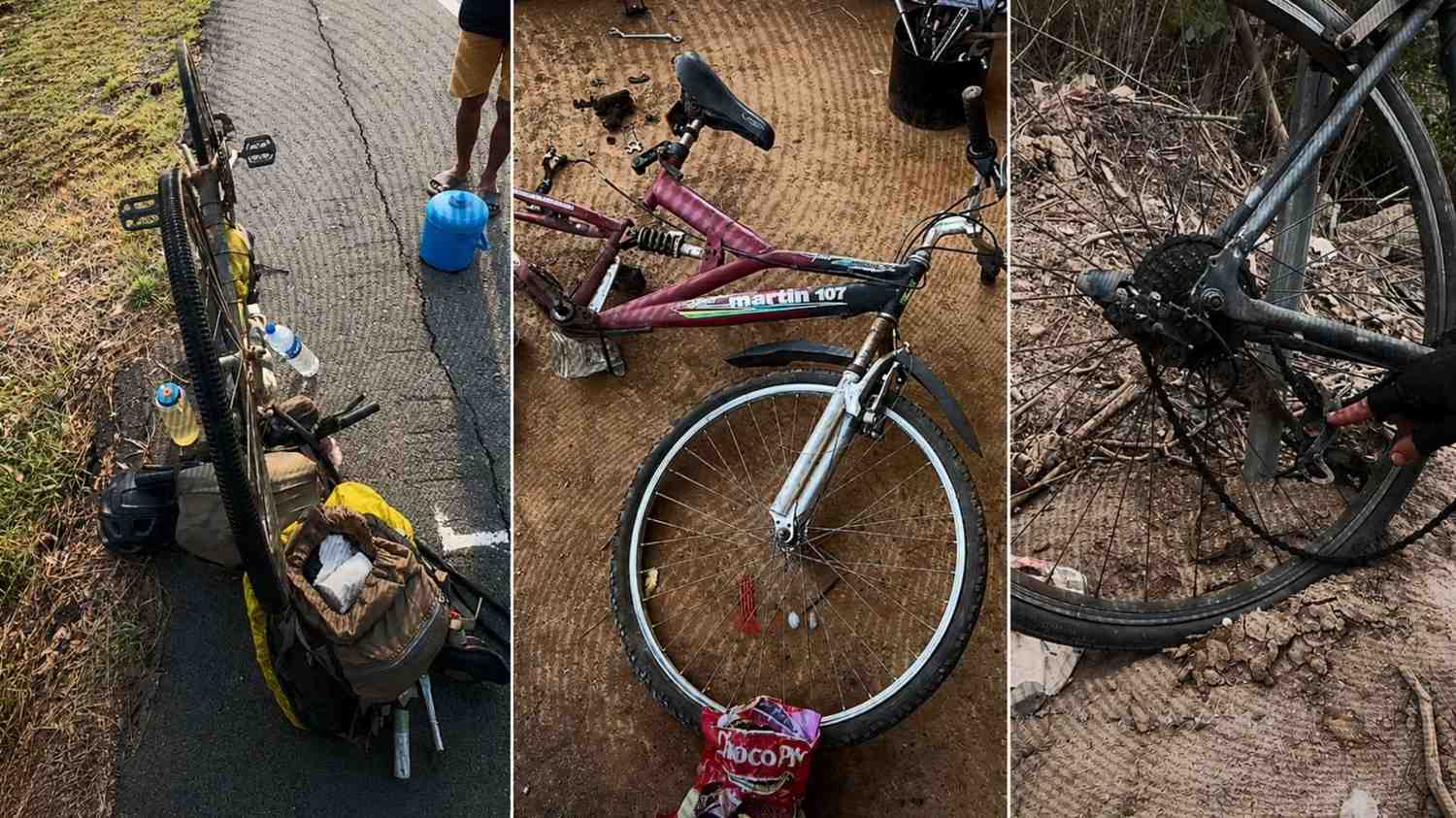
It had already burned through three chains, three freewheels, two full sets of tires, one chainset, and fourteen spokes.
Its owner, a solo traveler who posts as yungcheeezy on Instagram, had by that point become his own mechanic, his own supply chain, and something close to a folk hero for the 86,000 people who watched the trip unfold in real time.
That is the part the cycling industry has to sit with.
Because everything about this trip contradicts the story the industry sells you.
The Ride, By the Numbers
Ten countries. Seven months. 9,500 miles.
The bike cost forty-four dollars.
He got caught in 106-degree heat across Cambodia.
He woke up in China to a rear wheel that had frozen solid overnight.
Northern Vietnam gave him days of rain without a single break in the clouds.
His worst single day was nine flat tires after a $4 tire blew out in Thailand.
The rear derailleur ripped off into his spokes twice. Both times, he salvaged a replacement from an abandoned bike beside the road.
The drivetrain that carried him the final 4,000 miles was harvested from a scrapyard in Vietnam.
His frame bag was rope, cost two dollars, and held the whole way.
For the last 3,000 miles, he pedaled in sandals held together by three screws and a nail.
Then, in the last stretch, the bike just went quiet. Fourteen hundred miles without a flat.
As if it had been listening the whole time, and finally decided he had earned it.
The Industry Sells You a Story. This Trip Was the Receipt.
Walk into any bike shop in the developed world in 2026 and the first thing you see is a $13,000 carbon flagship under spotlights. The message is not subtle.
Serious cycling requires serious money. Reliability is a premium feature.
Adventure is a lifestyle category with a price tag attached.
Yungcheeezy's ride is a live-fire experiment against that entire premise. Not a $2,000 gravel bike with tubeless setup and a Garmin.
Not a $600 hardtail from a big box store. A forty-four dollar bicycle that a lot of shop mechanics would refuse to work on.
And it did not just complete the trip. It completed it while its owner was actively harvesting parts from other people's abandoned bikes.
That is not endurance. That is an indictment of the story we tell about what cycling costs.
What Peer-Reviewed Research Actually Says About the Cost Barrier
A 2023 narrative review published in Frontiers in Sports and Active Living looked at what actually stops adults from taking up cycling.
The research team synthesized ten studies covering surveys, interviews, and focus groups across multiple countries. The leading barriers were not what the marketing suggests.
Riders cited traffic exposure, poor infrastructure, and community perception of cyclists far more consistently than gear cost.
In studies specifically of people on lower incomes, loaner-bike programs were repeatedly shown to remove the entry barrier entirely.
Not carbon frames. Not tubeless setups.
A bike that rolls.
That's quietly powerful.
The academic literature and a solo Instagram rider just arrived at the same conclusion by very different routes.
The bike is not the barrier.
The industry has been selling a solution to a problem that was never the main problem.
Where the $44 Approach Genuinely Falls Short
Nine flats in a day is not a badge of honor. It is an information cost.
Every one of those flats was time on the shoulder, a puncture kit running low, a heartbeat spent on maintenance instead of movement.
A derailleur that rips off into your spokes at speed is a crash risk, not a character-building moment.
On a descent, at load, with a fully packed frame bag, the same failure could have ended the trip in an emergency room. Yungcheeezy got lucky twice.
That is worth naming.
Cheap components also fail unpredictably. A drivetrain from a mid-tier groupset gives you clear warning signs before it dies.
A scrapyard drivetrain does not. That unpredictability is fine if your day is elastic.
It is not fine if you have a plane to catch, a group to meet, or a job to get back to on Monday.
If you want to see how the cost math actually breaks down for someone starting out, the full cost of starting to cycle in 2026 tells a more nuanced story than either extreme.
The Real Difference Between Cheap and Expensive
This is where nuance matters. Yungcheeezy's ride does not mean a $13,000 bike is a scam.
It means a $13,000 bike is a specific tool for a specific job, and most riders are not doing that job.
A premium bike buys you predictability, weight savings measured in grams, and marginal aerodynamic gains that matter at race pace.
A $44 bike buys you the ride itself, which is the part everyone forgets to price in.
If you want a full teardown of what the money actually gets you, the comparison of a cheap bike versus a superbike walks through the engineering line by line.
For the enthusiast reading this: the honest question is not cheap or expensive. It is what you actually plan to do.
A weekly 40-mile group ride justifies a mid-tier road bike. A dream of pedaling from Kunming to Bangkok does not require you to wait until you can afford a $4,000 touring rig.
It requires a working bike and a willingness to start.
Three lessons sit inside the numbers. They are worth pulling out.
One: the road provides. Every catastrophic failure yungcheeezy hit was met by a repair option he did not have to plan for.
Bike shops. Roadside scrap.
Local riders who noticed a foreigner walking a broken bike and knew what to do.
This is not luck. It is the shape of the world when you are actually in it, moving slowly, visibly needing help.
Traveling on an unreliable bike, he said, meant meeting more people who love bikes.
Two: gear failure is information, not disaster. A blown tire tells you something about your tire pressure, your load, your route, your reading of the terrain.
Nine blown tires in a day tells you a lot. Riders who buy their way out of ever failing also buy their way out of ever learning that particular language.
Three: the plan is not the trip. He was clear on this in the video.
You will throw your initial plan out the window. That is not the end of the world.
You will figure it out.
The Statement Cycling Just Made
The industry now has to decide what to do with a $44 bike that outrode most WorldTour service courses in terms of raw mileage covered per dollar spent.
It will probably do nothing, because there is no advertising revenue in "you already have enough."
That is fine. The riders who see this video will do the math themselves.
Somewhere out there is a used bike on Facebook Marketplace for under $100 and a person who has been telling themselves for two years that they cannot afford to start.
Yungcheeezy just handed them the excuse-killer.
The road might have a few speed bumps.
You might have to throw your initial plan out the window.
.webp)