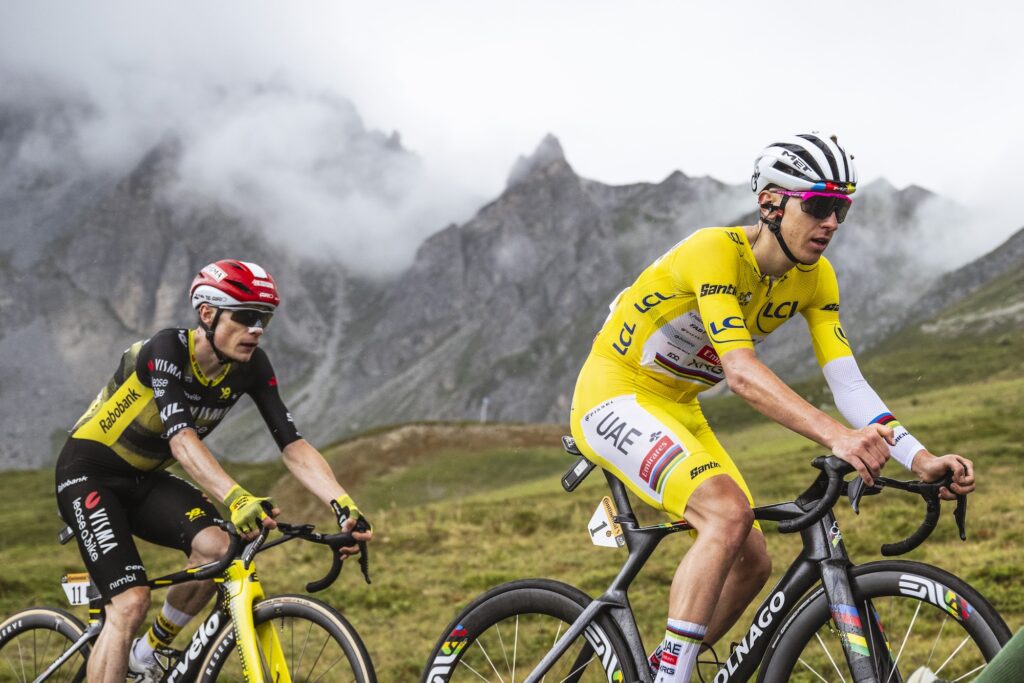
Tadej Pogacar and UAE Team Emirates are dominating cycling at a rate we have never seen before
Following Tadej Pogacar’s third consecutive Tour de France win, many people brought up this very contoversial topic again. Fans want to see exciting and unpredictable racing, but for years they’ve been getting the exact opposite.
Right now in cycling we often see one rider who sits above the rest in a certain race, without a true rival who could challenge him. Just take a look at this year’s Giro d’Italia for an example.
Jonas Vingegaard went to Italy with the goal of completing the Grand Tour Trilogy, a feat that has only been achieved by seven riders before his attempt. However, without Pogacar and Evenepoel at the start line the Dane made this historic achievement look like a formality.
At least in the Monuments we have been seeing some closer racing, but at the same time they have been at least as predictable as the Grand Tours.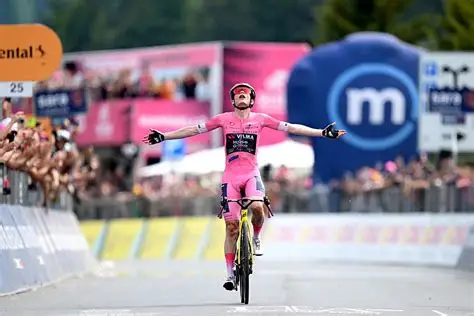
This mindblowing stat sums it perfectly: Twelve of of the last thirteen Monuments have been won by just two riders: Tadej Pogacar and Mathieu van der Poel. The exception?
This year’s Paris-Roubaix, where Wout van Aert came out victorious, after outsprinting Pogacar in the Roubaix Vélodrom, who was looking to win his fifth Monument in a row. However, even the Belgian was considered as one of the top favorites prior to the race, so his victory was far from a huge surprise.
“Right now, it feels like it’s a one-trick pony and the rest of us are just picking up scraps,” said Doug Ryder, manager of Pinarello Q36.5 Pro Cycling during the Tour de France. Most of the peloton is clearly frustrated, but not for the first time.
UAE Team Emirates-XRG’s recent dominance in recent years (they won a record 97 races last season, 93 more than fellow WorldTour teams Picnic and Intermarché-Wanty), has accelerated the push for change within cycling. The so called super-teams are getting stronger and stronger, leaving the rest splashing around for the odd victory to boost morale.
But in some cases even those odd victories are not enough to stop them from going bankrupt and disappearing from the peloton. So, with all that in mind, what can be done to stop this negative spiral? Here are five changes the UCI could make in order to make races more exciting:
Budget/Salary Cap:
"At the moment, the three or four richest teams hoover up all the best young riders," said Christian Prudhomme, the race director of the Tour de France, in a wide-ranging interview with Andy McGrath during this year’s Grand Boucle.
However, unlike many other directors, Prudhomme came with an idea, one that has been discussed several times already in the past. He has said that he is in favour of a salary cap for professional cycling teams in order to foster "real competition" in the peloton.
"Us, we’re clearly favourable. It exists in French rugby. There are discussions in effect with the UCI, the riders, teams and us." added the Frenchman.
Next to French rugby there are numerous other professional sports leagues that also have some kind of a salary cap system. Most people associate the salary cap with the American major sports leagues (NBA, NFL, MLB, NHL).
But how exactly do salary caps work?
Simply put, salary caps limit the amount of money that teams can spend on rider salaries. But even in America every league has its own structure.
For “soft” caps, various exclusions or definitional loopholes may allow flexibility in the calculation of the cap by using upfront signing bonuses, deferred compensation and other incentive clauses, while for “hard” caps, limits are more strictly defined.
However, there is another budget-limiting system that has been more effective than the previous two. The NBA only imposes a so-called "luxury tax", which allows the weathier teams to go over the cap.
The funds that are collected through these “taxes” are then distributed league-wide. Overall, this system helps sustain small-market or poor-performing teams, but it also lets the super-teams to use their financial supremacy.
The NBA first introduced the luxury tax as part of the collective bargaining argreement in 1999, but it has only been used since the 2002-2003 season. However, in the first couple of decades this change was highly ineffcetive, as the league was still dominated by 3 to 4 franchises.
But the introduction of a stricter version in 2023 completely transformed the league. Since 2023 we have seen four different teams lift the Larry O’Brien Trophy, which we had not seen before in the 21st century.
Meanwhile, the National Football League uses a lot more straightforward system. All of the NFL's 32 teams must keep their team-wide payroll below a certain amount that fluctuates somewhat each year but generally rises due to the constant inflation of prices worldwide.
Unlike in the NBA, teams that violate the cap face extremely strict penalties, which basically makes overspending unsustainable. But how could these rules be implemented into cycling?
Unfortunately, a budget cap in cycling runs into practical obstacles that the American leagues don’t have. Firstly, in cycling we have teams based in many different countries that have their own independent financial rules.
For example, a cyclist that rides for a French team has to pay significantly more money in taxes compared to a rider who represents UAE.
Those clashing tax laws could be diminished with a collectively negioated, legally binding agreement between teams, nations and the UCI, although for that to happen we would likely need a consensus between all the politicians as well, which in today’s world seems like an impossible quest.
However, Formula One, an international sport, has one, and UEFA, football’s European governing body, also has a budget cap for its competing teams who are based in 55 different countries, so it’s definitely not impossible to create a system that would satisfy everybody. Having said that, that’s far from the only concern regarding budget caps.
Because there is such a big gap between the super-teams and the smaller ones in terms of their budget, it would be very complicated to calculate the exact limit. Last year the average men’s WorldTour team budget was around $33 million, but you can’t just use that as the financial barrier.
Firstly, we don’t know how much of that is allocated to rider salaries because teams are not forced to publish their yearly expenditures. 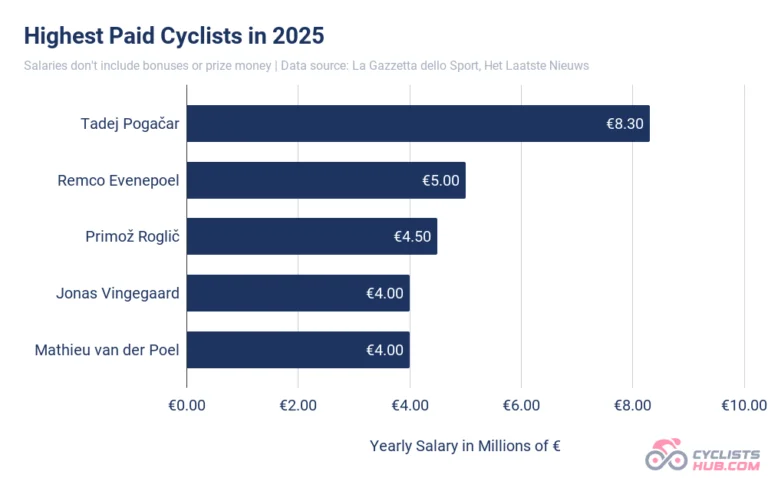
Secondly, the $33 million is just the average. There are many teams that spend way more than that, while others don’t even come close to that figure.
So if the UCI were to introduce this number as the limit, teams such as UAE, Lidl-Trek and Red-Bull Bora would probably have to release a good chunk of their roster, while the poorer ones like Picnic and Lotto-Intermarché would be able to retain all of their riders.
Also, due to the year-to-year inflation the UCI would also have to adjust the cap accordingly by either some sort of calculated inflationary metric or by a simple percentage.
Next to that, leagues with salary caps also have spending minimums to ensure that there is financial pressure on the underspenders as well, although these minimums are hardly necessary in the major American sports as team budgets don't generally fall near them.
But cycling is completely different in that sense due to its sponsor-reliant financial structure. Every year we have at least a couple of teams that struggle to stay afloat, so imagine how many more teams would be on the brink of bankruptcy if they had to meet a spending minimum as well.
Lastly, some riders don’t actually get their full salary directly from their team. For instance, Mathieu van der Poel’s salary is split between Alpecin and the team’s bike sponsor Canyon.
So, if there was hypothetically a salary cap, then only half of Mathieu’s salary would count against it. And that is not just the only way teams would be able to cheat the system.
Personal sponsors such as Red Bull and many other bike manufacturers also give riders quite a lot of money and teams could also use them to get around the rules and save some salary, which they can spend on resigning others and keeping the core of the team in place.
But even if somehow the UCI manages to find a solution to all these issues, there is still one huge concern that would need to be addressed. In 2020 cycling’s governing body introduced the relegation/promotion system that involves both the WorldTour and ProContinental teams.
At the end of the three-year cycle the worst performing WorldTour teams lose their licences to the best teams in the “second division”. This system makes the introduction of a salary cap even more difficult.
The UCI would likely need to work out two completely separate financial systems, but at the same time they would still need to be relatively similar, in order to keep the transition from one division to another feasible.
Currently we are in the first year of the three-year cycle, which means that the earliest we could see a salary cap implemented in cycling would be from the start o the 2028 season.
However, for that to happen race organizers such as Prudhomme and the leaders of the teams and the UCI would have to be willing to sacrifize some of their prioritizes. It would definitely be a hard task to get everybody on the same page, but as we have seen in other, even more successful sports, it’s not impossible at all.
UCI Points Limit:
While the UCI Points system clearly hinders the introduction of a salary cap, at the same time it opens the opportunity for a different kind of limitation.
In January, Soudal Quick-Step’s CEO Jurgen Foré suggested that instead of a salary cap it would be better to introduce a ruling that would prevent teams from fielding several world-class riders in their Tour de France roster.
“I would be in favour of a sporting regulation where there is a maximum amount of UCI points that you can bring to the start of a one-day race or a Grand Tour. That would already make a more equal playing field. Then it would be impossible to go to the Tour de France with a team where the eight riders cost more than my team of 30 riders,” Foré said
Foré argued that implemeting a system that is based on sporting merits would be far easier compared to an economical one.
“If you intervene in the business or economic model, there will always be a regulatory body saying it’s anti-competitive, so make a sporting regulation that is more equal and teams will be obliged to be more creative in how they approach a sporting event.”
You can’t really question his reasoning, however just like with the salary cap, this suggestion also has its own drawbacks.
Many people believe that teams would find a workaround to still be able to select their best riders in the biggest races, by for example not sending their highest point-scoring riders to many races before the Tour, therefore limiting the amount of points they can collect.
This change would also go against an even more controversial topic, which calls for the best riders to race against each other more often. This is one of the original reasons why races have become so predictable over the years, so this method would probably end up making the situation even worse instead of solving it.
“To have Tadej, Jonas and Remco and the other top guys racing more often would create more interest and more hype,” said Q36.5’s Ryder.
However, if such system were to be implemented, then how would it look exactly? Well, it would be a lot more simple compared to the already discussed budget cap.
There would be a maximum amount UCI points teams can bring to each race. But to make it work it shouldn’t be measured from the start of the season, because than the UCI would have to change the limitation from race to race, which would make season planning for teams virtually impossible.
As a simple solution, the points each rider scored in the last 365 days should be taken into account. However, for a dominant rider like Pogacar that would number would be around 11 000.
His rate of points scoring just complicates things even further. Because a rider is not allowed to race without teammates, the points limit would have to be at least 15 000 in order to stop that from happening.
However, some teams don’t even score that many points collectively, so this ruling wouldn’t affect them at all. You could argue that this way Pogacar would be less dominant because he would not have good enough teammates to control the races in the first place.
On the other hand, penalizing a team because of one rider’s excellence would put a poor light on cycling as a whole. Instead, a logical move would be to try to replicate Major League Soccer’s designated player rule.
People often refer to this ruling as the “Beckham Rule”, as the British football star was the first player signed under this rule back in 2007. The regulation itself is quiet straightforward: it allows MLS franchises to sign up to three players that would be considered outside their salary cap.
The rule simultaneously enables teams to sign superstars like Lionel Messi and Zlatan Ibrahimovic and also ensures that the league still operates under a salary cap based structure, in order to keep things competitive.
It’s a rule that can be implemented into pretty much any sport and it’s also far less complex than the salary cap systems, making it more understandable for casual fans. So, at the start of every race teams would get to pick a maximum of two riders that would not count towards the points limit.
As a result the likes of Pogacar, Evenepoel and Vingegaard wouldn’t be without teammates, however their teams would definitely be less dominant.
A rule like this would also probably have a huge effect on the transfer market. UAE would almost certainly not be able to send both Del Toro and Pogacar to the Tour de France. As a consequence one of them would likely ask to leave, which would mean that the best riders would be more equally spread across the peloton.
Overall, just like the previous one, this system also offers plenty of positives and negatives, however it can be introduced right away, making it a more attainable solution for this urgent problem.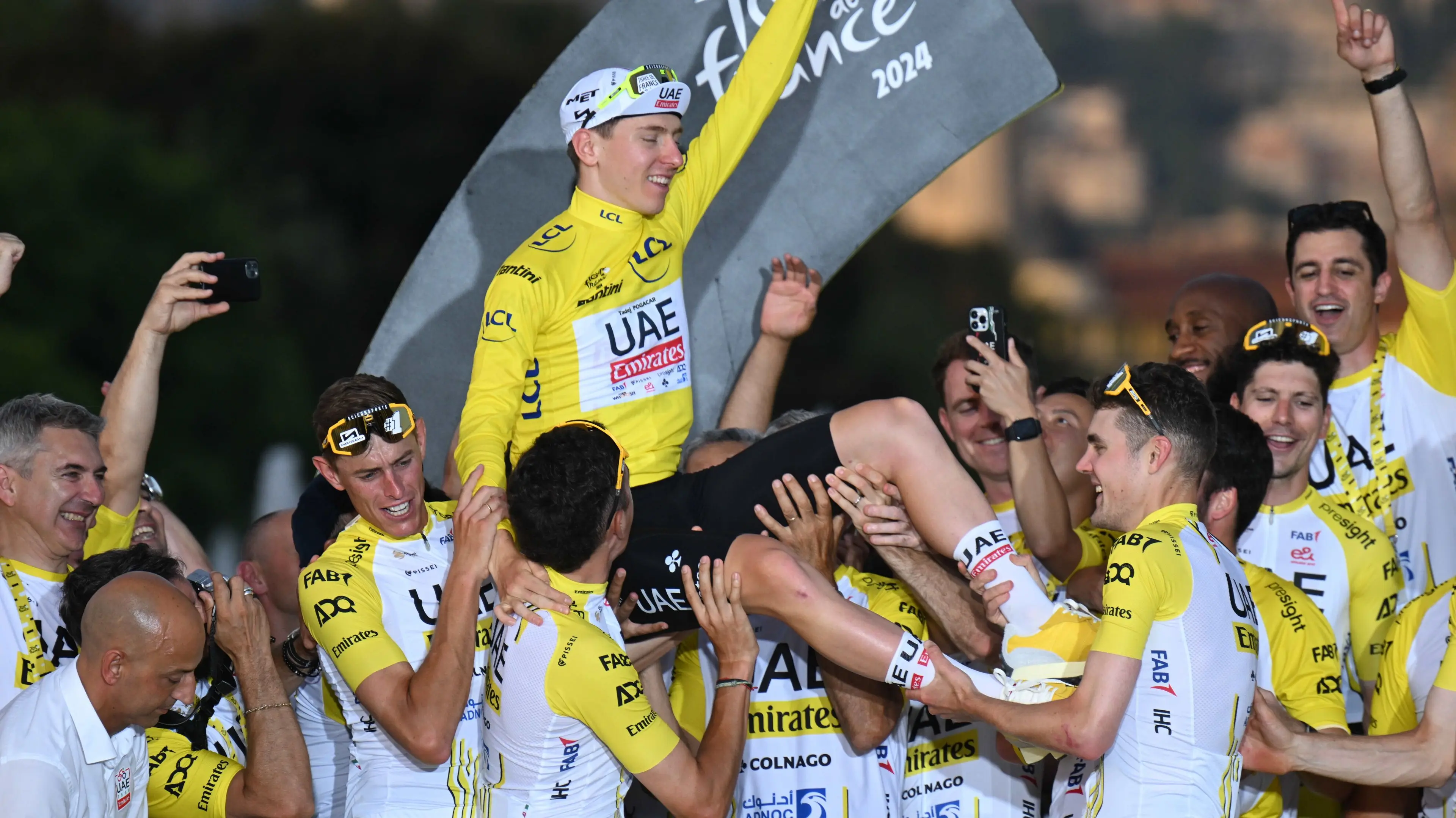
Transfer Market with a Draft System:
Speaking of the transfer market, at the moment we don’t really have one in cycling. Until the last few years we have rarely seen riders breaking contracts and teams paying fees to their rivals to sign certain names.
As a result, the super teams were able to pick up talents for pretty much nothing, while the lesser-known teams remained poor. However, Oscar Onley’s recent move to Ineos is the perfect example why the transfer market would be benefitial for both sides.
By buying Onley out of his existing contract the British giants got their future GC leader for a large chunk of money, which was the main reason Picnic didn’t go bankrupt at the end of last year.
But, unfortunately in most cases riders like the young Scott depart their boyhood teams for nothing. That is why we see more and more teams struggling financially.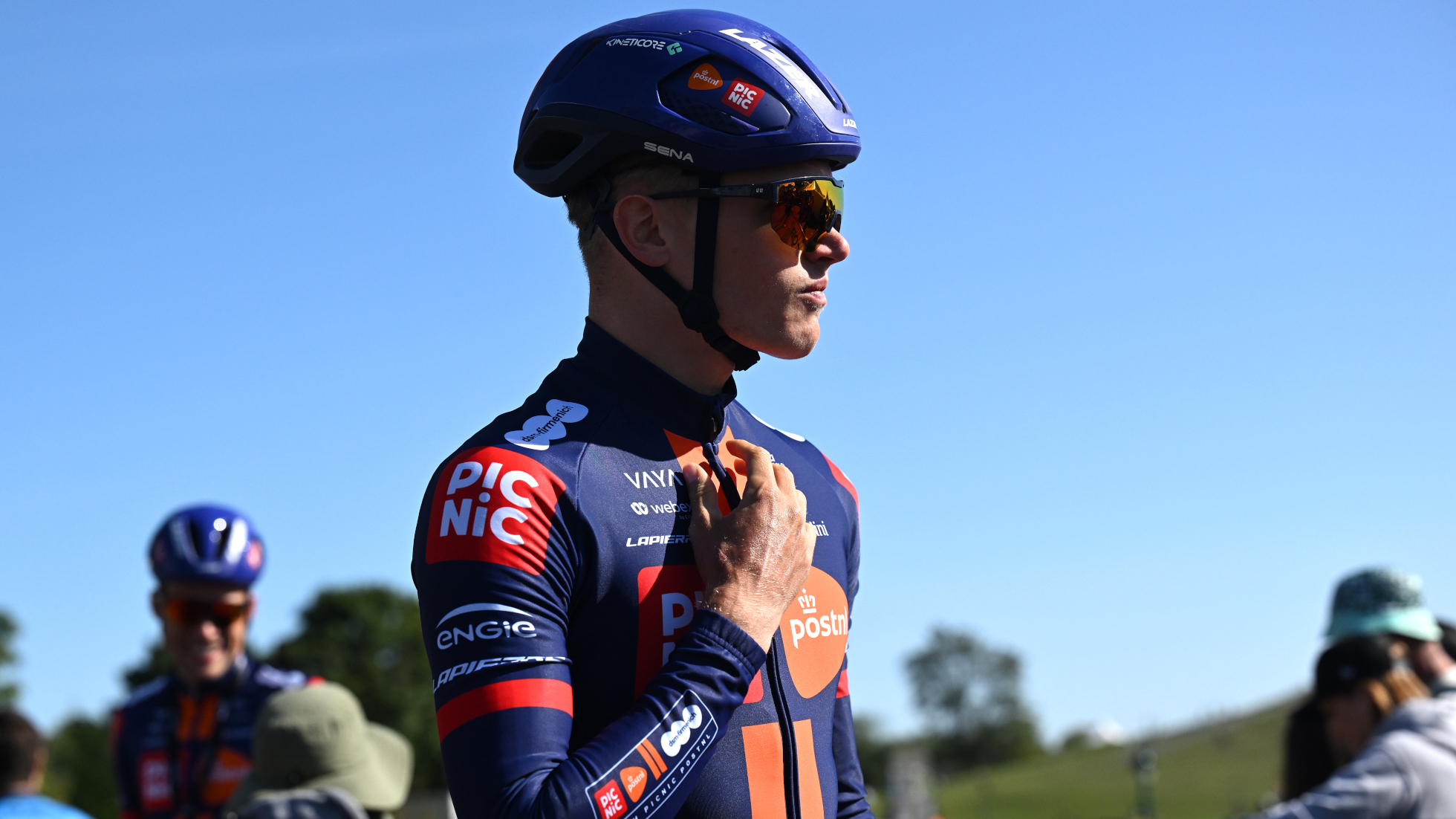
However, a transfer market like in football would solve all of that. Teams that spend a lot of time and rescources recruiting and developing up-and-coming youngsters would get a return for their investment.
Also, the wealthy teams would have to pay a lot more money to sign those riders, which after a few transfer cycles would reduce the financial gap between the top and the bottom of the peloton considerably. Lidl-Trek veteran climber Carlos Verona also supports the idea of a transfer market.
“Some teams can pay a buyout clause of €1-4m for a rider, no problem, and for some teams that could be 20% of their overall budget. I think this is the only way to balance the budgets and close the gaps” said the Spaniard in an interview with the Cycling Weekly.
On the other hand, less and less talents end up in poorer teams, because of the introduction of the development structures. Visma were one of the first ones to create their own development team, where they could sign riders out of the junior ranks.
Then those youngsters would develop within the team’s system before reaching a good enough level to turn pro with the WorldTour team. Nowadays, almost every WorldTour team have their own U23 team, while some like Red Bull-Bora, Visma, Decathlon, Lidl-Trek even have a junior team.
As a result, they can secure the best talents for basically free when they are still 16 years old and eventually promote them into the senior team. That’s why it would make sense to have a draft system next to the already discussed transfer market as well.
Just like the salary cap, the draft system was also first implemented in the American Major Leagues. While the NBA and the NHL have a lottery based system, the NFL has a lot more simple and fair one.
Instead of deciding the draft order by a lottery in the NFL each team is given a position in the drafting order in reverse order relative to its record in the previous year, which means that the team with the worst record is positioned first and the Super Bowl champion is last.
Currently, the draft consists of seven rounds, which means that more than 200 players get selected at the beginning of each season. However, in cycling there would likely be only three or four rounds as the average number of neo-pros only sits around a 100.
Pro cycling already has the basics in place, as the draft order could be determined based on the yearly UCI Team Rankings. However, U23 teams should still exist, as most talents need more time to develop both phiscically and mentally before turning professional.
For that to happen, the draft would have to consist of junior riders, who would then either go to the development team or straight to seniors, depending on how good they are.
But, even if they begin their careers in the development teams, there should still be a ruling that they have to sign their first professional contract with the team that initially drafted them.
This would mean that the big budget teams would not be able to poach them for peanuts when they turn pro, so to sign them they would have to pay a transfer fee to the team that has developed those riders during the years. However, when asked about the draft system Verona also raised his concerns.
“It would be complicated in cycling. Where you’re going to ride depends on the type of rider you are and your cultural aspects, so it’s not going to be easy to say the lowest teams can go first [in picking the best young talent]. I don’t think it’d work out.”
While it would certainly reduce the gap both on and off the road between the teams, as Verona pointed out it could destroy a young rider’s career. Just imagine that you were a talented Spanish climber who has spent his childhood living with his family and riding on his home roads.
Then suddenly, you would get drafted by Lotto-Intermarché, a Belgian side that puts generally more emphasis on sprints and one-day races.
While a few riders would be able to get over that obstacle thanks to their talent, a large number of them would probably collapse in such a new environment, because in most cases they just simply don’t have the mental strength to adjust to the different circumstances in just a couple of months.
In the first few years we would probably see a lot of draft “busts”, but as both Jonathan Vaughters and Jai Hindley pointed out, we have seen in America that this model can be affective.
“It’s a proven model that works. The NFL in the US is the best example. The worst-ranked team gets the first pick of college recruits. In cycling, even if a rider wanted to ride for UAE because they were offering 10x more money, sorry, they can’t. They have to go to the worst-ranked team in the WorldTour,” said the team manager of EF Education Easy-Post.
On the other hand, Q36.5’s Ryder believes that riders could more evenly spread out without the need for a draft. “What needs to happen is that riders who are good enough to be leaders in those big teams need to make the decision: do they want to be a worker, or go somewhere else and be a leader?” he asks.
“It’s up to us smaller teams to create an environment where those riders are able to lead with good support and that’ll balance the ship a little bit. We’ve done that with Tom [Pidcock]. All of us need to work better at creating that space and agents have a role in that too,” Ryder added.
While Vaughters and Ryder share a different opinion, they both agree that changes have to be made, at least connected to transfers. Cycling is still a conservative and antiquated sport in that regard, but in today’s world, where money matters more than anything, this can’t go on for much longer.
However, the UCI remains opposed to introducing a football-like transfer market, even if the winds of change are pointing in that direction.
Reducing Team Sizes:
Seeing one team dominate a Grand Tour from start to finish has become a usual sight in recent years. However, this is not the first time we’ve seen this happen in pro cycling.
In the 2000s Lance Armstrong’s US Postal were dominant side, while in the 2010s Team Sky took over as the “villains” of the peloton. Then at the start of this decade we saw Visma rise above everybody else, thanks to their modern approach to racing, nutrition and recovery.
The pinnacle of their dominance was undoubtedly the 2023 season, in which they won all three Grand Tours, each with a different rider. Many people thought that no one else would be able to surpass them in the coming years, however then came UAE with Tadej Pogacar.
After losing the Tour de France two times in a row the Emirati team went all-in and built a super team, which elevated them into a completely new stratosphere. But it’s not just cycling where we have teams that stand above the rest financially.
In football state-owned clubs like PSG and Manchester City have eclipsed the traditional giants such as Manchester United, Juventus and Barcelona. As we have already pointed out, a salary cap in cycling would likely solve this problem immediately and the president of the UCI shares the same viewpont.
"We worked intensively on this for a year and a half alongside the teams, and specifically with the AIGCP investing significant sums in external consultancy,” said Lappartient in a meeting arranged by Warner Bros. Discovery just before this year’s Tour de France.
However, to his surprise the initial proposal was rejected by the majority of teams.
"The budget cap system was ready for implementation, but at the time the teams spoke out against it. We were very surprised that it was precisely the smaller teams that voted against it.”
“Without a budget cap, the richest teams will continue to increase their revenues, making it even harder for smaller teams to survive. Such a scenario is detrimental to the sport."
As we can see, implementing a system like the salary cap would probably require years of negotiating with team owners and other representatives, but we don’t have that much time to solve this issue. However, Lappartient has another idea, that could be introduced right away.
During this meeting in June the Frenchman also suggested changes to the current Tour de France squad format in an effort to make racing more unpredictable.
"Does it really make sense to have 22 or 23 teams of eight riders each at the Tour de France? Often, the most powerful teams manage to stifle the action, controlling the race for its entire 3,500km distance.”
“Wouldn't it be better to switch to 25 teams with only six riders each? Such a change would make races less controllable, more unpredictable, and decidedly more spectacular,” said Lappartient.
A change like this would make sense for a couple of reasons. Obviously, if a team had less rider then they would have a harder time controlling the attackers, which could create more exciting racing.
Secondly, we have already seen a change like this happen in the past. After 2017 the UCI wanted to end Team Sky’s dominance, so they decided to reduce team sizes in Grand Tours from nine to eight.
Although they still went onto win the upcoming two Tours, they were far less dominant across the other races. Just look at how Chris Froome won the 2018 Giro d’Italia. He didn’t have the usual “Sky Train” by his side, so he was on the backfoot for most of the race.
But thanks to an incredible attack on the Col de Finestre he managed to turn things around and win the Maglia Rosa. But in order to take the crown he had to suffer, more than he would have wanted, which backfired later that season at the Tour de France, where he was clearly out of shape.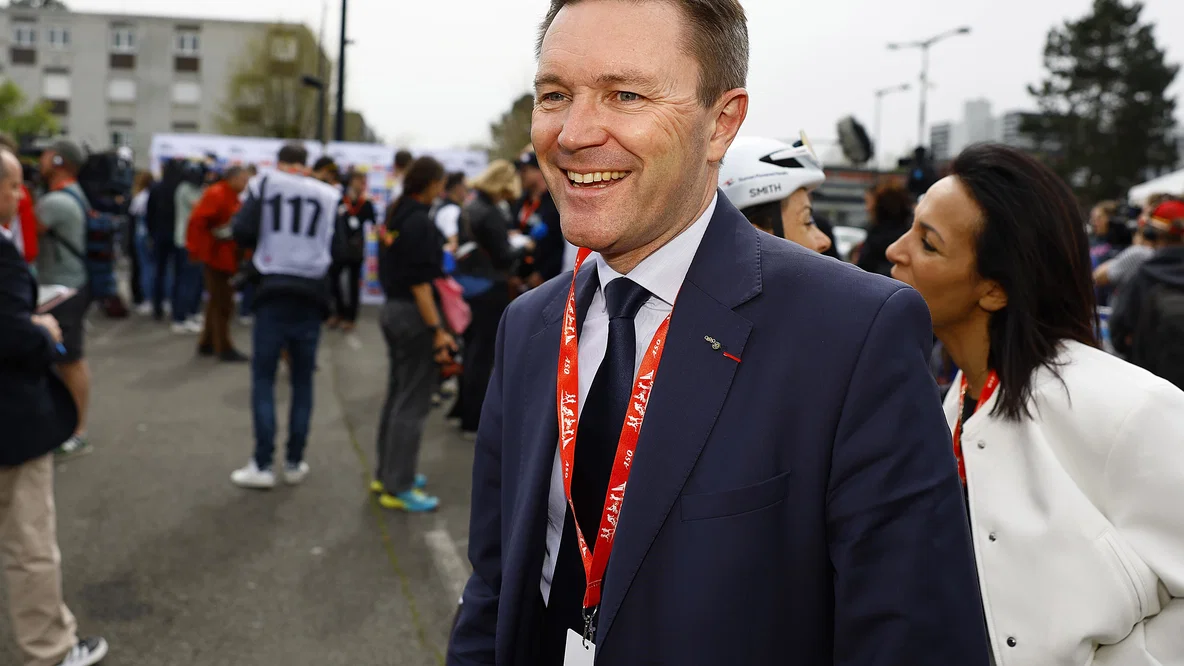
However, following almost a decade of racing one thing has become more than obvious: team sizes have to be reduced again. While another change would probably not have a significant effect on the final outcome of the race, we would at least see more exciting and unpredictable stages during the three weeks.
And as Lappartient mentioned, reducing team sizes could open up the opportunity to increase the total number of teams. This would give a chance for some of the smaller teams to participate in Grand Tours, which would certainly increase their revenues and possibly save team from going bankrupt.
Their sponsors would also be more willing to invest further rescources into the team, which would simoultaneously make them more competitive and close the huge financial gap to the super teams. Next to the UCI the organizers of the Grand Boucle (ASO) is also warm to the idea of six-man squads.
However, not everyone supports this idea. Q36.5’s Douglas Rydar is one of the many team executives who is against the UCI’s suggestion. “I wouldn’t reduce the number of riders in teams because the sport is already hard enough,” Ryder said.
“If you look at us in the Giro d’Italia, we lost three riders in the first week, so if we’d have had less numbers that wouldn’t have been a solution. Being on the startline here gives your partners big exposure and the commercial side of it is important.”
While Ryder does have a point, crashing is part of cycling and it can happen to everyone. Yes, during the Giro the Swiss team would’ve definitely struggled with only three riders, however not having an overly dominant team would probably result in more people tuning in to watch the stages.
Overall, out of the four solutions so far, this one seems like the best one yet. We would have to wait years to see the positive results of a salary cap or a revamped transfer market.
Meanwhile, reducing team sizes would have an immediate effect and it also wouldn’t require any financial investment. Still, the UCI would have to convince all the teams that this change would be benefitial, which they haven’t been able to do so far.
Banning Race Radios and Bike Computers:
The first four topics have already been very dividing, but the fifth might just be the most controversial one yet. Race radios have been an integral part of cycling for decades. However, the introduction of bike computers changed the sport completely.
Back in the day riders had to analyze their feelings before going on the offensive. Also, historical collapses have happened far more often, because without computers riders were simply more likely go over their limit.
However, in today’s world which is largely dominated by numbers and data, most cyclists just ride at their threshold power on the final climbs. As a result we rarely see huge attacks and upsets.
Nowadays, even juniors race based on their power data, so in future seasons things will get even worse, as the veteran’s who race on their instincts will retire, leaving us only with "remote-controlled" riders.
Speaking of controlled racing, race radios also contribute to that massively. Sport directors can just simply tell riders what to do based on what they see on their laptops in the cars behind, which is one of the main reasons cycling has become so predictable.
Without radios Pogacar probably wouldn’t have won Milan-Sanremo in March, as his teammates wouldn’t have gotten the information in time that the leader has crashed. While all of that is true, radios still play a crucial role in the safety of the riders.
Time and again, situations arise in which the peloton gets into dangerous situations due to instructions from the team cars: abrupt braking, hectic changes of position, risky manoeuvres on descents. However, without radio, many of these warnings would be difficult or impossible to communicate in time.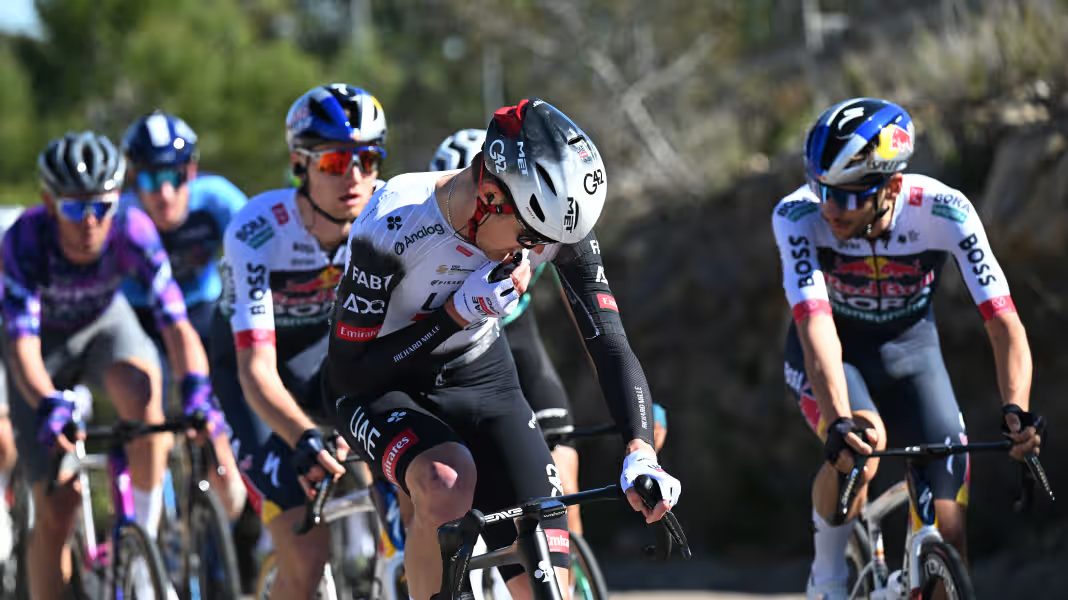
On the other hand, most riders don’t support the removal of race radios. After the Olympic Games in 2024 Soren Waerenskjold of Norway is certainly one of them, as he (rightfully) burst in anger after crashing and the team car driving by him without noticing the need for a new bike.
It was an absolute nightmare situation for the 24-year old who was an outsider for the road race, crashing in the latter part of the race. He was uninjured after hitting the barriers head on but broke the forks on his bike and needed a new one.
After waiting for a few seconds his team car emerged but was completely oblivious to his rider. National team races like the Olympics and the World-and the European Championships are ridden without radios anyways, but the Norwegian’s example shows exactly why riders are against this idea.
In races like Paris-Roubaix and the Tour of Flanders hundreds of riders suffer a puncture without us fans even noticing it. Sports directors, who also watch the same coverage as we do, usually don’t see their riders suffer a mechanical as well, but thanks to the radios the riders can quickly warn them that they need a new bike.
And also, as we have seen in the two recent World Championships, not having radios didn’t make the racing more exciting, as both times Pogacar won after a dominant solo ride.
However, on paper banning bike computers wouldn’t have any bad effects on the safety of the riders. And considering how overwhelming it can be for the cyclists to consume all the information while riding close to 50km/h, it might actually reduce the number of crashes, especially in high-speed finishes.
Cyclists would probably not like this change, as most of them have been racing based on their heart rate and power data since their junior years. The likes of Almeida, Del Toro and even Remco Evenepoel notoriously don’t go over their threshold power, in order to maximize their results.
This is the reason why we see some very weird scenarios, such as Isaac Del Toro’s performance on Jebel Mobrah. The Mexican was seemingly struggling early on as he was losing positions quickly. However, then out of nowhere he came back and passed everybody, except for Antonio Tiberi.
But without his powermeter he almost surely couldn’t have ridden that way, which would have resulted in an exciting showdown between him and the Italian.
All in all, the defensive minded riders would definitely struggle more without bike computers compared to someone like Pogacar, who always seems to be on the offensive. But with time even the passive ones would be able to change their racing style, which would result in more open racing.
Altogether, the consensus is that changes have to be made. But as with anything in politics, change is often slow, and neither the teams, nor the rest of the stakeholders are aligned on what to do.
However, everybody in the cycling world has to act quickly, because if the domination continues for another year or two, then people will start to follow other sports instead, which could be detrimental for a sport like cycling, which already struggles a lot financially.
Sources: CyclingWeekly, EscapeCollective, CyclingNews